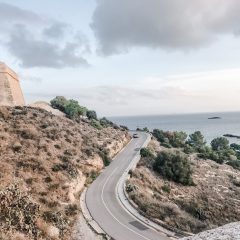

“What a large volume of adventures may be grasped within the span on [her] little life, by [she] who interests [her] heart in everything.” Laurence Sterne
At a World’s Fair in 1974, my parents purchased a delicate and finely carved wood figure of Don Quixote– a perceptive protagonist created by Spanish author Miguel de Cervantes. Dad, to keep the monsters away who spooked me at night, would regale me with tales of Don Quixote fighting off giants, that in actuality were just windmills. Through Cervantes and Don Quixote I learned there are two ways to see things…. the way they are, and the creative way. The creative way helped me turn the shadow monsters on my bedroom wall into Quixote’s faithful friend Sancho Panza and his horse Dapple, who I imagined patrolled the perimeter of my bedroom chasing away any monsters. Shortly after, my dad was in a car accident and with the ensuing traumatic brain injury, he lost ‘the way things are’ for a time. A segment of his prescribed recuperative therapy was artistic, and he carved and created a “Quixote,” which was just a primitive head resting on legs– a head brimming with imagination and breathless for adventures, and two legs to carrying the errant knight on his exploits. My Dad’s Quixote carving frequently pops in my mind’s eye while I am poking around my ancient surroundings in Valencia, Spain, as I don’t just see old stone towers. I see King Jaime entering the city when the Valencian flag flies in the wind; I see his echo on lamp posts, street drains and building friezes proudly displaying the bat crest over a crown– the bat that helped James of Aragon rally to remove the occupiers from the kingdom of Valencia. My head, filled with these wonders, rests solidly on my two legs, legs that earnestly desire to carry me on adventures imagined or otherwise.
“Not everyone is sufficiently intelligent to be able to see things from the right point of view.” ― Cervantes, Don Quixote
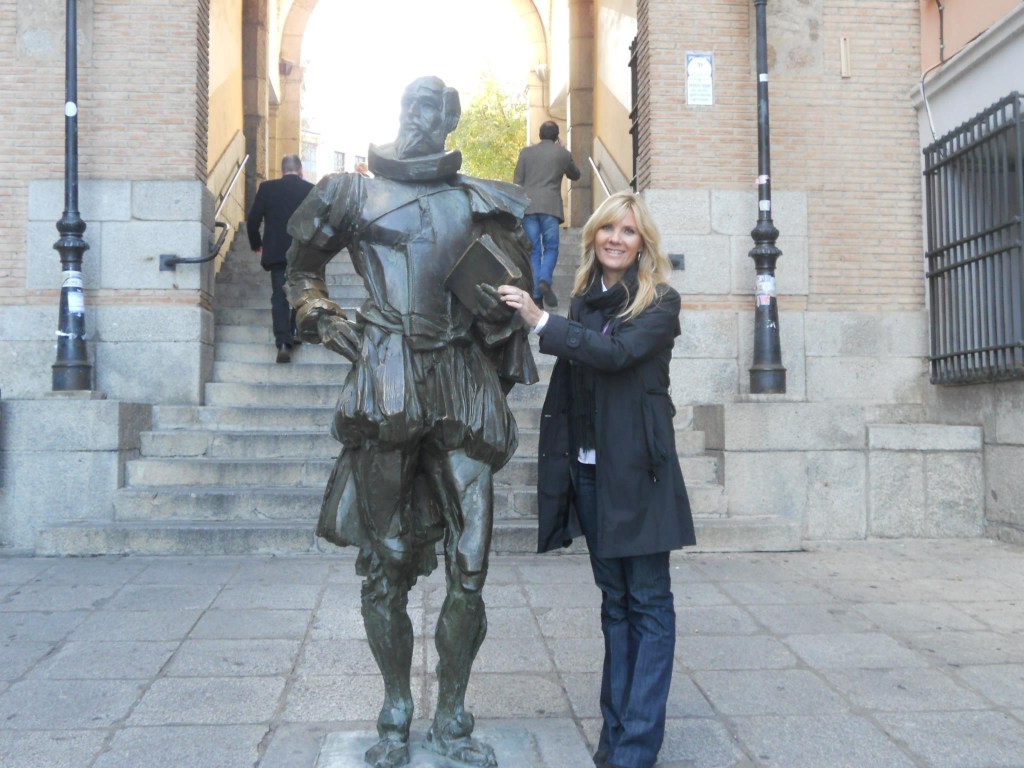
“Look there, Sancho Panza, my friend, see those thirty or so wild giants?”
“What giants?” Asked Sancho Panza.
“The ones you can see over there,” answered Don Quixote, “with the huge arms, some of which are very nearly two leagues long.”
“Now look, your grace,” said Sancho, “what you see over there aren’t giants, but windmills, and what seems to be arms are just their sails, that go around in the wind and turn the millstone.”
“Obviously,” replied Don Quijote, “you don’t know much about adventures.”
― Miguel de Cervantes, Don Quixote
One of the first museums Steve and I visited in Valencia was the cultural museum of Ethnology containing exhibits of ancient Iberian and Roman settlements in Hispania. While some might see three exhaustive floors covering 2000 years of archaic history, we saw as a three pronged adventure. We spent an entire morning learning about the intangible and tangible heritage of Sagunto, Lliria and Xativa, and how the Iberians, Phoenicians and Romans worshipped, lived, played, and battled. (This launched the next two ancient Roman outings, as we thoroughly enjoyed our trip to Sagunto a week earlier.)
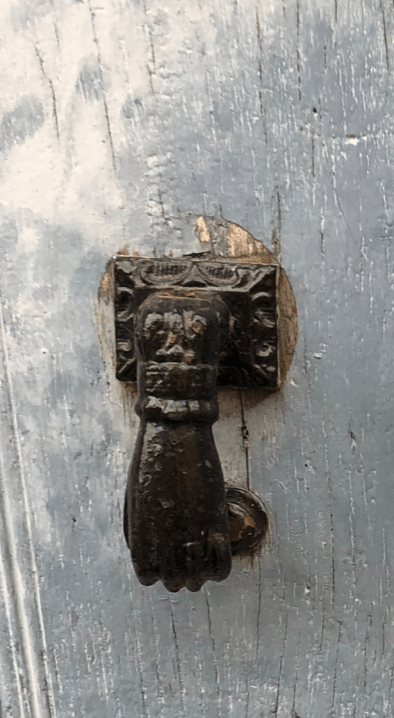
The aspect of my personality that likes discovery and connections noted several small female figurines in the Ethnology museum, similar to the Etruscan women carvings we had seen in Italy. The most impressive feminine figure of all, in an upright case near the end of museum, was called the Lady of Elche, a Phoenician/Iberian archetypal mother figure, goddess of light, also know as Mother Eve. The Lady of Elche, nicknamed Serpent Lady, due to her tussle with the tempter disguised as a snake in the Garden of Eden, is shown with her eyes opened. She can see things as they really are and can be, and not just in an edenic, perfect state. In true synchronous fashion, a Spanish acquaintance, after our museum visit, mentioned the Hand of Fatima, a Muslim, Jewish and Christian icon depicting a hand with an all seeing eye. These hands can be seen on door knockers in Valencia, and they represent non other than the Lady of Elche, the mother figure, with her watchful, perceptive eye. As a mother, wife and woman, and an employee in many male dominated businesses, I have been accused over the years as seeing others with my eyes half closed and not seeing their faults. In truth, I prefer using my imagination and insight to see the potential in others, and be the Lady of Elche with my eyes opened but seeing in other ways. It is easy to see giant windmills or the mistakes that others make, it is harder to see the best in them and what they could be. The Don Quixote mode of sight, seeing giant potential, and adventures through growth is a better way to view the world.


XATIVA
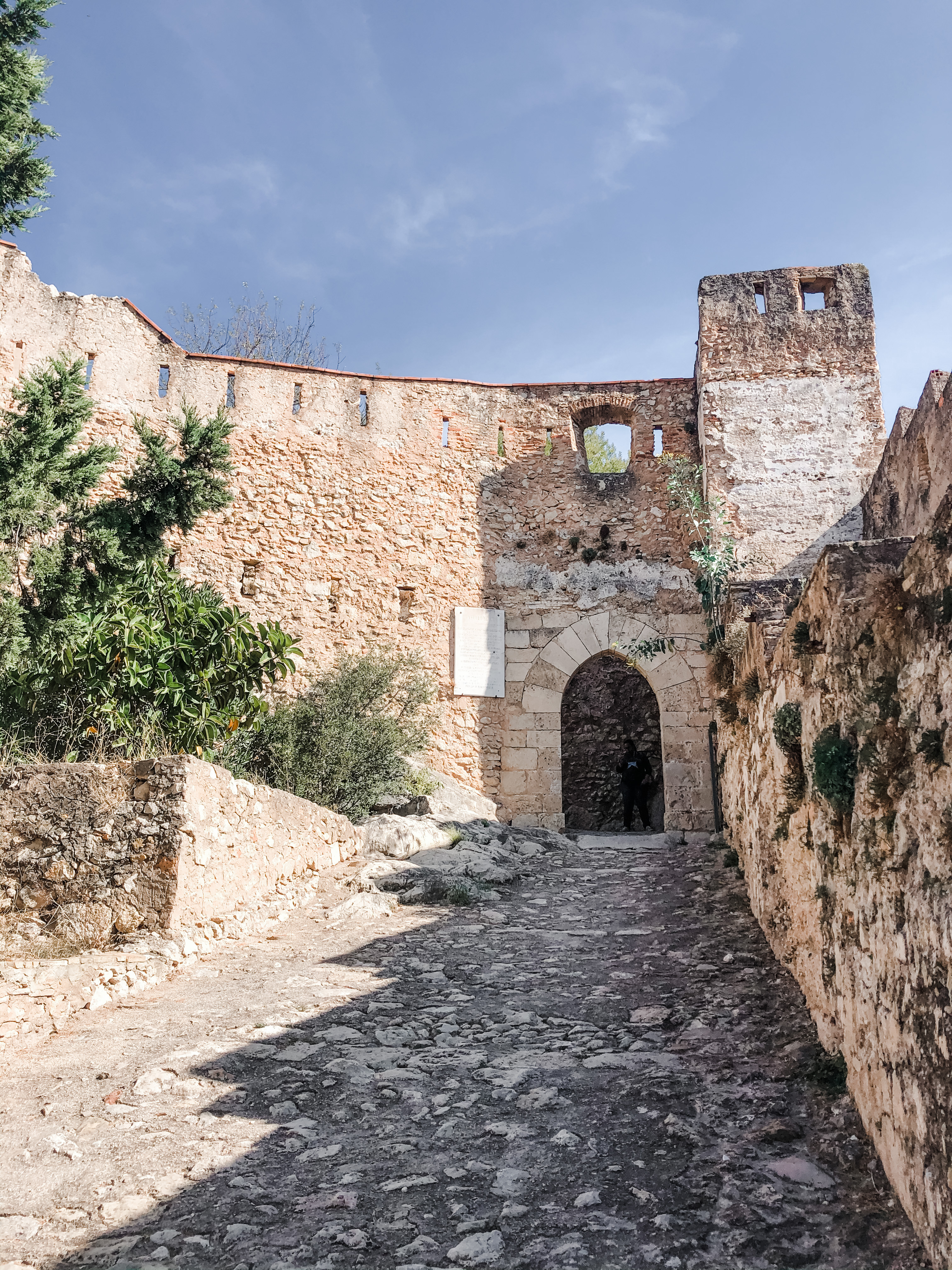
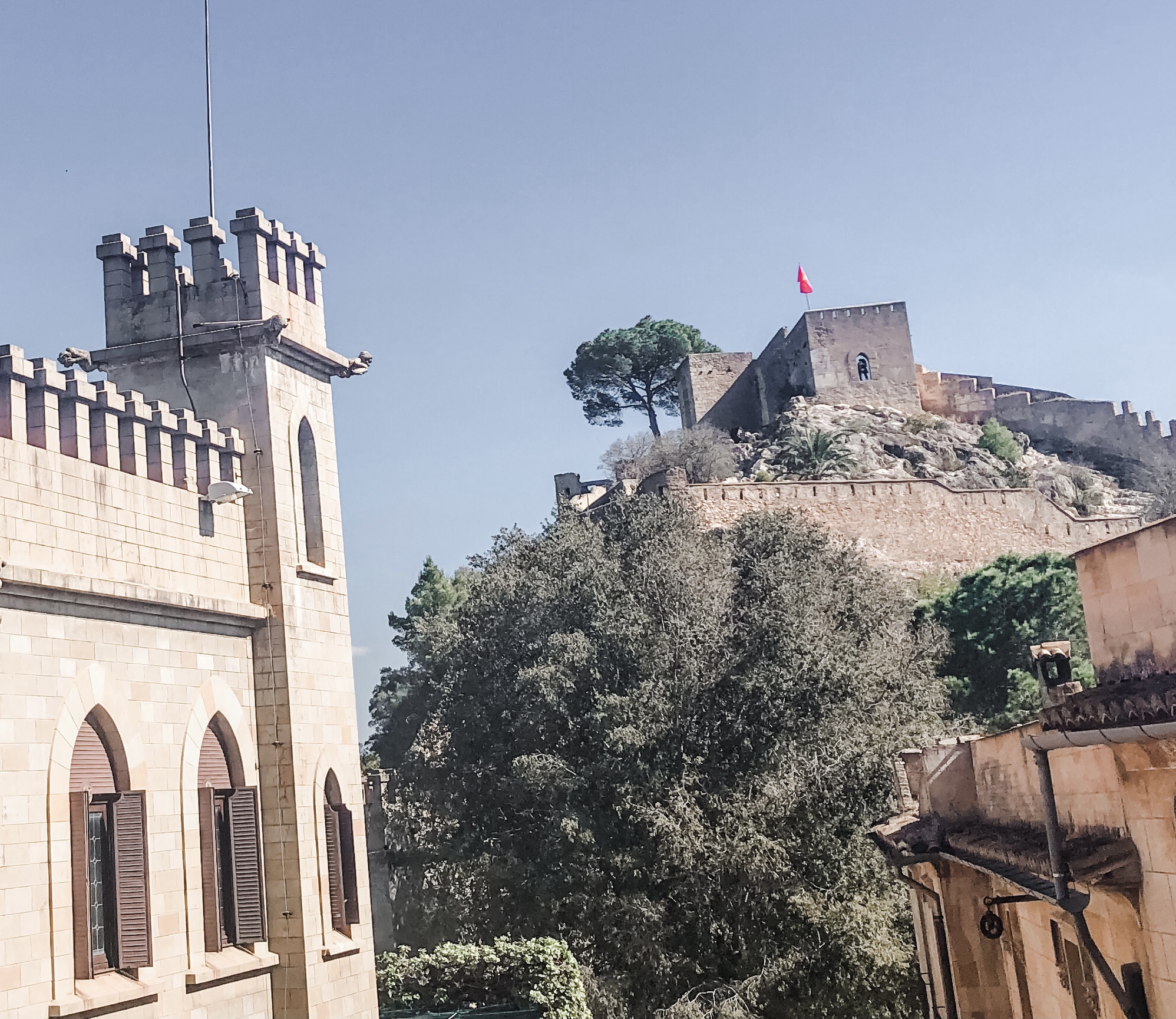
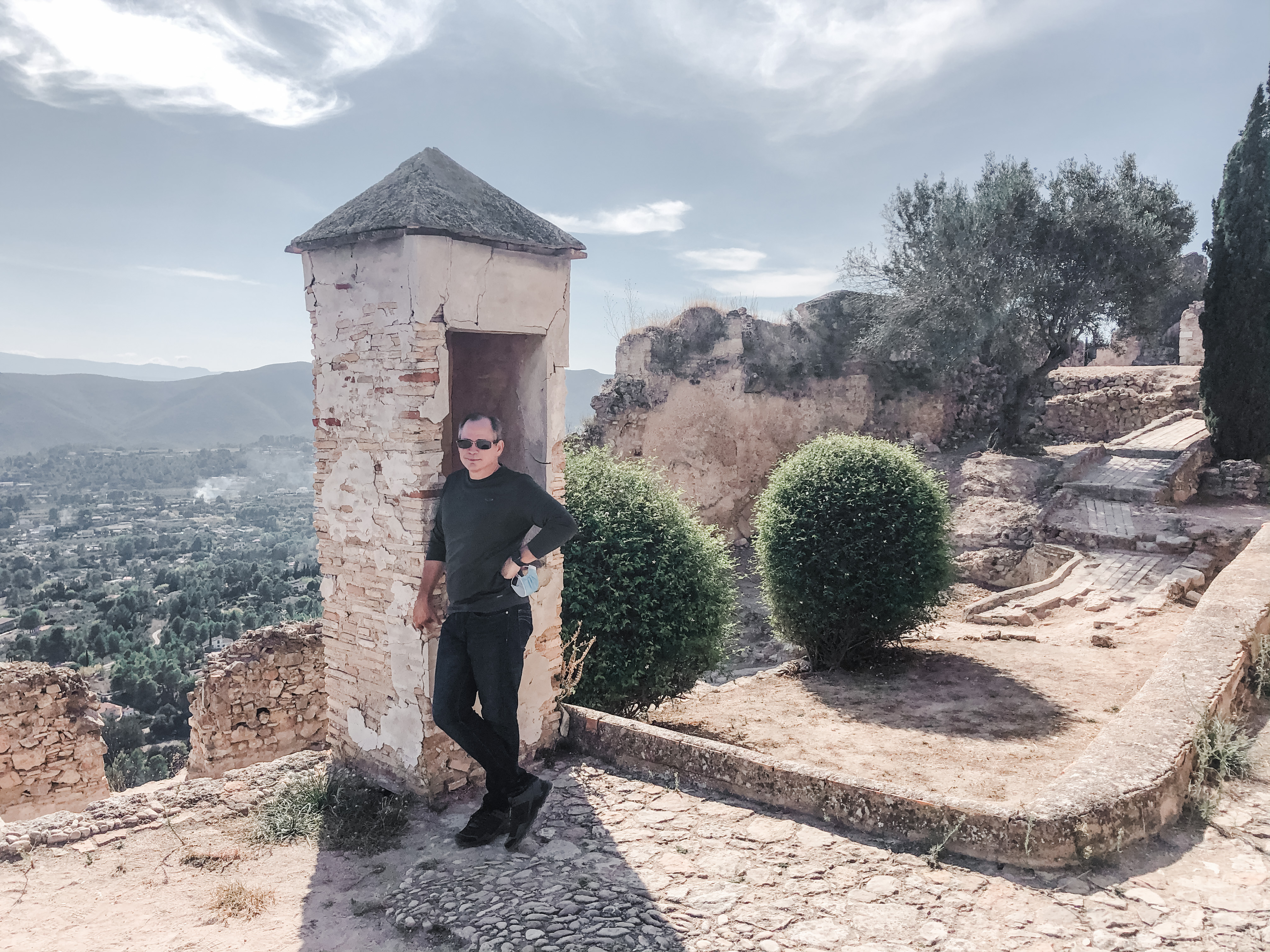
The following weekend we visited Xativa, the second stop of our three ancient roman settlements. As beautiful as our Sagunto excursion was (see Possibilities post), Xativa was the crown jewel with its castle Menor on one hill and Castle Major sitting majestically on the other. There are remains of Roman paving, water storage, fountains, cannons, ramparts, towers, and even one restored Islamic gate among others– everything needed to see a glimpse of the past when using your imagination. Xativa is known for being the birthplace of the infamous Borja family (renamed Borgias when they became popes in Italy); its fine linen from the Romans and paper from the Moors. It is also known in the 2nd century BC for Hannibal, the Carthaginian general, who plotted the sacking of Sagunto and invasion of Rome, Italy, from Xativa, as he could only see the Romans as a threat instead of an ally. In his short sightedness, lack of diplomacy and greed for silver mines in Spain, he caused a century worth of battles, and total destruction of Carthage.
After Hannibal laid siege on Sagunto from Xativa, and headed to Rome on elephants from the mountains of Northern Italy, a twenty five-year-old Roman named Scipio Africanus, full of new ways of seeing things, volunteered to lead troops in Hispania after his father and uncle were killed in a battle against the Carthaginian’s in Spain. No senior general wanted the task of going into battle against the Carthaginian in Spain and preventing reinforcements from reaching Hannibal in Italy. Young Scipio, with creative visions and insight drove the occupying Carthaginians out of the Iberian peninsula in just four years. Where other generals saw the impossible, a monumental wall protecting Carthaginian HQ, Scipio saw possibilities. After talking to several fishermen and learning the lagoon emptied at times, which exposed a strategic wall, Scipio stormed the occupying Carthaginians impenetrable quarters at low tide. Scipio, a master of creative warfare, cleverly trained his soldiers with new tactics and defeated Hannibal’s brother Hasdrubal. After Roman victory was complete, despite being well loved by his troops, and highly respected by Spanish and African princes, Scipio rested his command, moved to the country outside Rome and cultivated the fields with his own hands. Lauded as a hero by Roman citizens, Scipio Africanus could have used his fame and glory for political gain. Instead, taking a page from Don Quixote, he saw fame and glory as windmills to be fought and put down, and before nobility could place his accomplishments on a windmill millstone and grind his legacy to dust, he used his foresight and retired and used his mind studying Greek culture.
“I was born free, and that I might live in freedom I chose the solitude of the fields; in the trees of the mountains I find society, the clear waters of the brooks are my mirrors, and to the trees and waters I make known my thoughts and charms. I am a fire afar off, a sword laid aside…. the earth alone should enjoy the fruits of my retirement “ Cervantes
Xativa brought out all the wonder of the past and made history resurrect. The lyrics to the Carpenter’s song Top of the World “Such a Feeling’s coming over me, there is wonder in most everything I see” popped into my head as we hiked the switchbacks to the castle. The tune returned as we stood on old Roman roads, hung out for a moment in the dungeon’s darkness, scampered up ramparts, admired the city below and gleaming ocean beyond. It was one of those days that shape the way you view all others.



IIIRIA
A few weeks later we ended the three part Roman Iberian peninsula settlements tour while visiting Lliria on a sunny Saturday. The Valencia Metro was the easiest way to get there, and it took us about 45 minutes to go 2o miles north of Valencia to the end of the line.
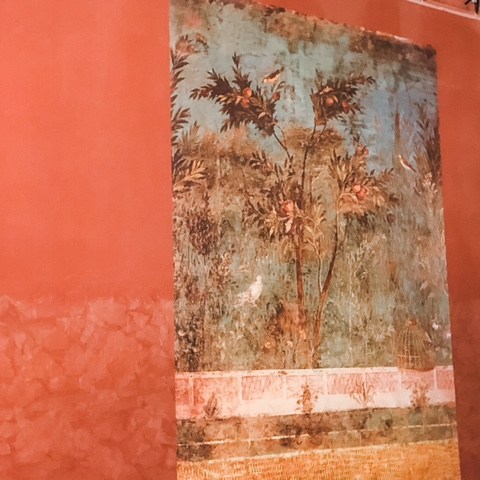
Illiria was built on a hilltop called Sant Miquel. The Romans started building around 76 BC and some vivid wall fresco called The Twelve Labours of Hercules and parts of their baths surprisingly still remain. Spain’s largest cache of buried coins was found in Lliria– 6,000 silver denarii Roman coins, minted in the 1st and third century were discovered. James of Aragon also left his mark on Lliria with the Church of the Blood built in 1238 over a mosque after the reconquest of the Valencia region from the Moors.
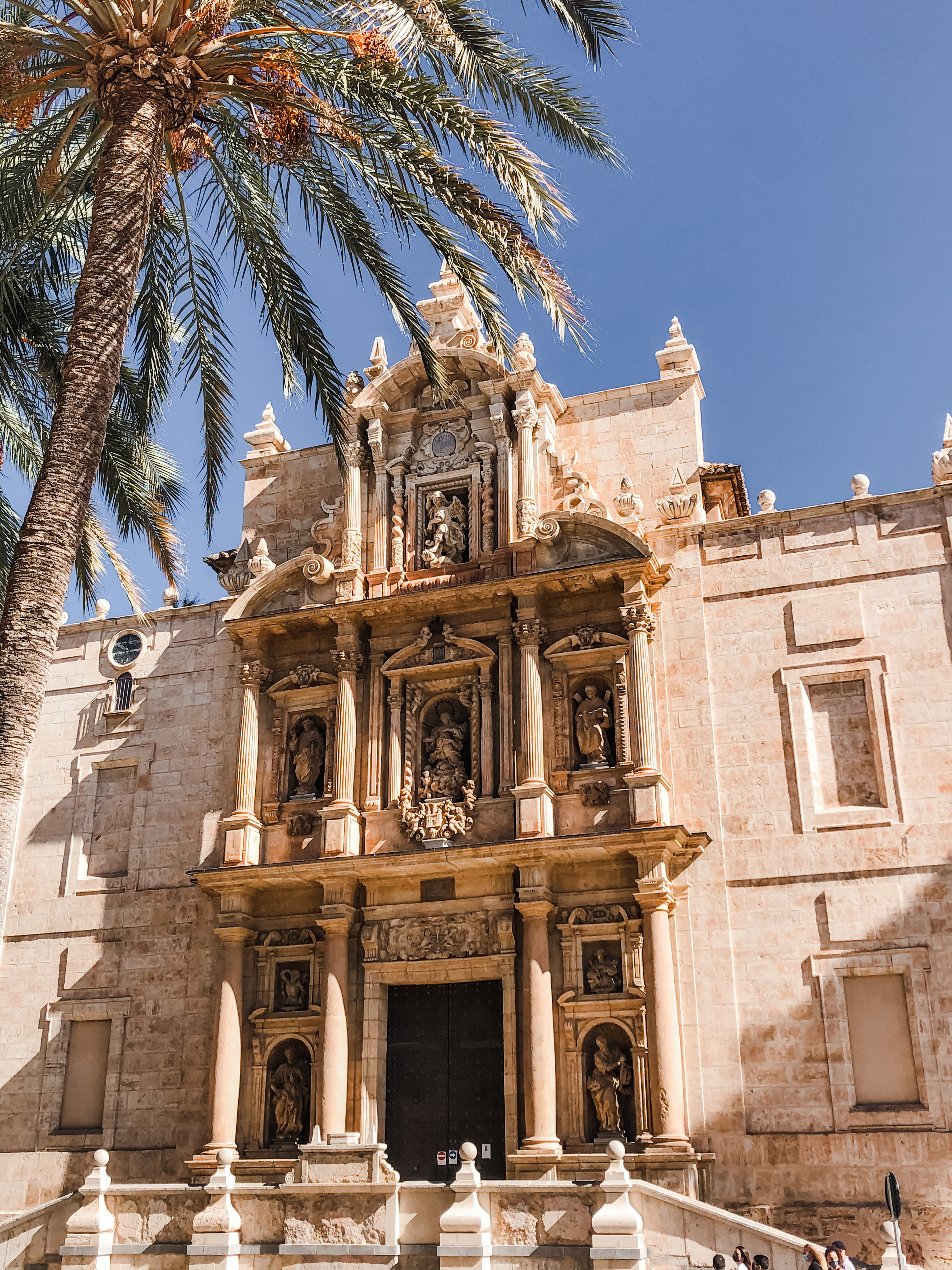
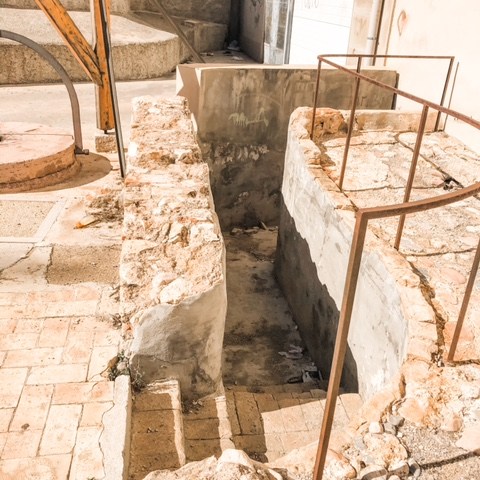
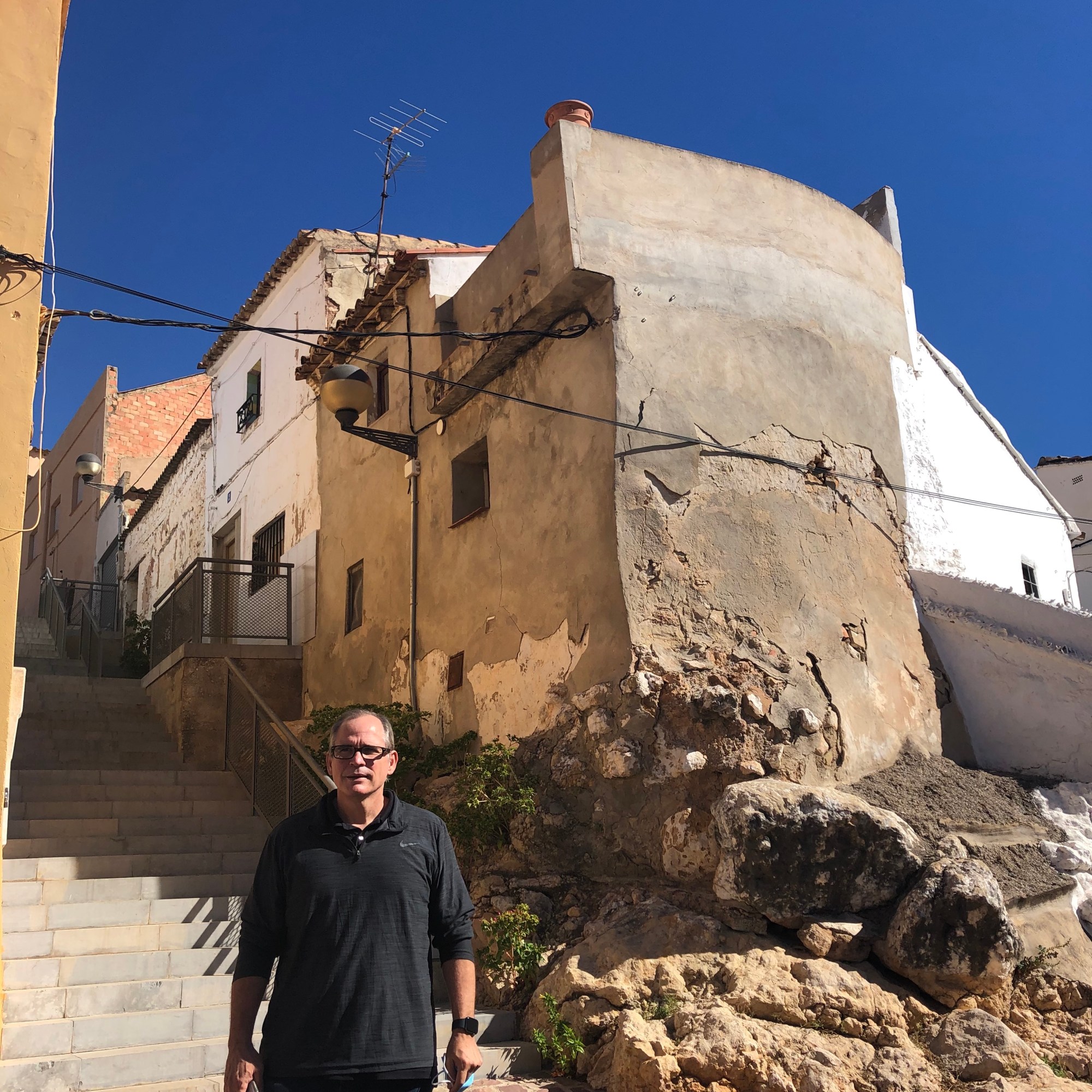
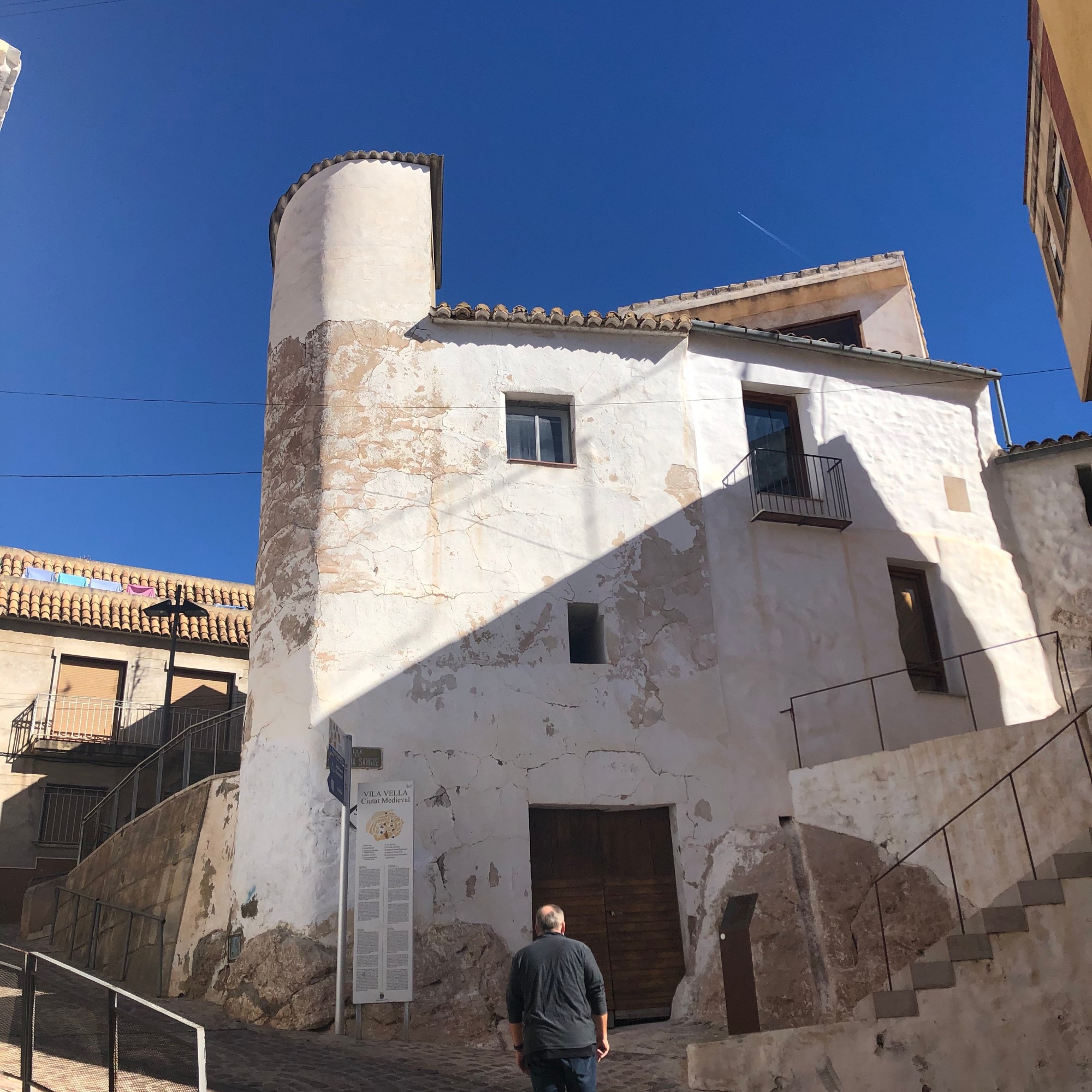
Unbeknownst to us, the modern city had not properly preserved their Roman past or ruins. (We read in several journals after our trip to Lliria that Roman baths and Muslim catacombs were just covered over when the city built new developments.) At the tour office we were told there were tours on Saturday, but while there was a guide available, she would not give a tour unless we reserved a couple weeks in advance. And the archeology museum that had some preserved Roman artifacts was closed due to COVID-19. Disappointment was the fuel that took us back to the train, but it was a lovely Mediterranean Fall day and the town’s 17th century baroque L’Assumpcion church with its picturesque facade was a nice parting glance. The truth is that Sagunto and Xativa were so spectacular that Lliria was always going to pale in comparison even if their museum had been open. In Lliria, I caught a glimpse of my dad’s Don Quixote statue of a head on legs but this time the narrative was Dr. Seuss:
“Out there things can happen and frequently do to people as brainy and footsy as you….. You have brains in your head. You have feet in your shoes. You can steer yourself in any direction you choose.” We had a curiosity in our head and let our legs carry us to a forgotten Roman settlement, and sometimes the point of adventures is just steering yourself where you choose and walking in a new place, and that we did.
“Curiosity has its own reason for existing.” Albert Einstein




“The Mind is not a vessel to be filled, but a fire to be kindled.” PlutarchV
Over the years, during our adventures to Italy, Spain, France and Turkey to see Ancient Greek and Roman amphitheaters, arches, basilicas, temples and walking on their ancient cobblestones, feeling their wheel ruts etched under our shoes, and running laps around the circus where chariots used to race, it was in these places we understood Roman historian Livy’s message: “Bethink yourself not whence you sprang, but who you are.” Studying their history, their idiosyncrasies, joys and mistakes, and how they worshipped, we better understood our own foibles, strengths, how we tick and what we believe. Now living in Valencia, Spain, and daily brushing up against the ancient Roman, medieval and gothic years, the current volume of our life’s adventures continually expands under a stoked fire of curiosity, and with introspection, and looking at our own personal journeys with new eyes and wonder, we have begun to see on a grander scale who we are.
“People travel to wonder
at the height of the mountains,
at the huge waves of the seas,
at the long course of the rivers,
at the vast compass of the ocean,
at the circular motion of the stars,
and yet they pass by themselves
without wondering. ”
― Saint Augustine
Viewing life through Don Quixote’s lens, it’s possible to creatively fight the giant windmills of loss, disenchantment, disease and death when we view our lives as though everything is miraculous and a wonder. The monsters we shrink from cease to exist when we view them with changed eyes. It’s time to contemplate your wonder.
 The Unhurried Traveler