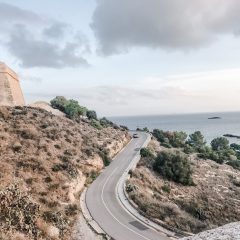

A pause gives you breathing space to listen to the whispers of the real you waiting to happen.” -Tara Estacaan
There is a “para llevar” cafe on Calle de Calatrava, in Valencia Spain, where we frequently take away Argentine empanadas. Steve’s mom spent part of her childhood in Mendoza, Argentina, and perfected the tiny pocket sandwiches, filled with a picadillo of green olives, eggs, raisins and ground beef, and they’ve become a family favorite. Spaniards, Latino transplants and tourists alike adore empanadas from this cafe near our apartment, so waiting in line is a reality. Trying to purposefully tick off minutes while we wait… deciphering garbled graffiti on a wall, admiring the palace decorations a few paces away, smiling at the pod of nuns heading for St. Nicholas cathedral…I usually only kill off around thirty seconds. For a farm girl conditioned to constant movement and productivity, WAITING—whether for food, our turn, a job offer, post-pandemic normalcy— must be filled with something fruitful. And yet, while “The Great Pause of 2020” continues, at least here in Spain where vaccinations are only at a 26% and cases have started going up again with restrictions lifting, it is not lost on me that the uncomfortableness of standing still, and waiting, has metamorphic lessons. Slowing down further, not pursuing distraction, and not distancing from ourselves and our emotions, these are the transformational messages available for para llevar, or take away.


“Be patient and tough; someday this pain will be useful to you.” Ovid
This last weekend was a festival to commemorate a patron saint named Isidore born in sixth century Spain. As a young boy Isidore was punished by his older brother Leander for not learning his studies in a timely manner. After reaching the end of his patience in Leander’s abuse, Isidore ran away. As he rested on a boulder, water dripped on his head. Looking about, he noticed the water dripping from above had, over time, worn holes in the rock below him. A notion came to Isidore that if he worked at his studies, evenly slowly, and endured Leander’s impatience, it would pay off drop by drop. Isidore returned home and didn’t protest when Leander locked him in a cell. He spent his days and nights for years, studying and learning, and eventually became the Bishop of Seville, and made education available for all through seminaries. As I read this, I was locked in my apartment, a Covid Cell, due to an uptick of tourists and virus cases, enduring yet another day of “skunk smells” from the pot smokers below us. I felt pity for Isidore and myself and wondered what lesson I was supposed to be learning. At my saturation point of secondhand smoke, I escaped and ran out to get groceries, and on the way back noticed a couple new “RESET” buttons, which have cropped up around Valencia. It occurred to me, as I shifted my heavy grocery bag from shoulder to shoulder, that I wasn’t poor Isidore being locked in a cell. I was Leander trying to beat more out of myself, others, and from the day, and it was time to reset my thinking.
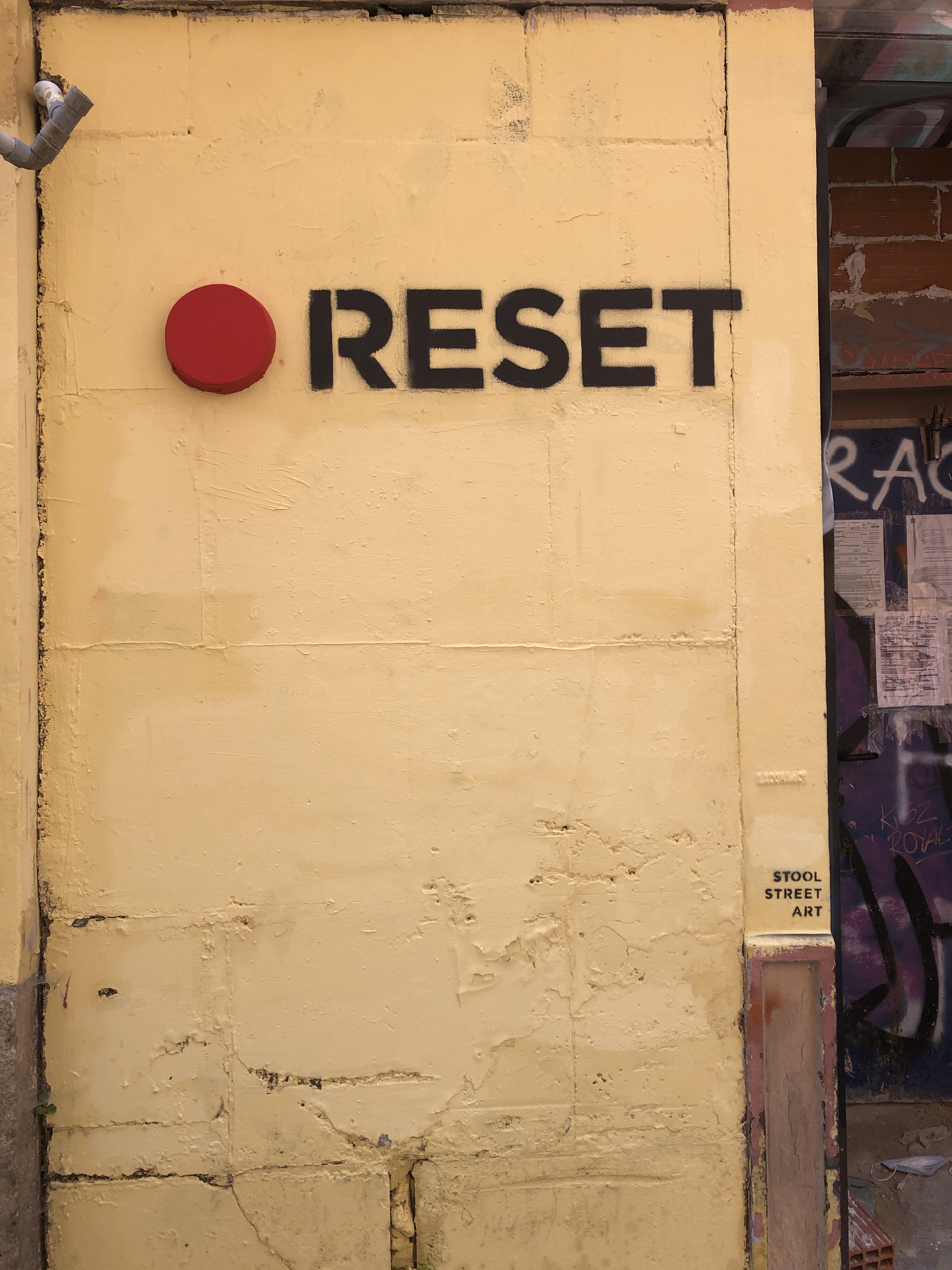

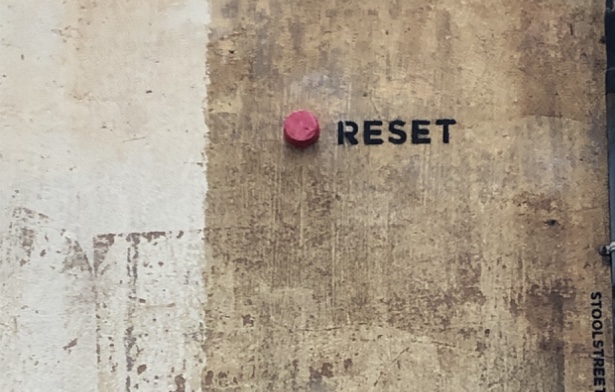
“If positivity is not your mindset, then reset”
― Josh Stern
While mulling over ‘reseting,’ we watched a Vlog on Netflix done by a 60+ year old man doing the Camino Del Santiago. We are walking the Camino del Norte, a 560 mile journey across Spain in September, (roughly 15-20 miles a day for 35 days), and we thought we’d get a feel for the trail via his walk. This Dutch man, with terrible knee problems, an invalid mother at home, a girlfriend who had just passed away, and a friend diagnosed with a terminal disease, decided to just start walking to release his fear and find direction for his life. He felt the days walking in solitude would reset his mind and return his confidence in life. As he walked from Summer to Fall, he noticed his shadow went from really tall in front of him, to a shorter shadow behind him. The thought came to him as the days ticked away, that he had spent his whole life always looking forward to the future, a tall shadow ahead, or thinking about his past, his short shadow behind him. It was impressed upon him that he need to stop looking forward and backward and just be in the present moment. Not be a shadow of himself. After two weeks of walking, he reset his thinking and stayed present listening to bird calls, noticing the sound of the trees moving in the wind, and the way the color of the sky changed. Fear left him and a love for life returned after he slowed down and stayed in the ‘now’ by observing, feeling and appreciating. He was no longer a shadow of himself. This resounded with me, not going through life as your shadow self….always rushing and moving and stuck in front or in back of your life. I have been a creature of the past, i.e., missing aspects of my family, how they used to be, and not appreciating them fully for who they are now. And purposefully staying busy and wishing for the future, when confinement and mask wearing is finally finished. Living in both shadows, I had set aside the joy of ‘right now.’ My Reset, the button I hold down to restart my life, is not escape mode through productively and accomplishment. My reset, now and after the Great Pause, is to ‘pause’ in my own life, as uncomfortable as it is locked in the COVID cell, to feel pain, loneliness, discomfort, and from it walk away with more self-awareness, empathy and courage. To become less shadow, and emotionally stronger by being still and releasing the numbness of constant motion.
“Patience is not passive, on the contrary, it is concentrated strength.” Bruce Lee

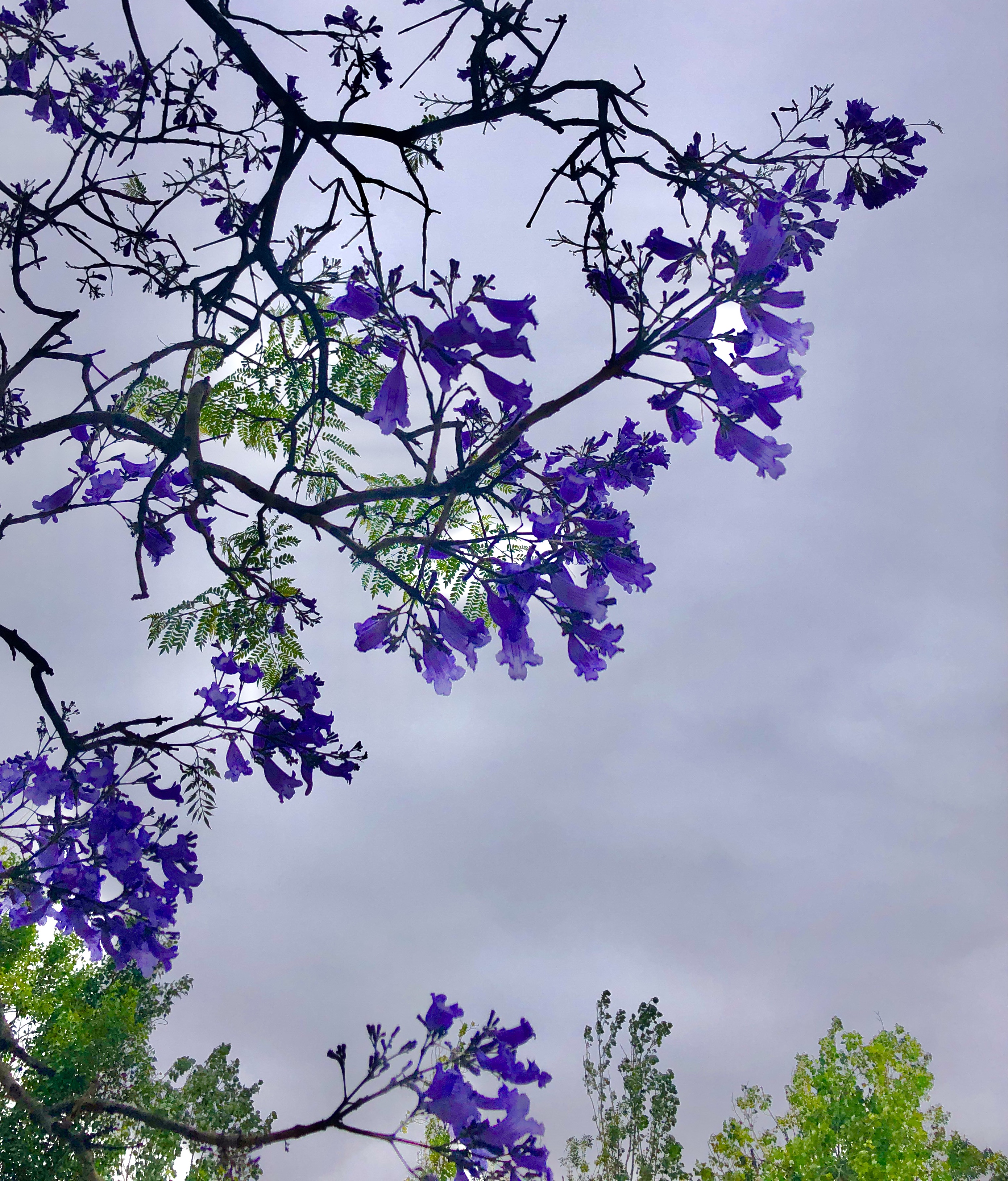

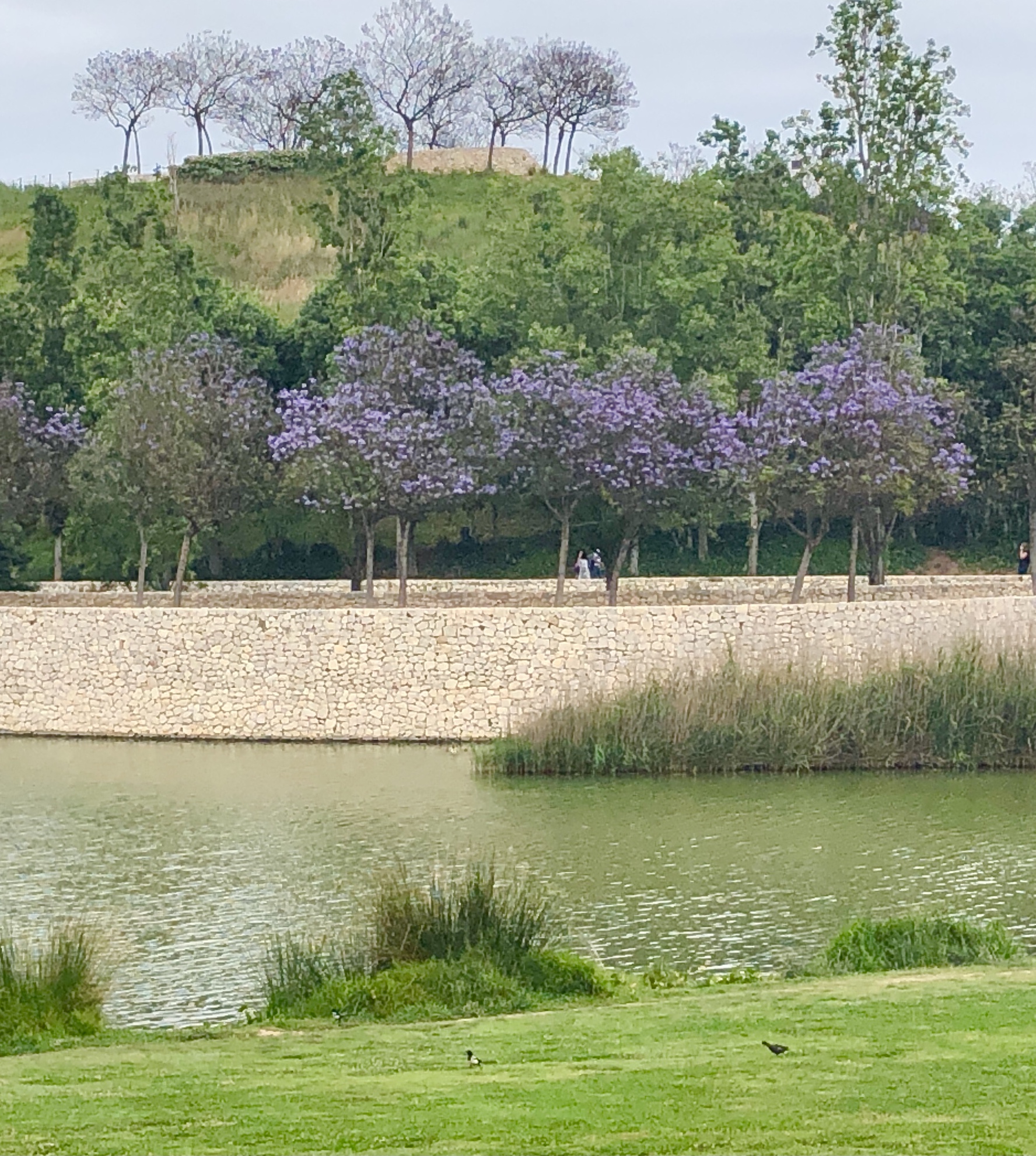

As a visual learner, a tree helped me learn to ‘reset’ and be present. After living in Spain for eight months, and observing a slower rhythm of life by Spaniards, I still continued ‘full steam ahead.’ I tried to rush the lockdown by setting a goal to move my 15 minute mile down to 13 minute mile in hiking boots for the Camino– achieved at the cost of hurting my knees and destroying Steve’s feet. One day while I was zagging around slow walkers on the trail, Steve tugged my sleeve and said “slow down.” He reminded me we had come Spain to find a better pace and rhythm for life, and yet I was still speeding through life. Not a coincidence that a ‘Mindful Meditation While Walking’ showed up in my inbox. It said “if you look up, you will automatically slow down.” So I headed out, looking up and immediately tripped over an exposed tree root and twisted my ankle. I got up and tried again, slowed my step and my breath, and a little further on, twisted my other ankle stepping in a hole. I hobbled away ready to abandoned the whole attempt, except I noticed this row of stark trees that looked dead except for a handful of sparse blossoms here and there on bare branches. Upon closer inspection to one of the trees, I realized they were purple Jacaranda trees. (We had yellow Jacaranda in Brazil that exploded in vibrant yellow flowers in the Fall) The thought came to me “The Jacaranda grows through patience.” Point taken. Over the next week, more of the dead looking branches on the Jacaranda sprouted more purple trumpet flowers. By the following week, the dead looking branches had sprouted vibrant clusters of lavender-blue flowers. I stood rooted under the Jacaranda with the wind throwing purple confetti, and I understood you could be mindfully present while walking. My watch kept prodding me to get moving, but there I stood smelling jasmine and honeysuckle from other corners of the Turia park and smiled at the breeze dropping blossoms in my hair. I was alive in the moment. The Jacaranda bloomed in May, two months after the almond and cherry tree blossoms had come and gone. While the Jacaranda took longer, the flowers were more beautiful and lasted twice as long. The patience of the Jacaranda gave me hope and courage to reset and be grounded in the present.
“Patience is also a form of action.” Auguste Rodin (The Thinker Statue)
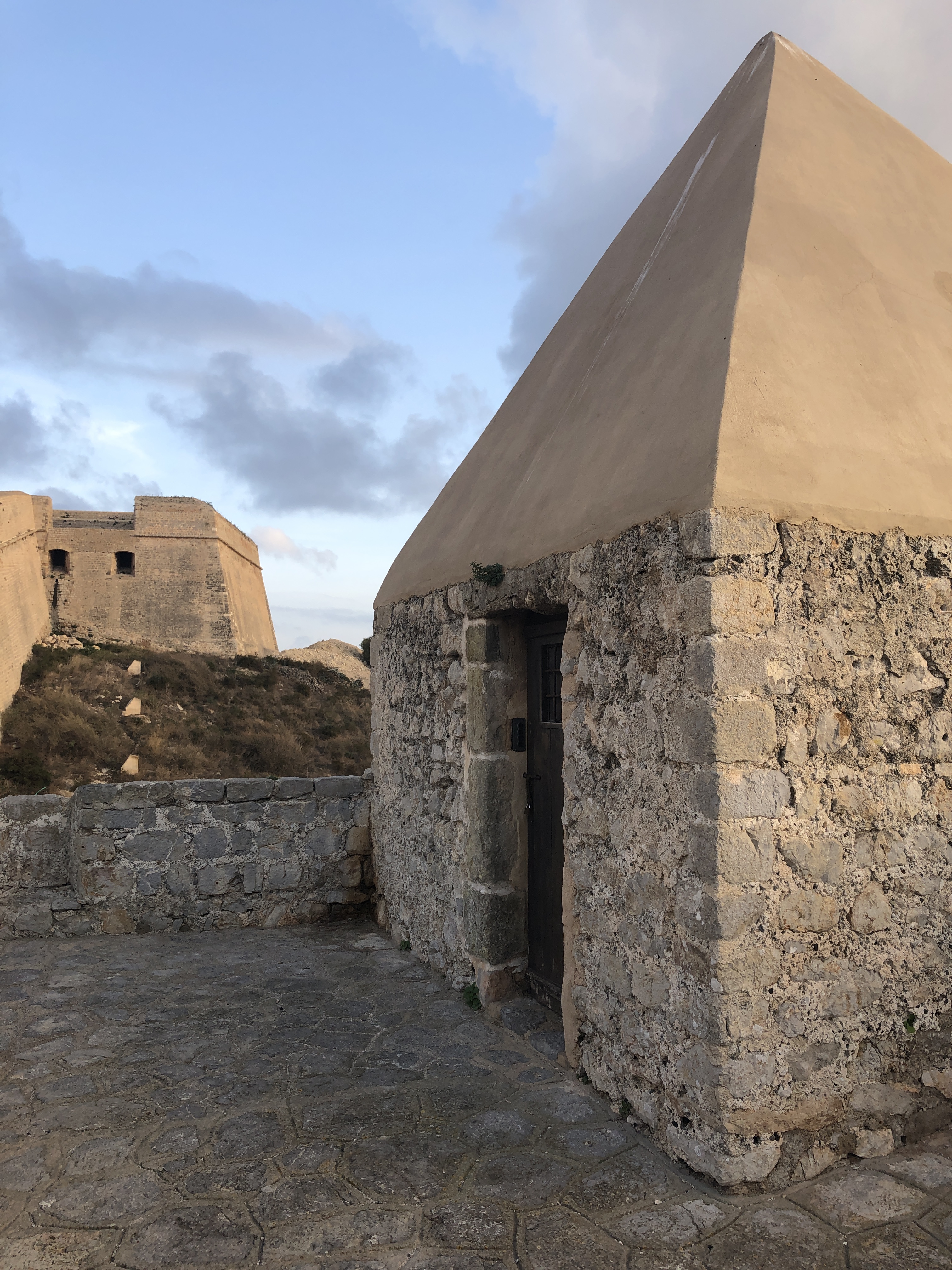
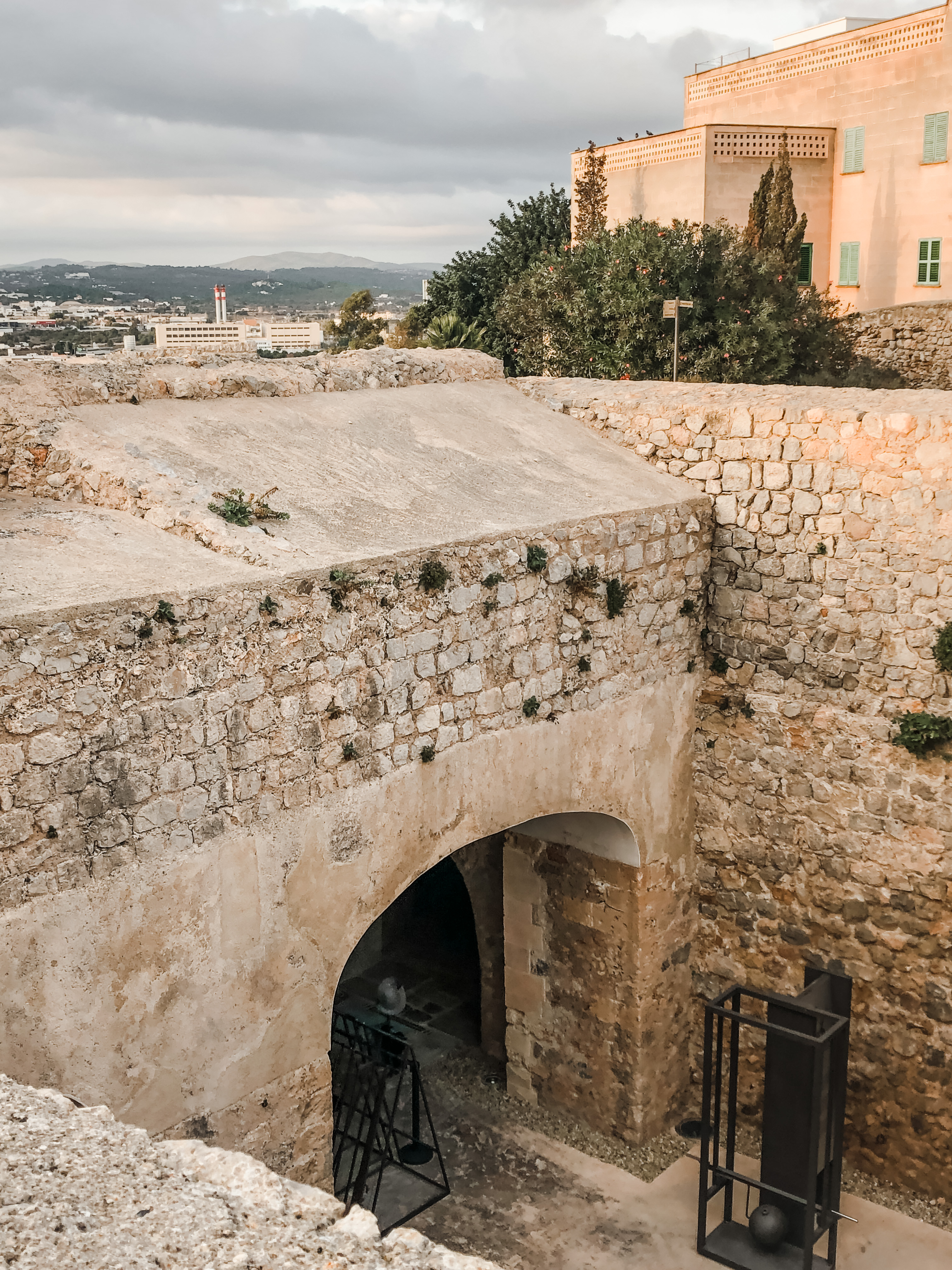
To prove that patience and thinking is an action, Jennifer Roberts, a Harvard Humanities professor, challenged her students to stare at an object for three hours in an exercise she called “deceleration and immersive attention.” To illustrate the value in waiting, she chose a painting and sat with her students. It took her ten minutes to notice a matching curve on the boy and the animal. It took her another 22 minutes to notice his fingers holding a chain were the same diameter as the water glass below. Deeper revelations came during the three hours as she slowed and decelerated her thoughts. The professor’s appreciation and understanding was enhanced through waiting and pondering. By immersing them all in the present, her student’s also cultivated a deeper relationship with time. It was not about using time wisely to get more done, but letting periods of slowness, deep breathing and pause create greater wealth in their lives. We decided to experiment on this professor’s challenge while visiting the Balearic Island of Ibiza, 93 miles off the coast of Valencia, at a Mediterranean rock fortress called Dalt Vila. The Phoenicians were the original inhabitants in the 8th century BC, and then the Romans, Goth and Visigoths and Arabs before the Christian reconquest in 1235. Dalt Vila fortification with its Renaissance walls and bastions was built as a defense against Barbary pirates, Ottoman corsairs who operated from North Africa and raided villages and islands in Spain, Portugal, France and Italy.


“Patience and fortitude conquer all things.” Ralph Waldo Emerson
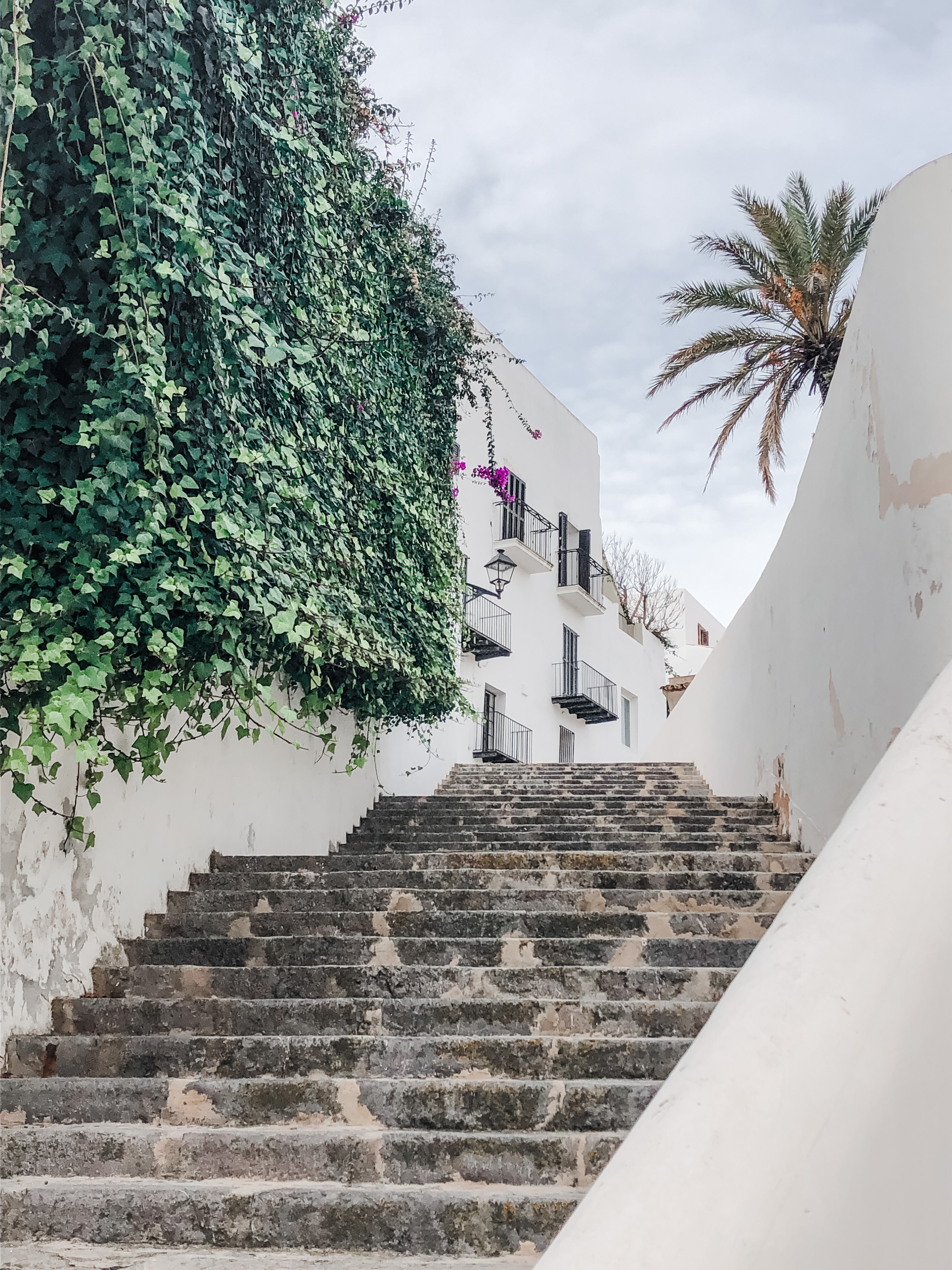
It was a long climb up the stairs to the fortress summit to see the cannons that guarded the coast but the views on the high ramparts and Bastion of Santa Lucia were breathtaking. After we caught our breath, we didn’t hurry off. We stayed and admired the sunset on the water, and the way the setting sun highlighted the windmills of Puig de Molina (Windmill Hill). We could finally imagine the army of giant windmills that Don Quixote fought. The windmills had been standing guard on Ibiza since the 15th century and used to bring energy and grain to the inhabitants of the island. Their cylindrical towers stood 8 meters or 26 feet high and rested on a medieval islamic Necropolis dug in the hillside below. People paused momentarily to see what we were looking at in the distance but climbed on leaving us alone to think our thoughts. Just staring at the windmills energized our minds and bodies. I could feel myself resetting as we paused to just observe the sea moving below the fortress. We waited hopeful for the green spark that sometime flashes when the sun dips below the horizon on the water. We were rewarded with this fleeting spectacle as the atmosphere bent the sunlight passing through it, separating the light into different colors. The reds and oranges were absorbed, leaving the green light visible for a split second. It was astounding. Even though my initial response while visiting a new place is go go go and see see see, I said to Steve as it started to get dark, “let’s come back here again tomorrow,” and he readily agreed.
“Every sunset is an opportunity to reset. Every sunrise begins with new eyes.”
― Richie Norton



‘We could never learn to be brave and patient if there were only joy in the world. ” Helen Keller
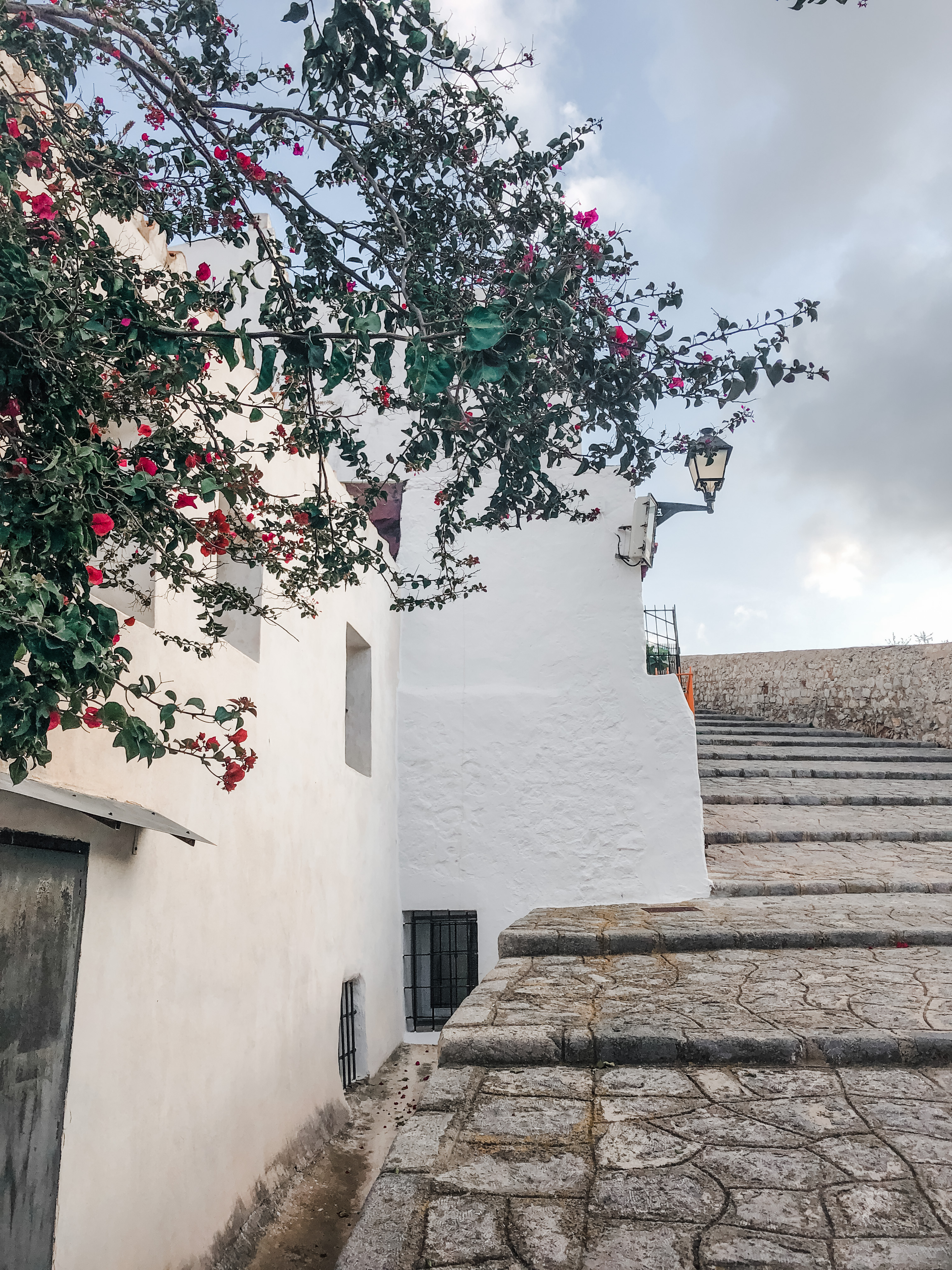
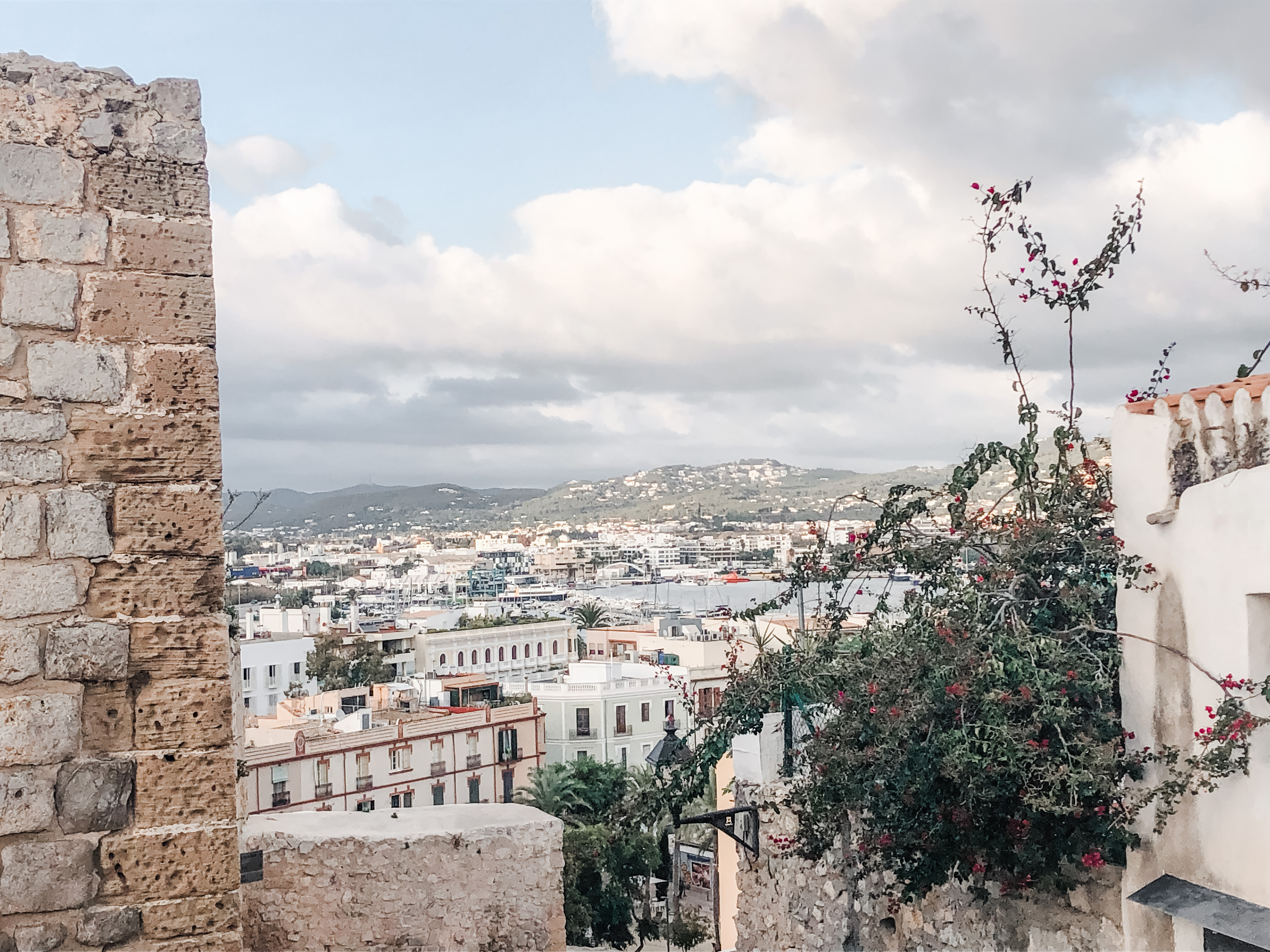
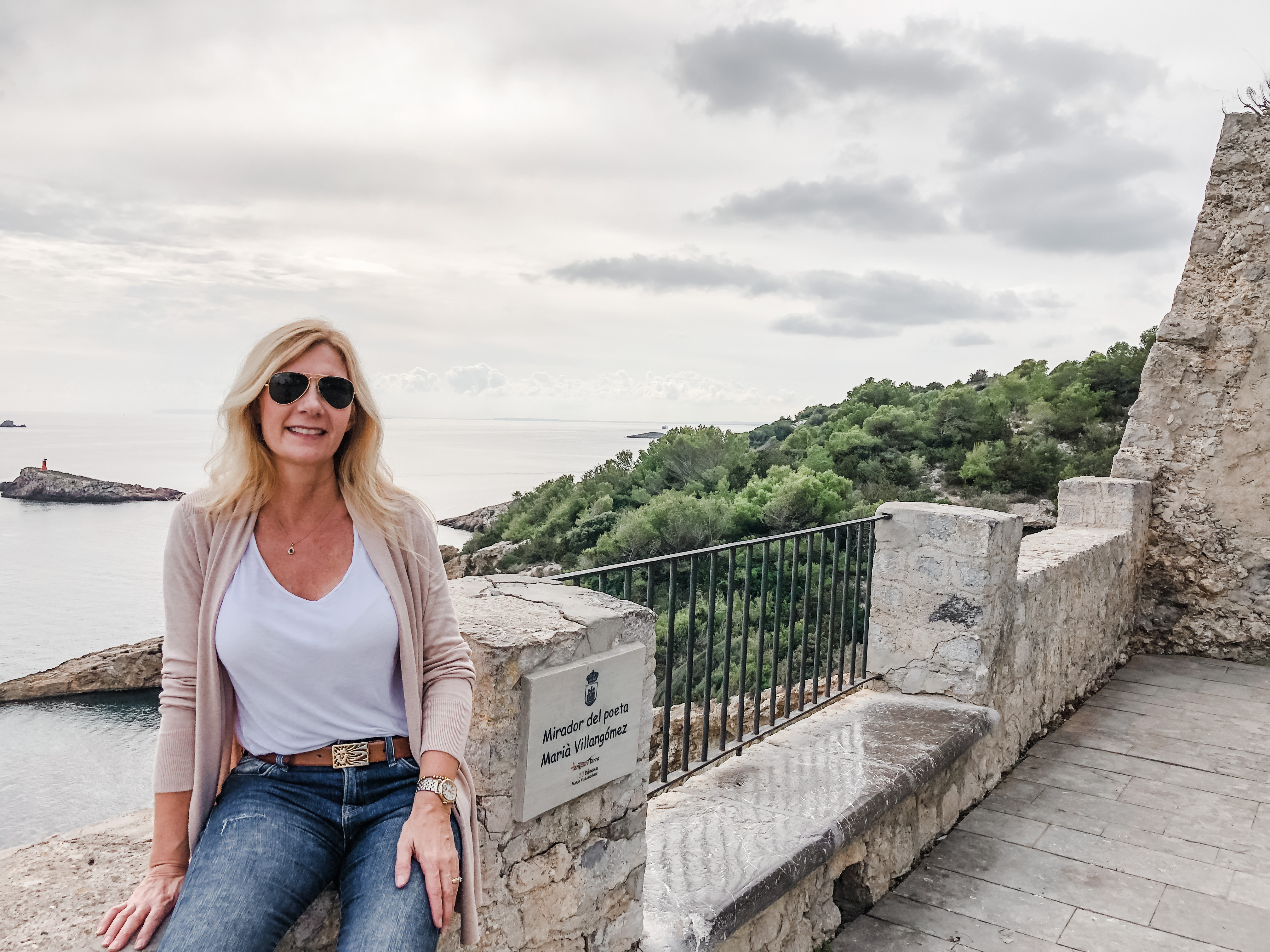
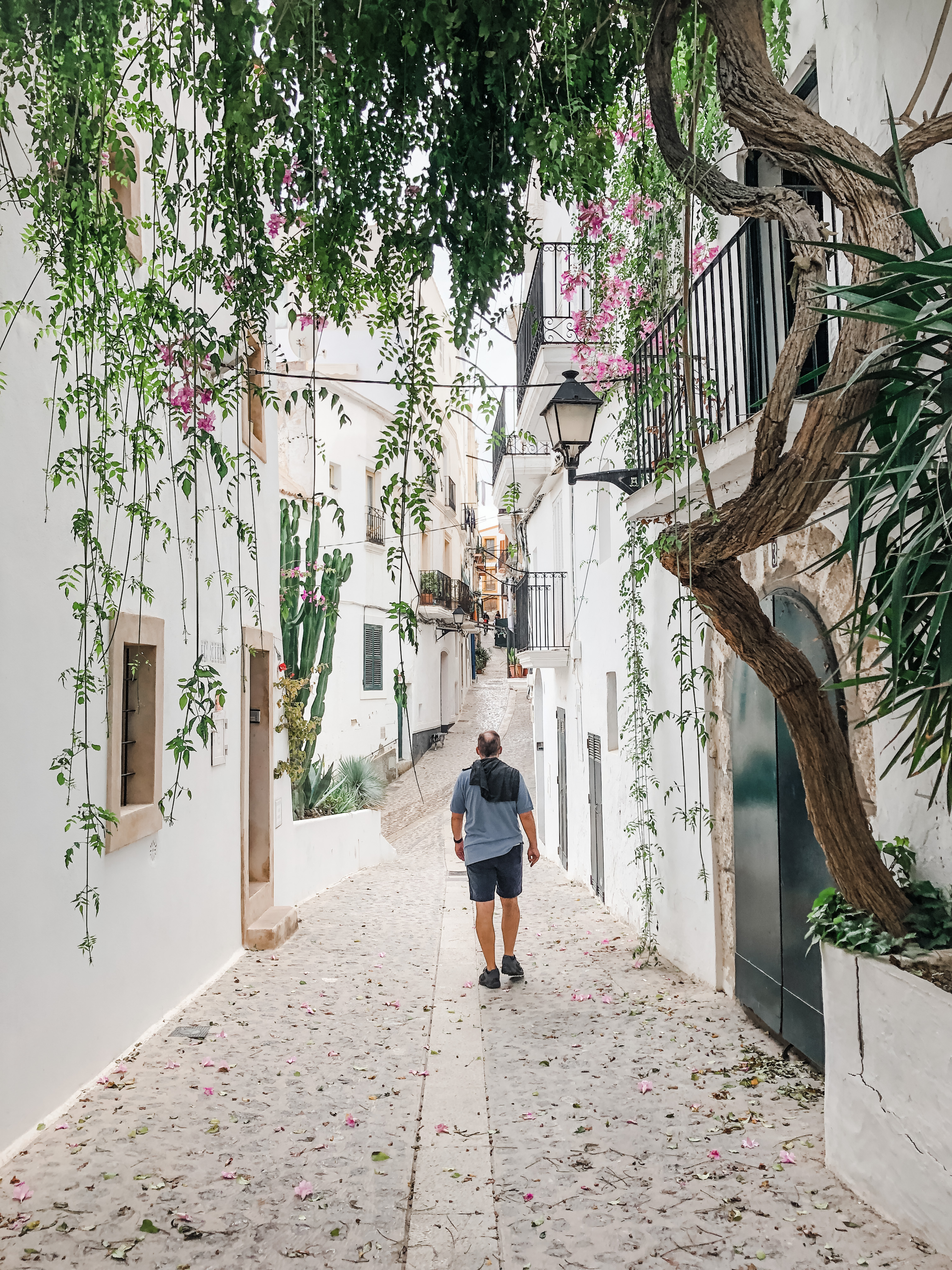
The next day we wandered up and down more steps and through tunnels and admired pink bougainvillea cascading down white walls and over fences. We poked into little churches stuck in crannies. We read little signs stuck in the walls saying someone lived there long ago. We admired green shutters and blue doors and wrought iron decorations. We watched boats and ferries come to shore and people disembark. We lost ourselves in the mini grandeurs of life. I read in the Journal of Positive Psychology once about a researcher named Dr. Sweeny who said “Typically, ‘awe’ is generated through experiences that help us recognize the ‘bigger picture’ in some way through observing grand natural phenomena, profound human experiences or incredible human accomplishments.” But I found awe on Ibiza not by the grand phenomena of Dalt Vila but through its minute details.
As I sat on the old Renaissance wall of Dalt Vila, looking at the vibrant Mediterranean Sea surrounding Ibiza, a novella by Margaret Atwood, “The Penelopiad,” fluttered through my mind. It is a modern rewriting of The Odyssey that recapped Penelope’s story. She waited twenty years for Odysseus to return and while she waited she raised her infant son Telemachus and wove a death shroud every day and unpicked it every night, in an attempt to waylay her suitors wanting her to remarrying. (She told the men pursuing her, who said Odysseus was dead, that when she finished the death shroud she would pick a new husband). Telemachus, now 20, grew tired of waiting for his father and waiting to inherit his kingdom and Penelope said to him: “Water goes where it wants to go, and nothing in the end can stand against it. Water is patient. Dripping water wears away a stone. Remember that my child. Remember you are half water.” In the vein of Penelope, I thought about patience like water doing its magic during the great pause. Did we wear away the nonessential in our lives drop by drop? Did we succeed in unearthing wisdom while we waited? Like the Jacaranda, did we bloom slowly and surely by tapping into dormant knowledge inside us? Was the real part of us waiting to happen, become unearthed when we no longer ran from stillness, solitude and ourselves? Maybe that is the Para Llevar, the take away.
“From our solitude we shall create, forge songs, pour in the reflection of the stars and refresh the mind about the silk-ridden roads that wait for them who have forgotten to feel.” Tara Estacaan
 The Unhurried Traveler