The End … or the Beginning

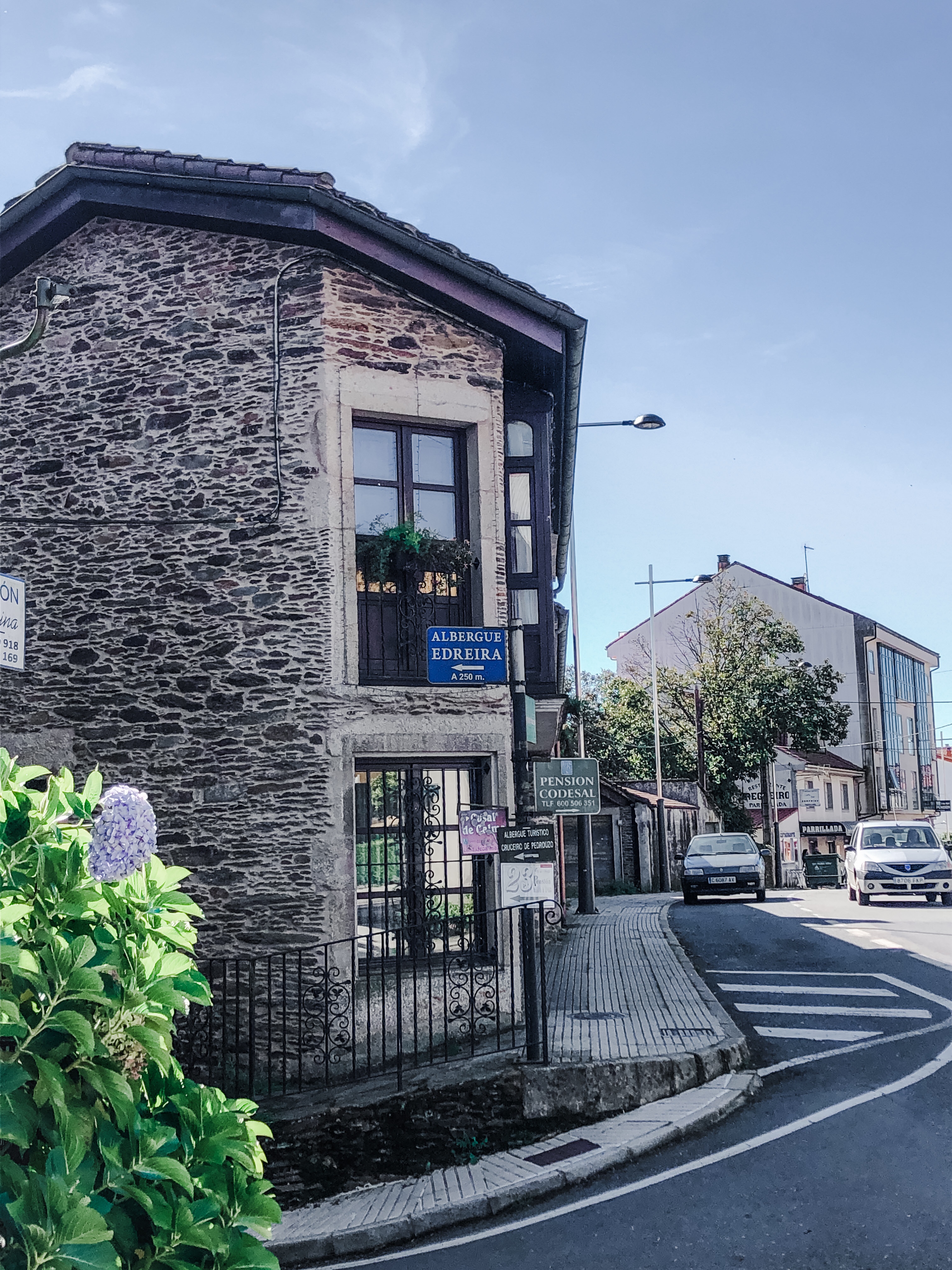
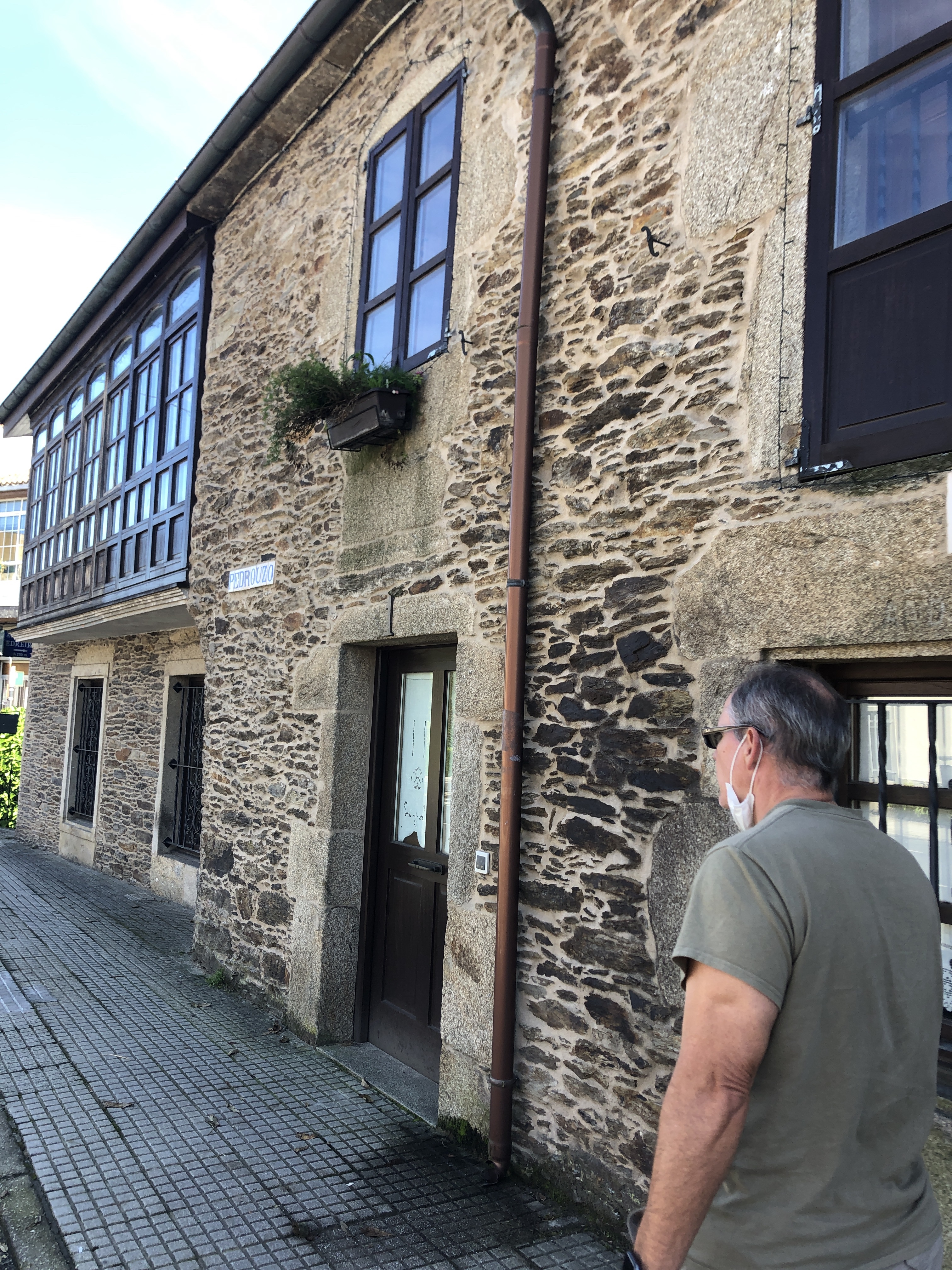
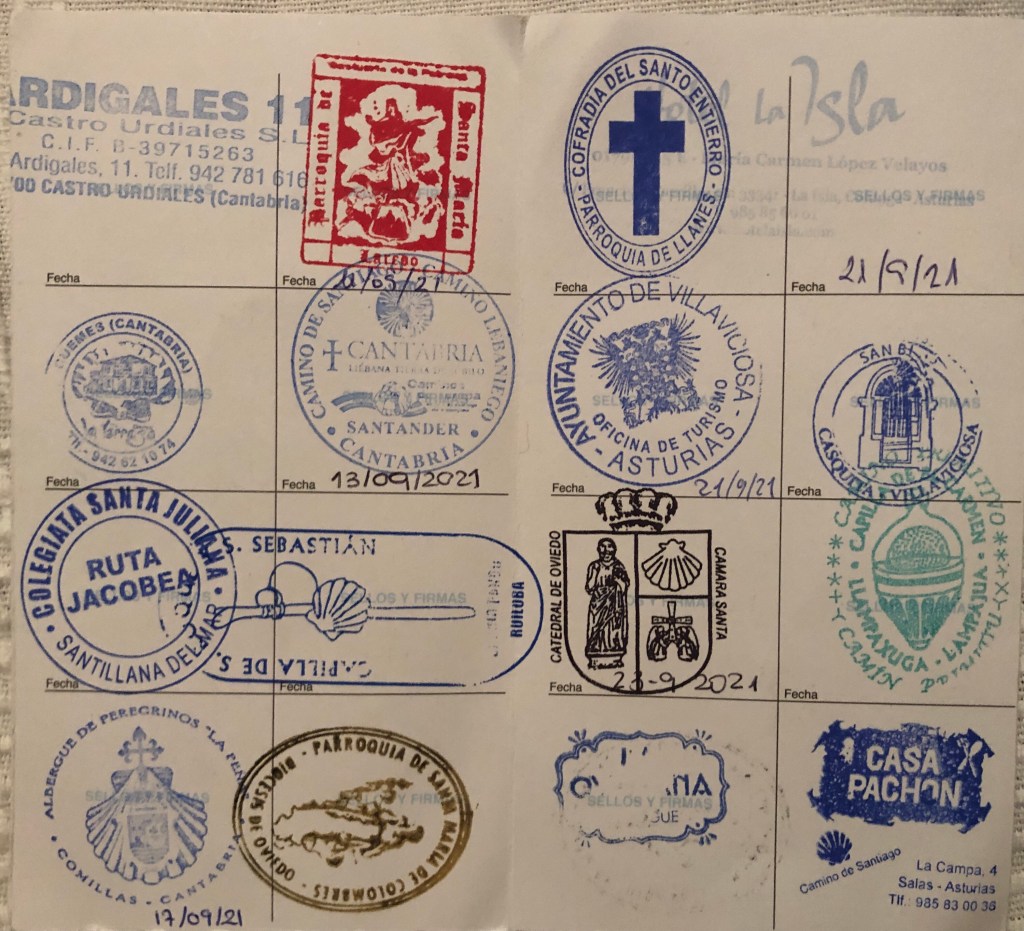
CAMINO STAGE 34: O Pedrouzo to Santiago de Compostela. El Camino De Santiago: 13 Miles, Day 36, last day
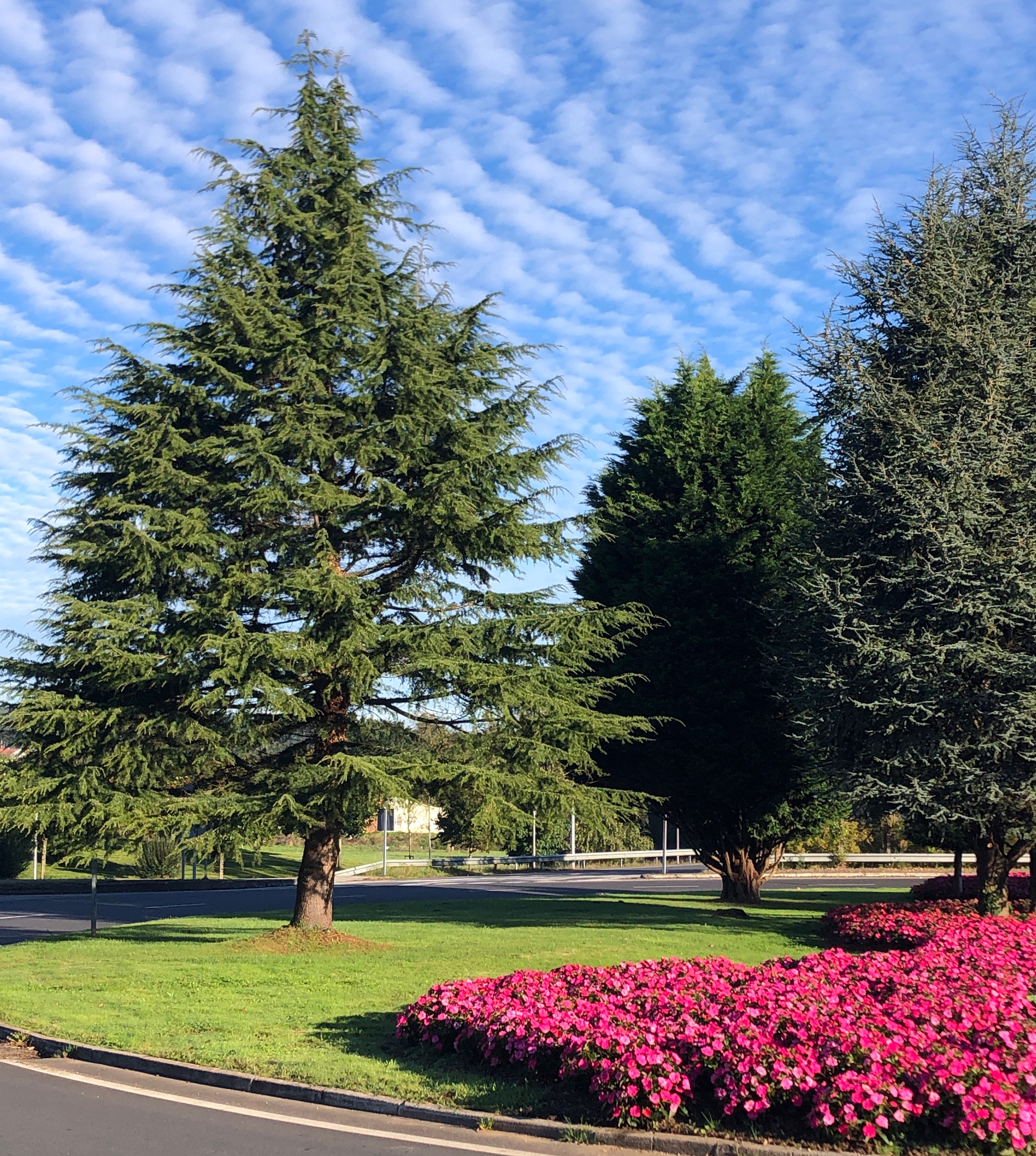
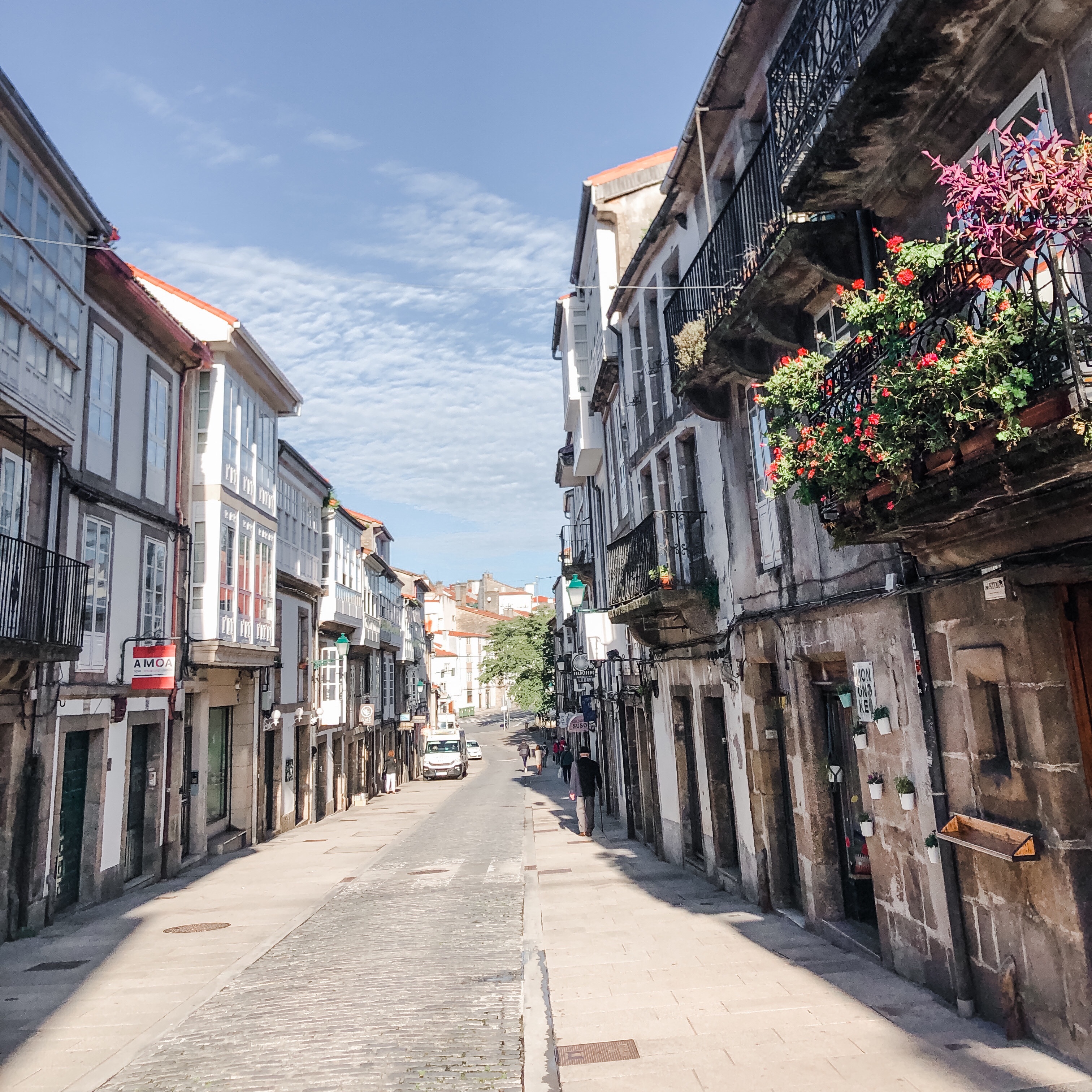
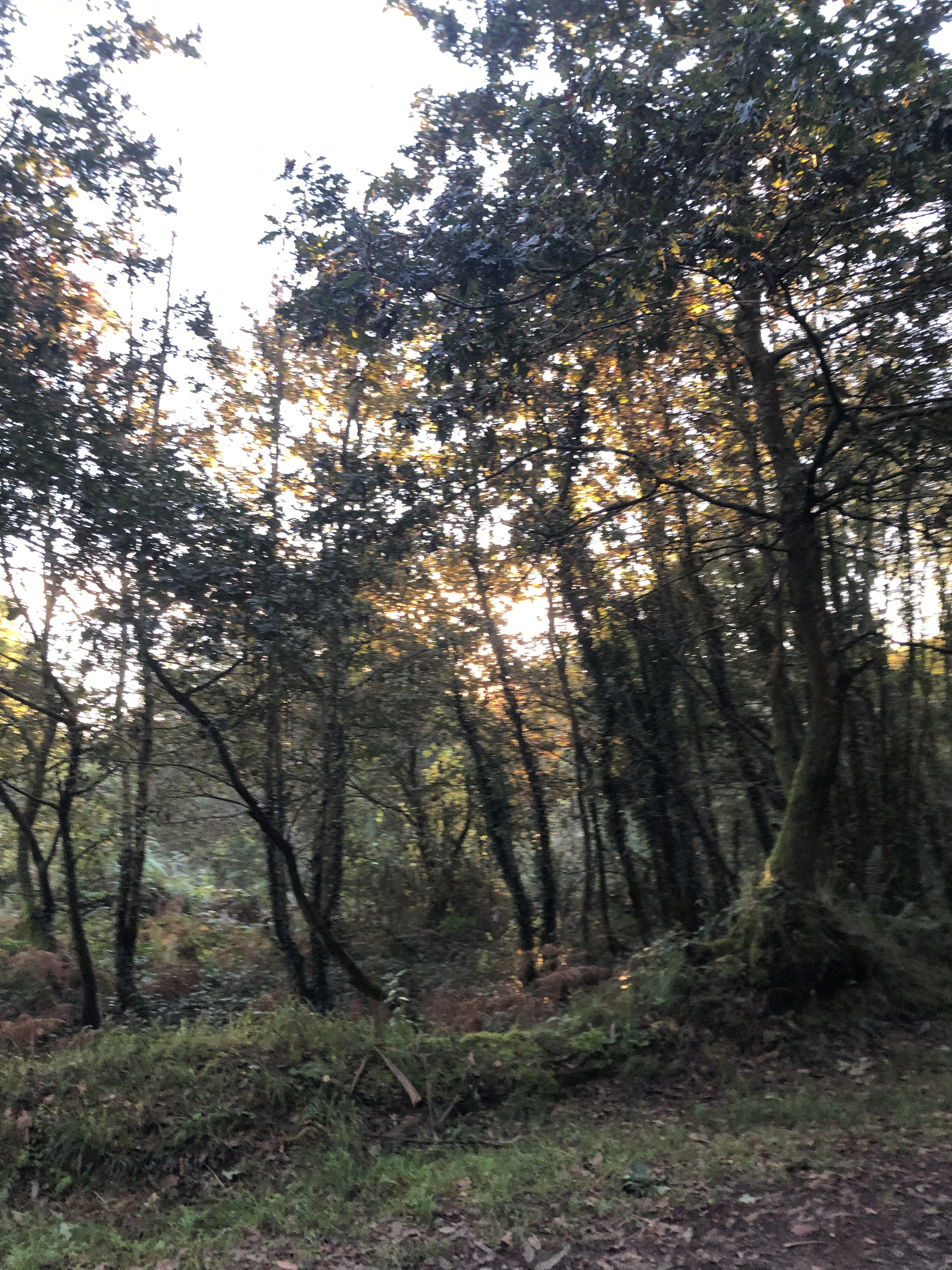
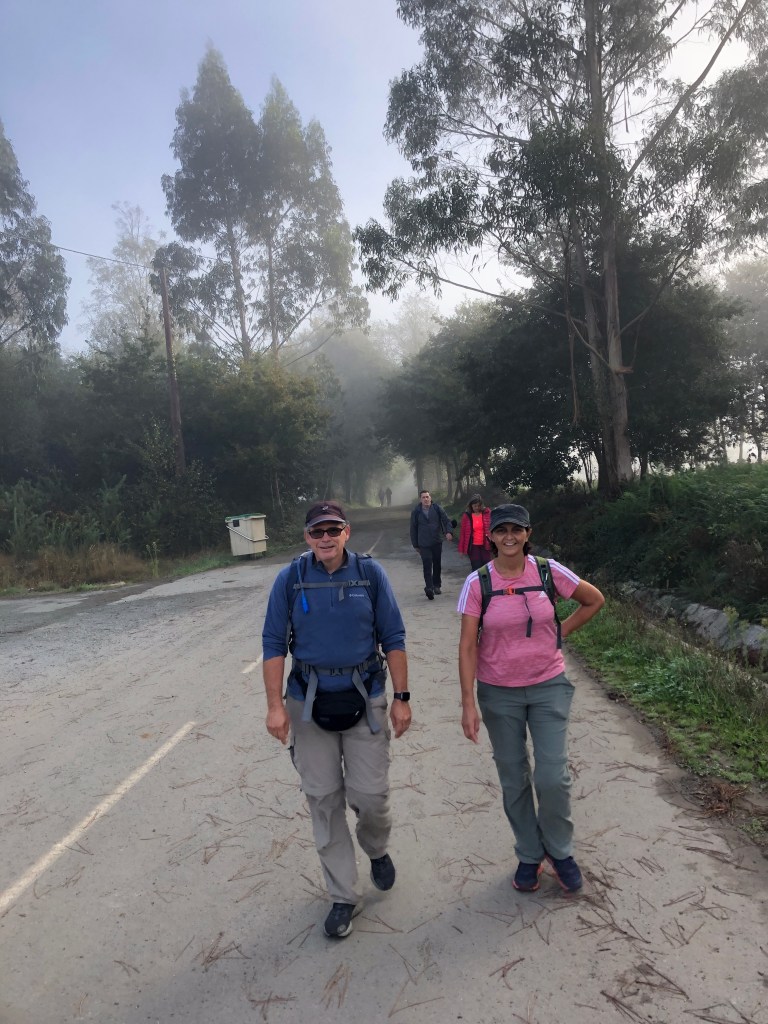
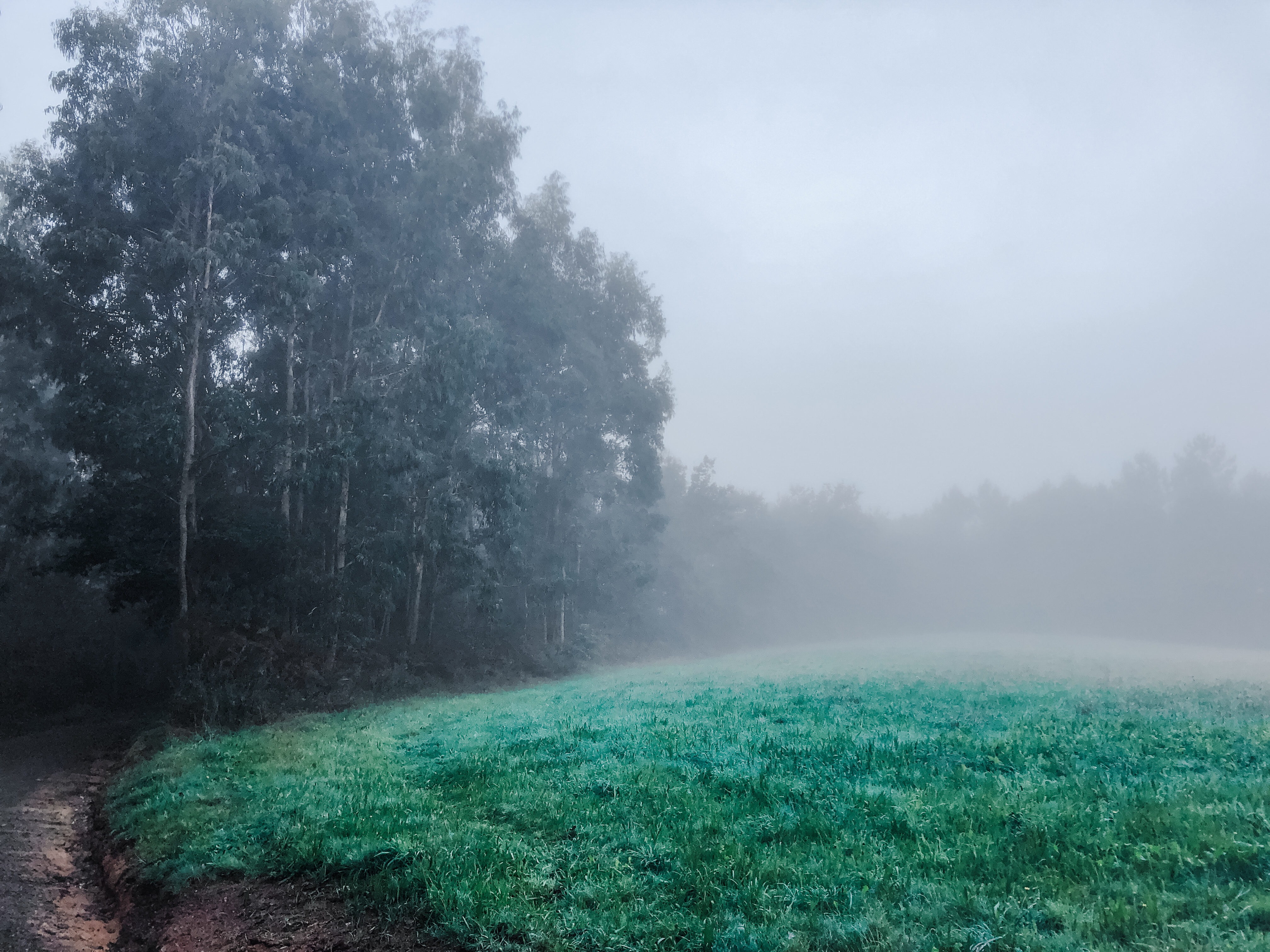
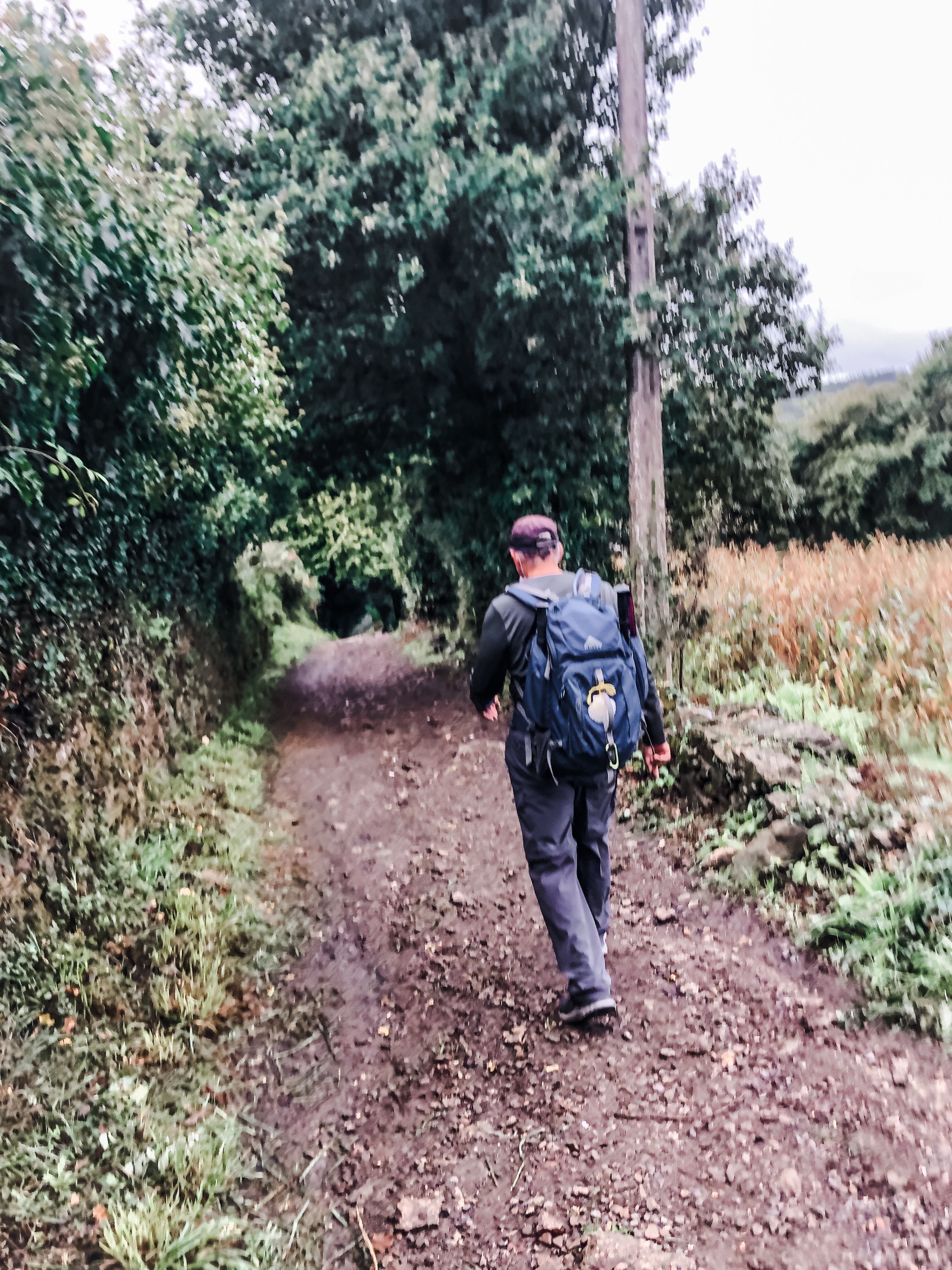
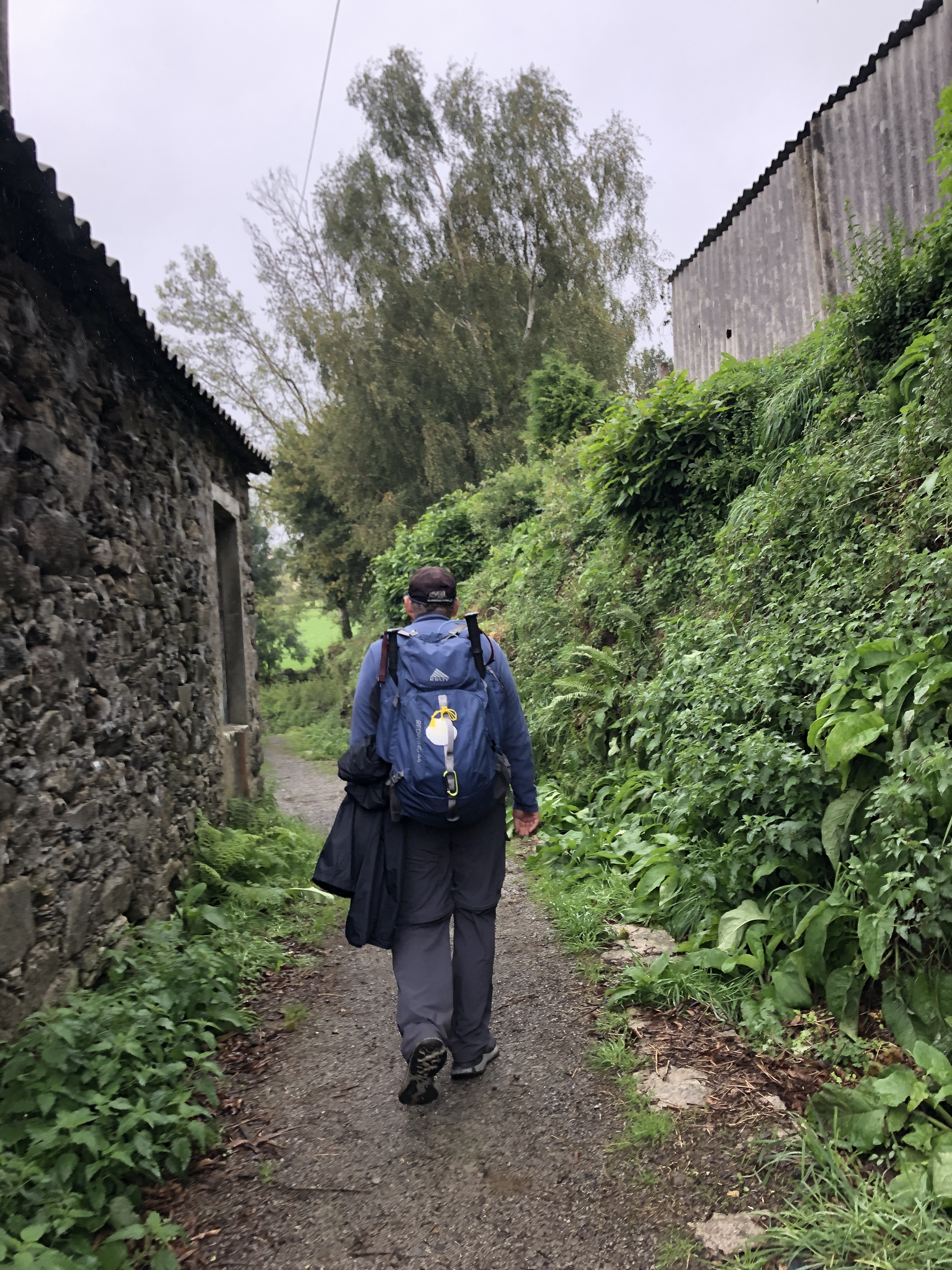
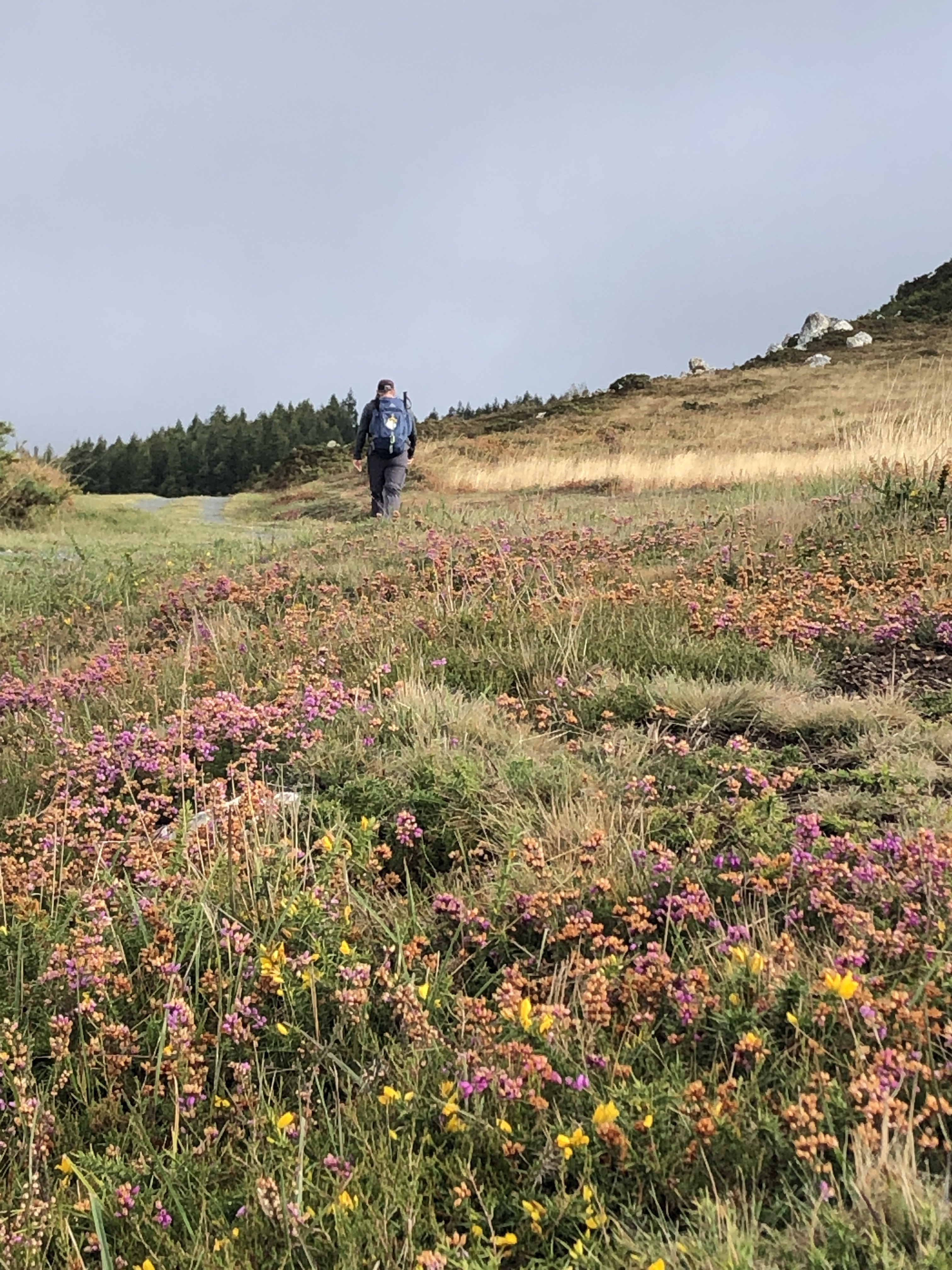
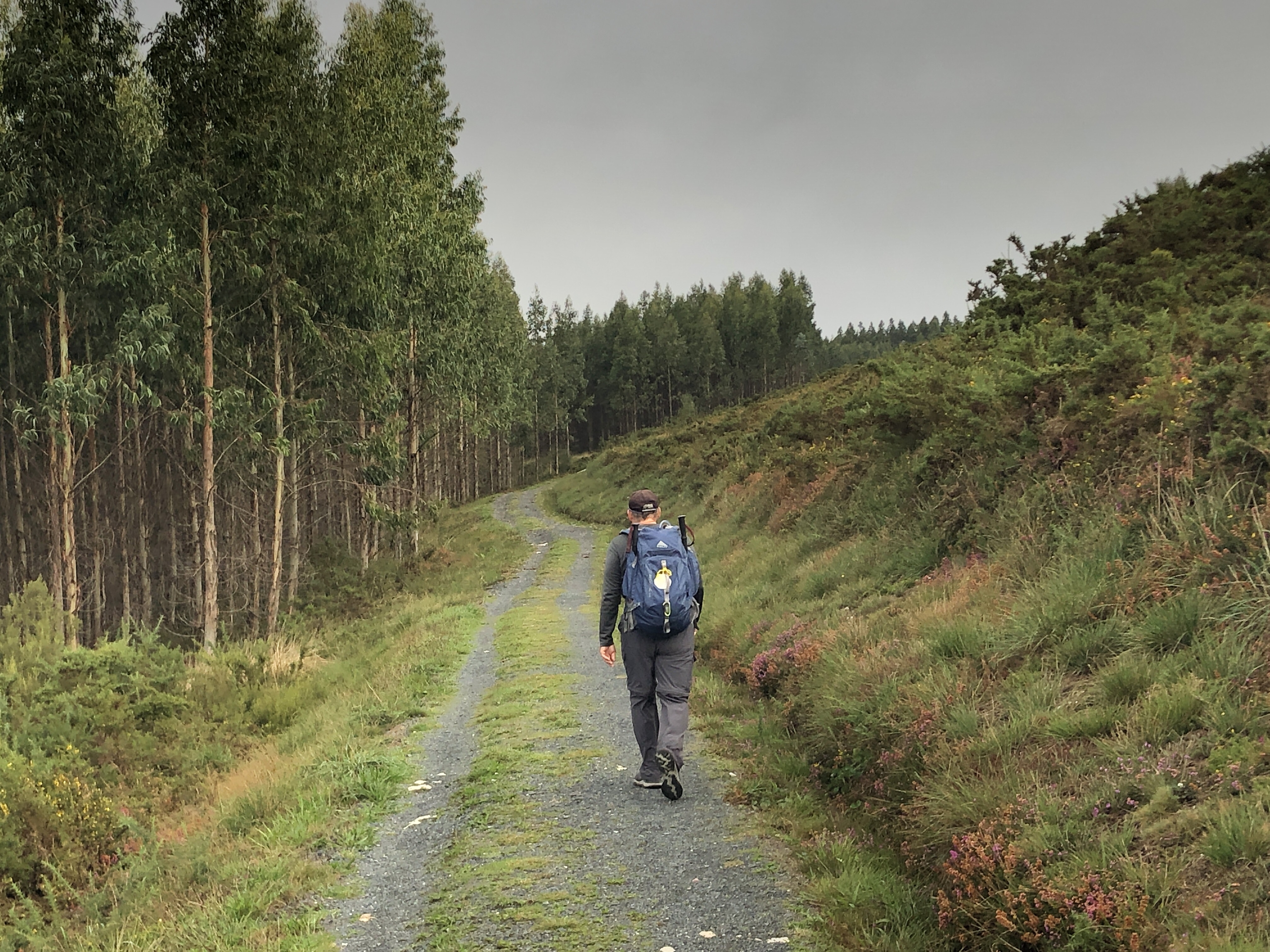
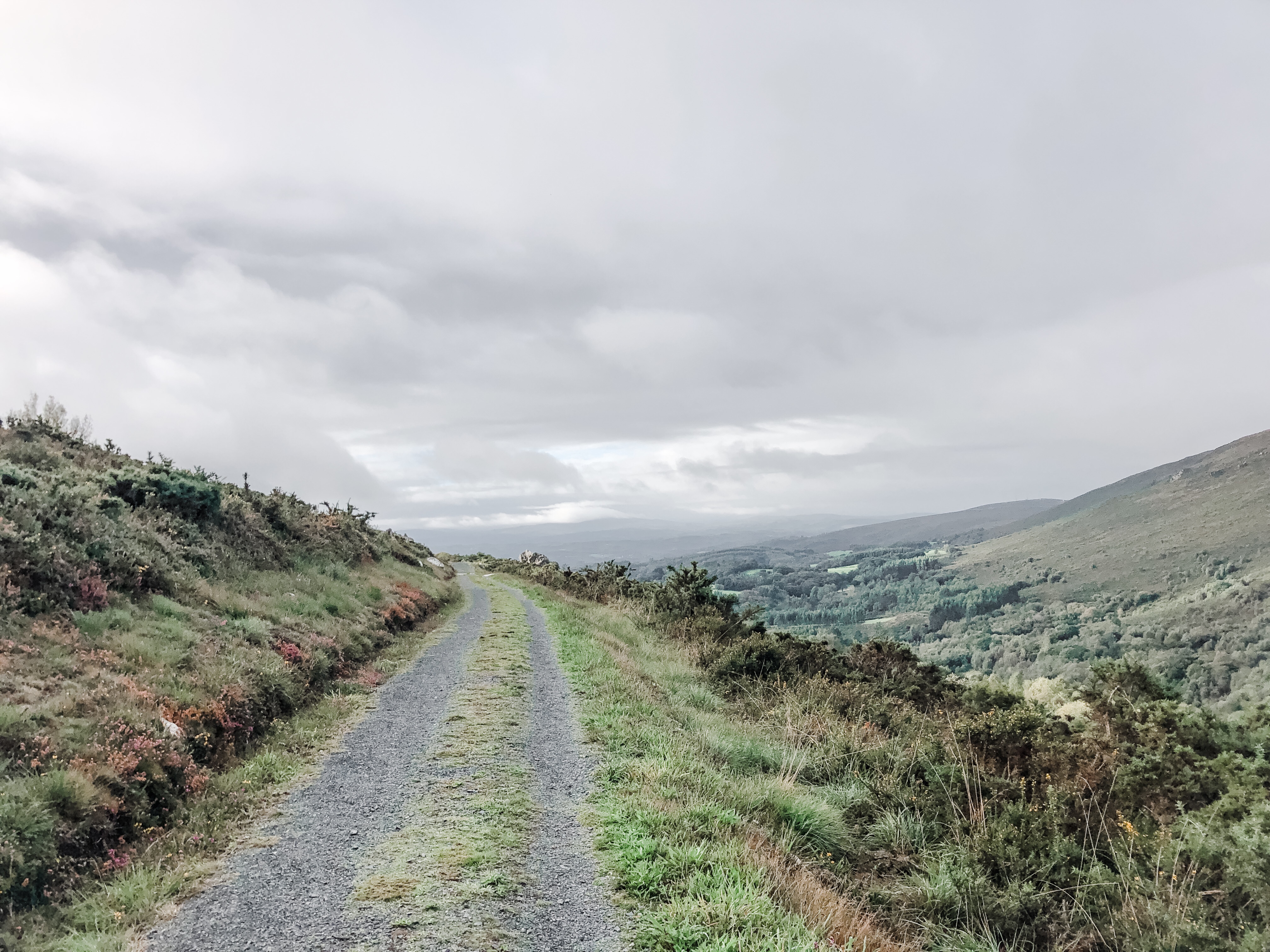
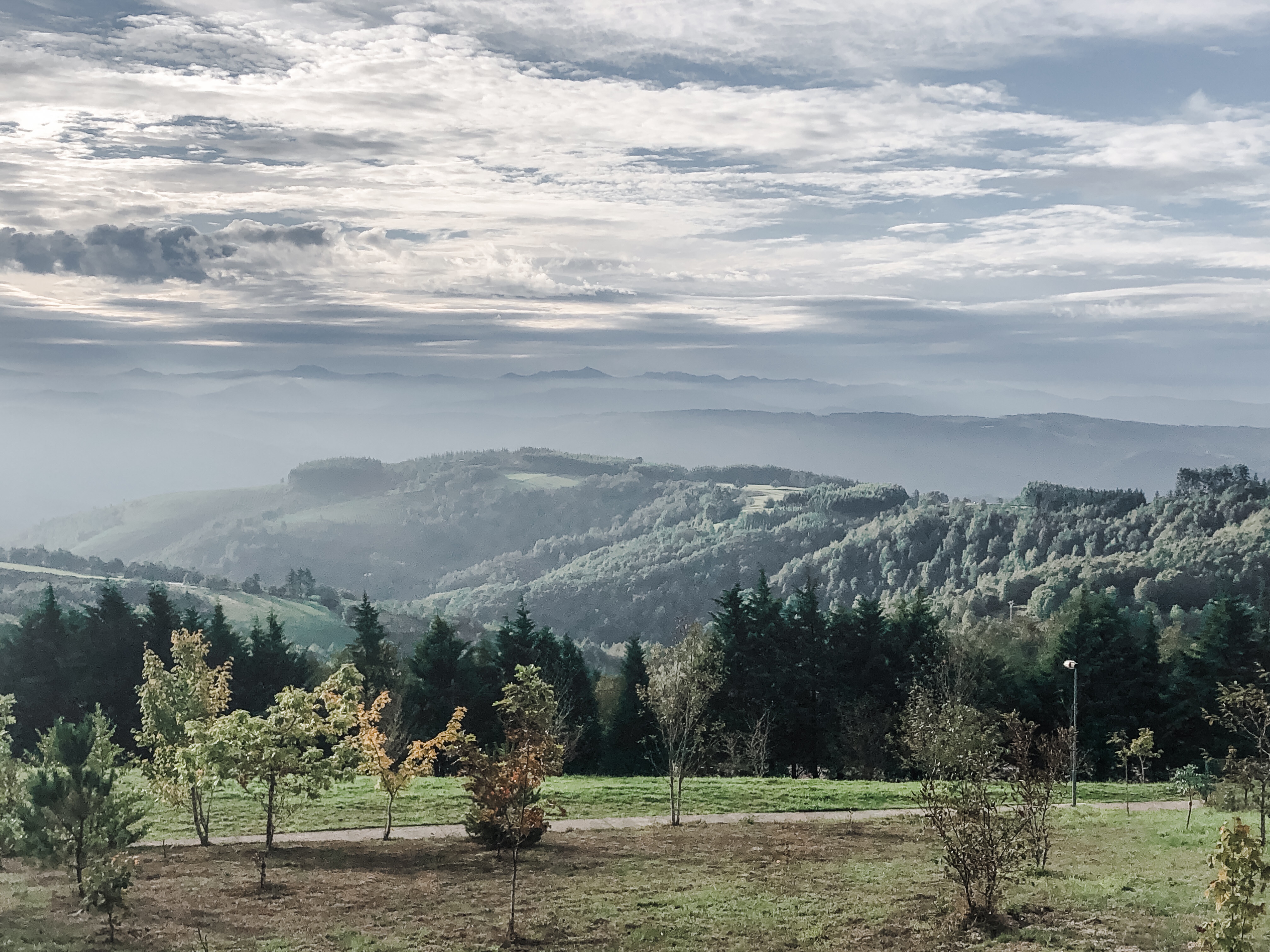
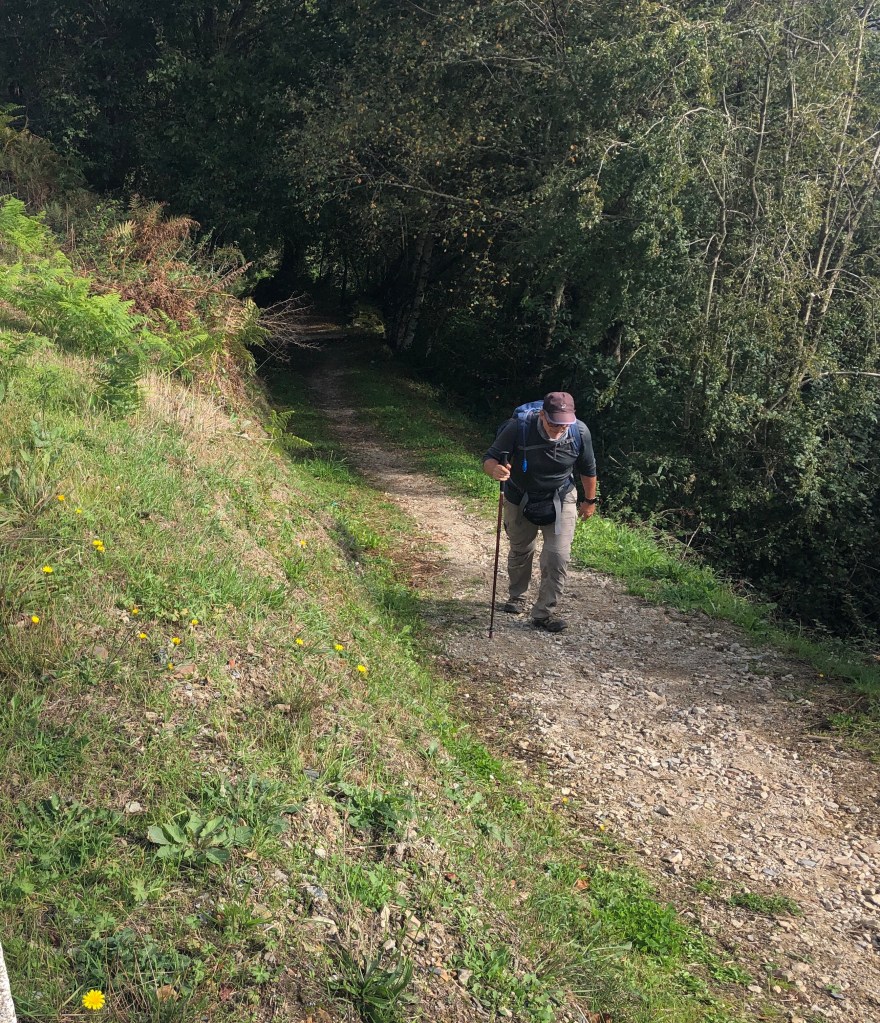
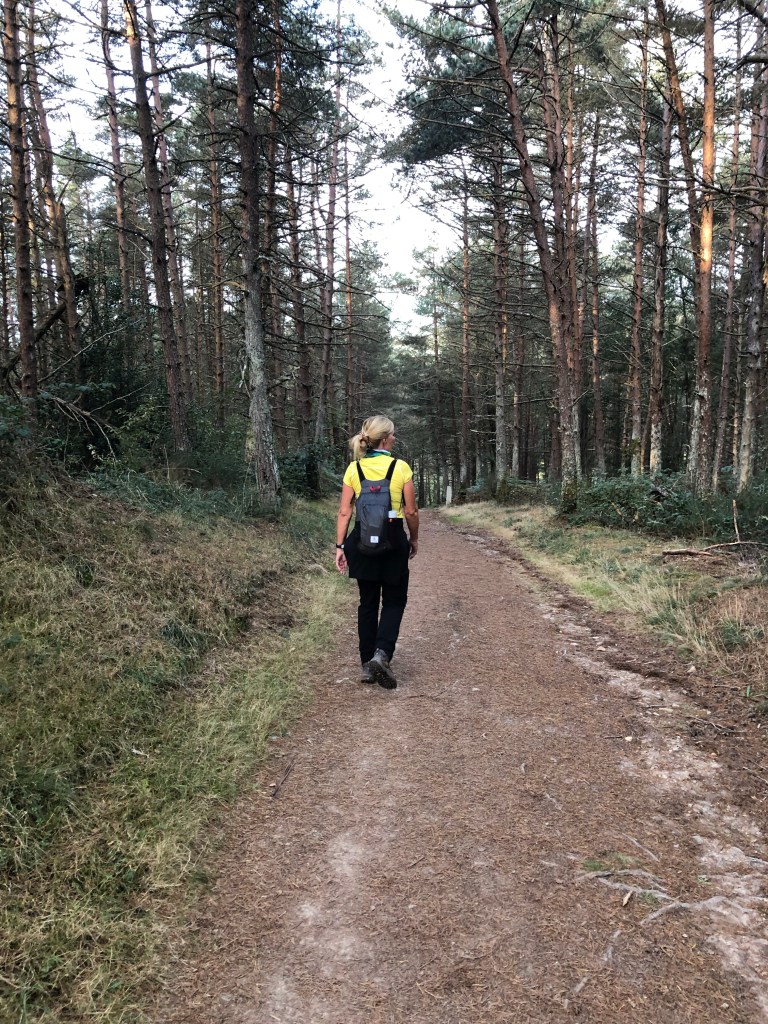
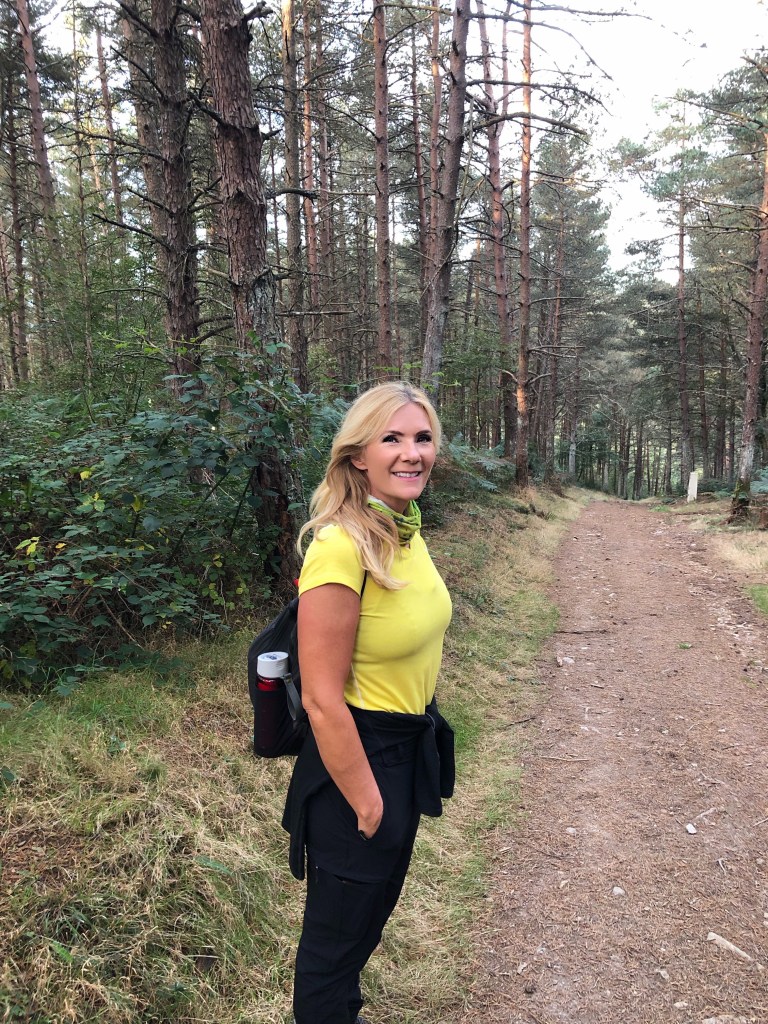
We stepped out into the inky darkness with our headlamps at 7am, as it was a 4 hour walk to Santiago for the final 13 miles. We wanted to be there before noon, because not arriving early enough could mean not getting a Compostela certificate. 900+ pilgrims have been arriving everyday in Santiago in October, and the lines are so long some pilgrims get turned away. With our headlamps pushing back the darkness, we passed several pilgrims who were also making an early start. After climbing a few hills, we found ourselves in a stretch with no one in front or behind us. Serenaded by the birds and greeted by an orange sunrise seemed a fitting way to complete this last stage as we entered the outskirts of Santiago.
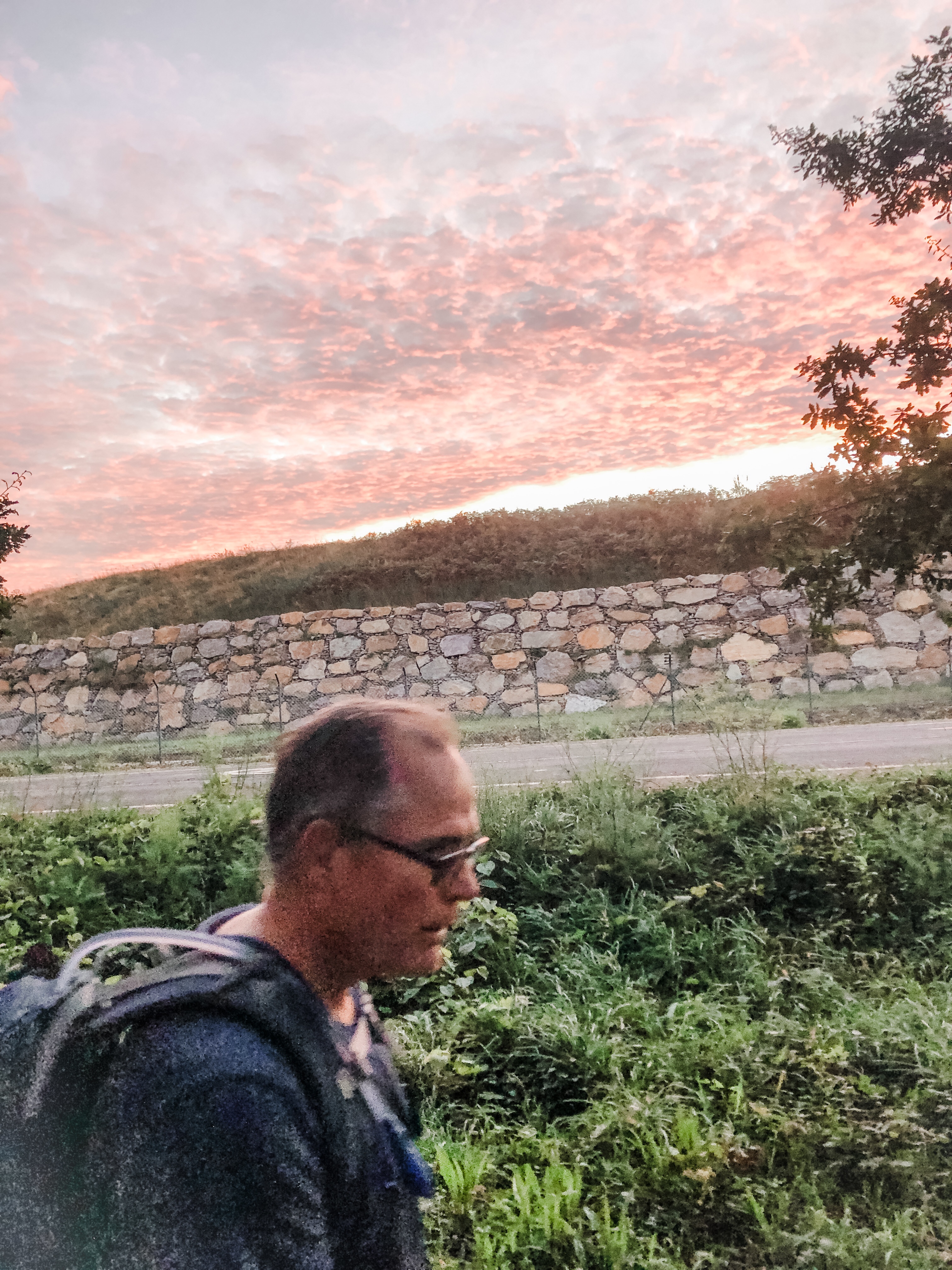
Five miles away, we encountered a mob of “tour-egrinos” (peregrinos) or pilgrims who take a tour bus and just walk the final leg and few miles into Santiago. We talked about the differences of those on a 10k or 100k vs a 800k Camino — the exterior comparison of muddy boots, dirty pack and hobbling “Camino shuffle” from aching limbs being the most obvious. We concluded the external comparison of pristine boots and normal gait wasn’t the point…. each pilgrim leaves with a physical manifestation of the road walked (Compostelas, t-shirts, patches, tattoos, or bruises, blisters, knee braces, bandages, etc)…….but internally, that is where the true Camino differences lie. Inside longterm pilgrims are the lessons gleaned while walking for weeks—Understanding limitations, strengths, what makes you tick and what keeps you going when you are beaten. Camino lessons from the highs and lows, the rain and mud, making unlikely friends and walking miles in their burdened shoes have intrinsic weight that remains long after the pack is set down and the trail ends.
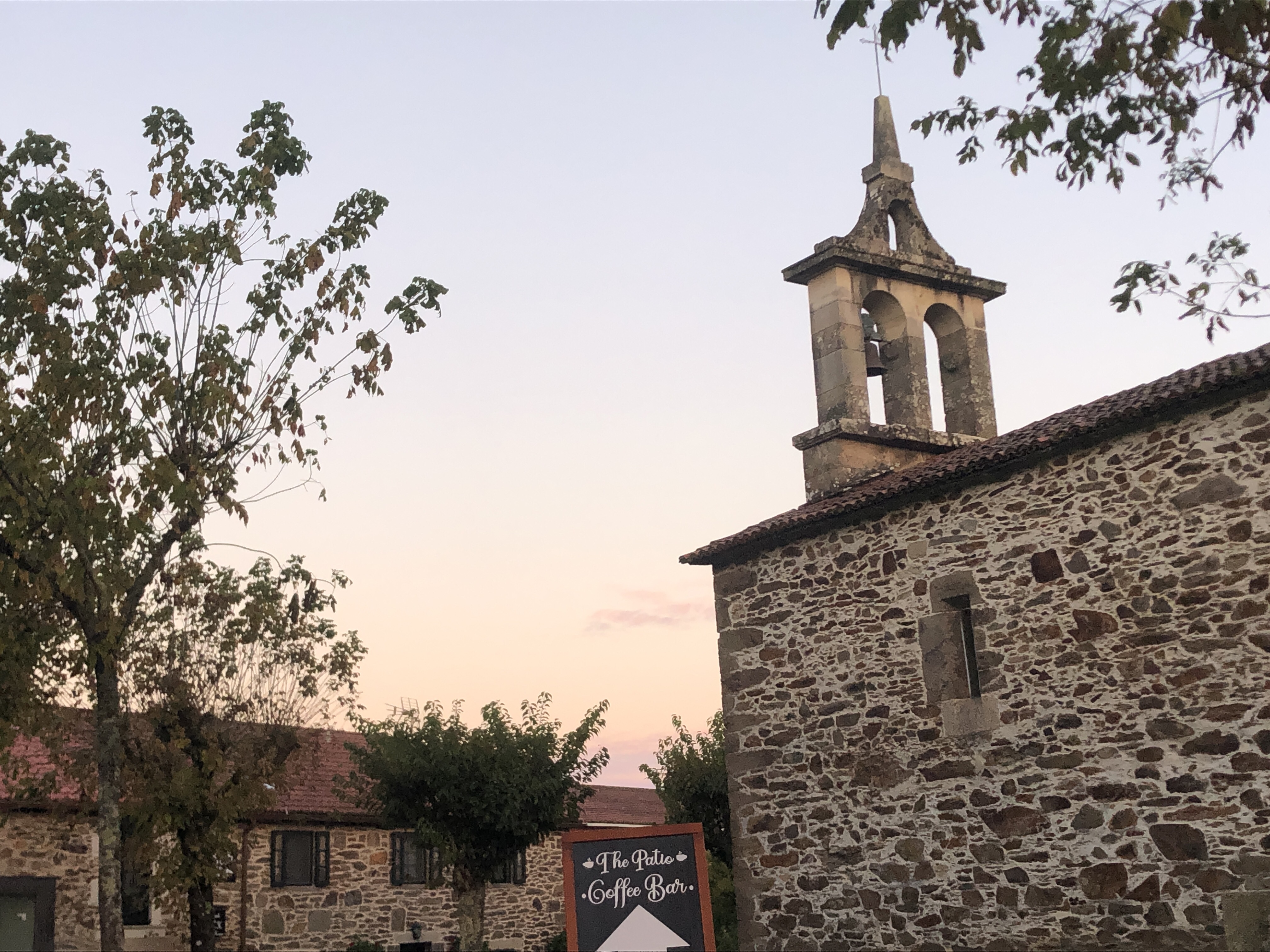
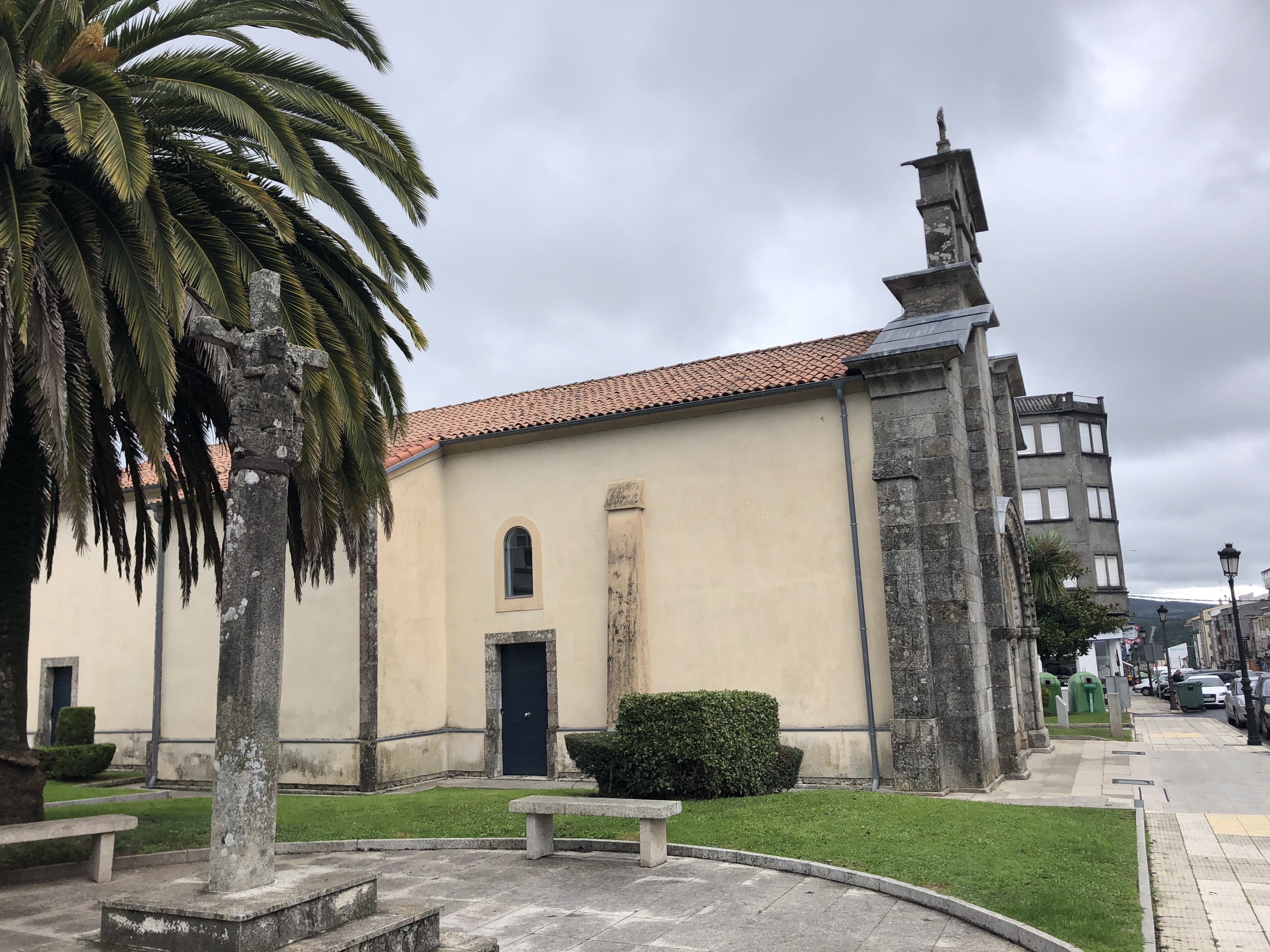
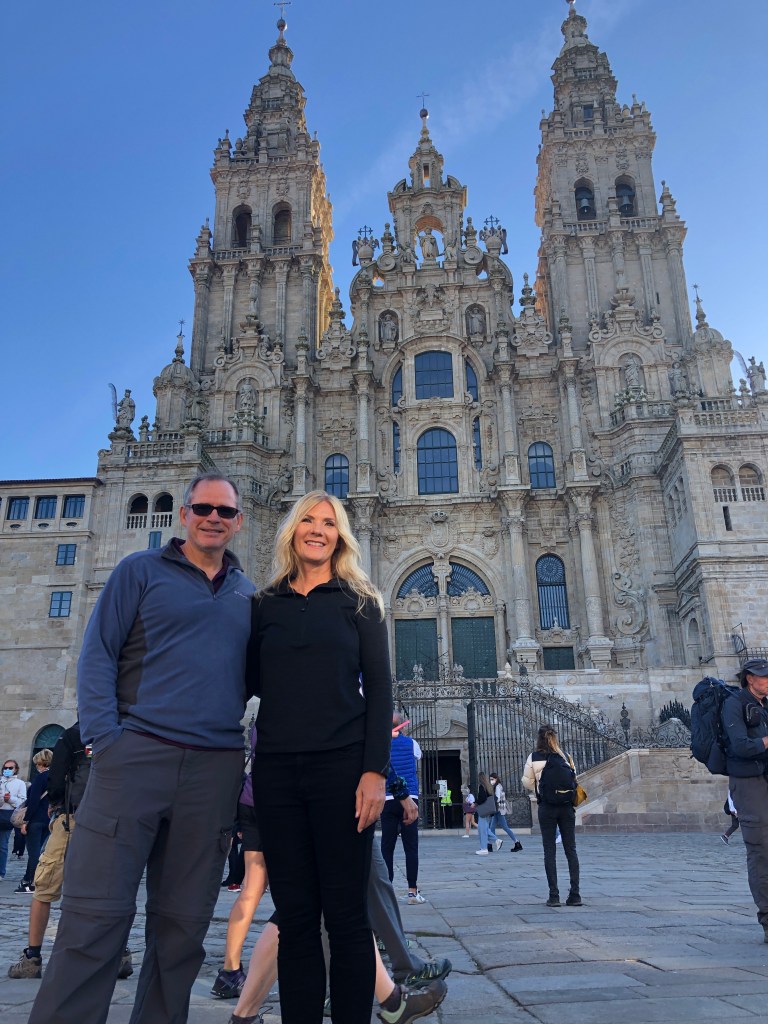
Entering Plaza do Obradoiro- Santiago Cathedral

There is something deep within us that sobs at endings.” Joe Wheeler

Bagpipes and flutes greeted pilgrims as we entered the plaza to the Santiago Cathedral. The excitement and exhaustion was palpable. Setting down our packs, flashbacks of the last 500 miles where we had traversed mountains, stumbled along streams, with rocks in our boots, aching knees, and bleeding feet all while we crossed Spain, flooded back. Tears bubbled to the surface. It was finally over. The feeling of completing a goal was exhilarating.

Within a few moments, the inevitable moment arrived, the dawning realization …. “It’s the end… now what do we do?” I felt immediately a deep knowing that Camino never really ends…. It will continue in our lives long after the blisters heal and feet recover. The Camino leads to other roads, ones not taken, with courage to go down them now. A Camino ending is just a beginning.

Every new beginning comes from some other beginning’s end.”

Lucius Annaeus Seneca

After all our journeys, when the end comes, there’s always a fresh page to look forward to and new book to begin. Here’s to weaving a new story …. Chapter 1…
Our lives have ebbs and flows. Ends and beginnings are illusions. Starting over is nothing more than recognizing The Pause before picking up your thread and continuing to weave your own story.”

Molly M. Cantrell

Nearing the End

CAMINO STAGE 33: Arzua to O Pedrouzo Camino Primitivo route merged with Camino Frances on El Camino De Santiago. 14 miles, Day 35, 2 days to go

I was told to be prepared for the emerging hordes and bus loads of 100 km Camino walkers when the Camino Primitivo merged into the Camino Frances. I was not prepared to climb the first hill and see this….

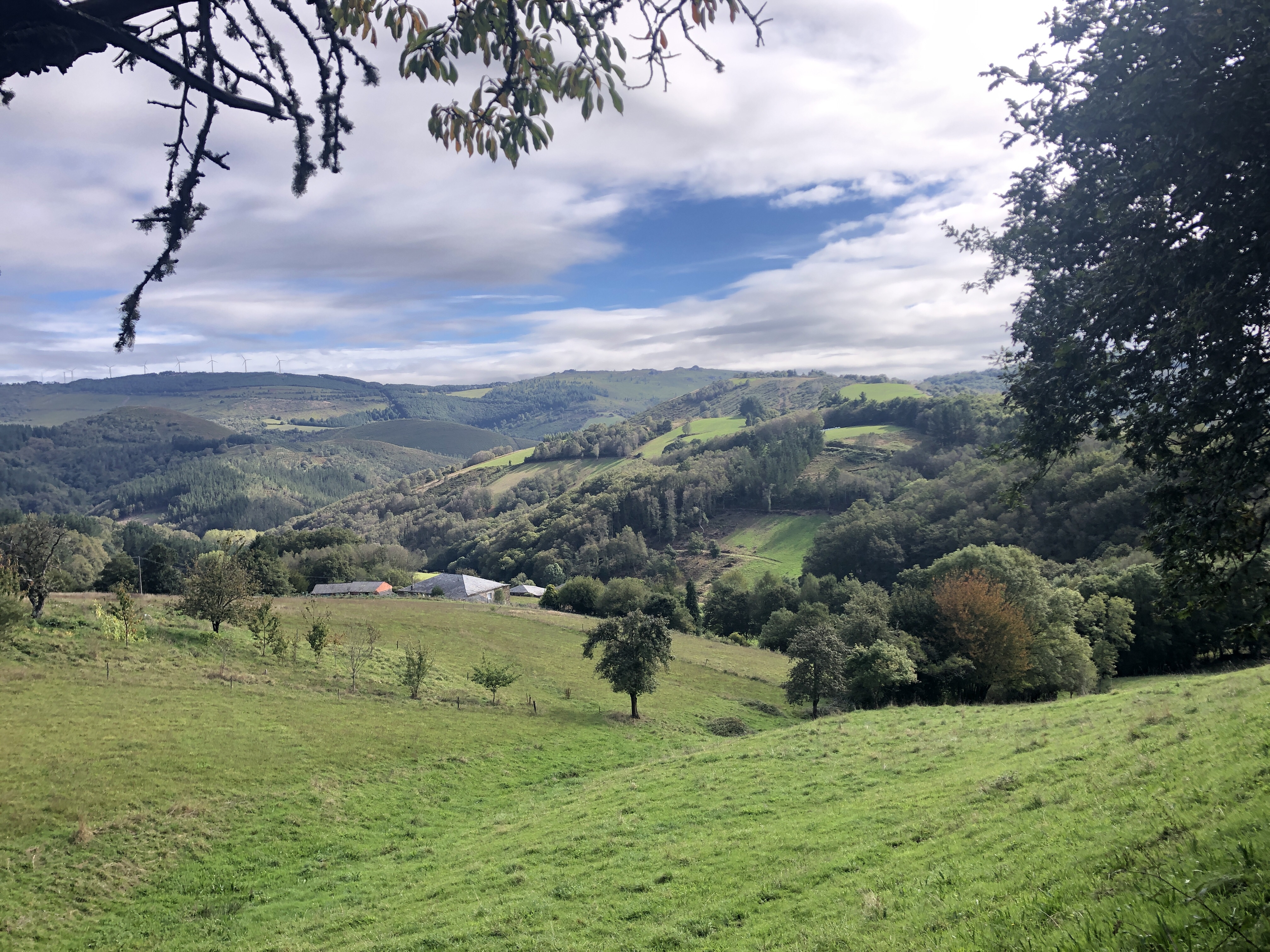
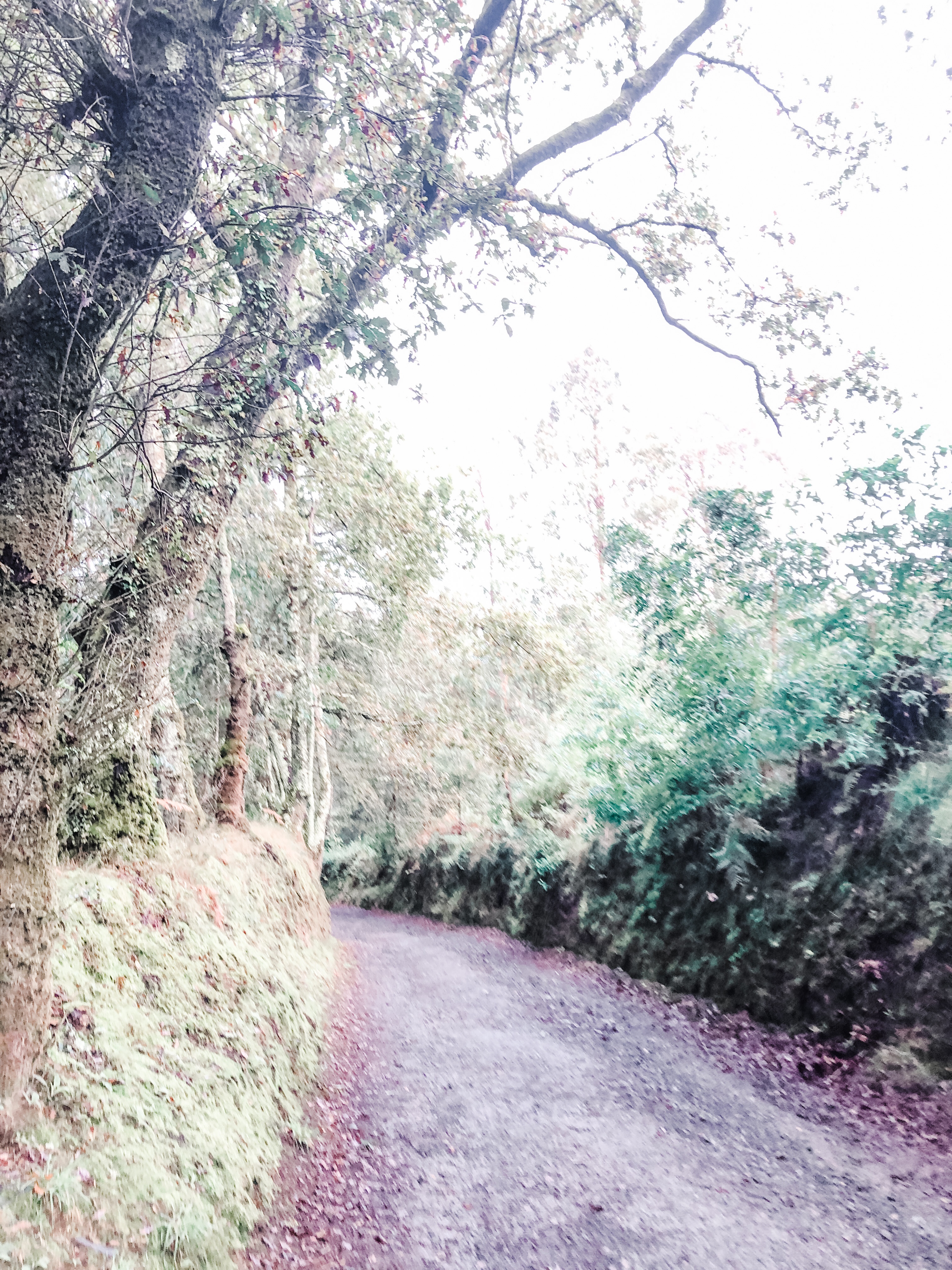
We chose the Camino Norte and Caminó Primitivo to be alone in nature. This was our usual view and we enjoyed the solitude and tranquility.

Upon reaching the crowds, we started passing people right and left, and eventually found our Camino Primitivo friends. They looked as shell shocked as we felt. We stopped at a cafe for sodas and to decompress. When the café filled with the pristine shoes and mini packs of the 100 km walkers, we the footsore, bedraggled 800 km peregrinos hit the trail again and were soon accompanied by three little dogs that followed for miles.
Camino Primitivo friends

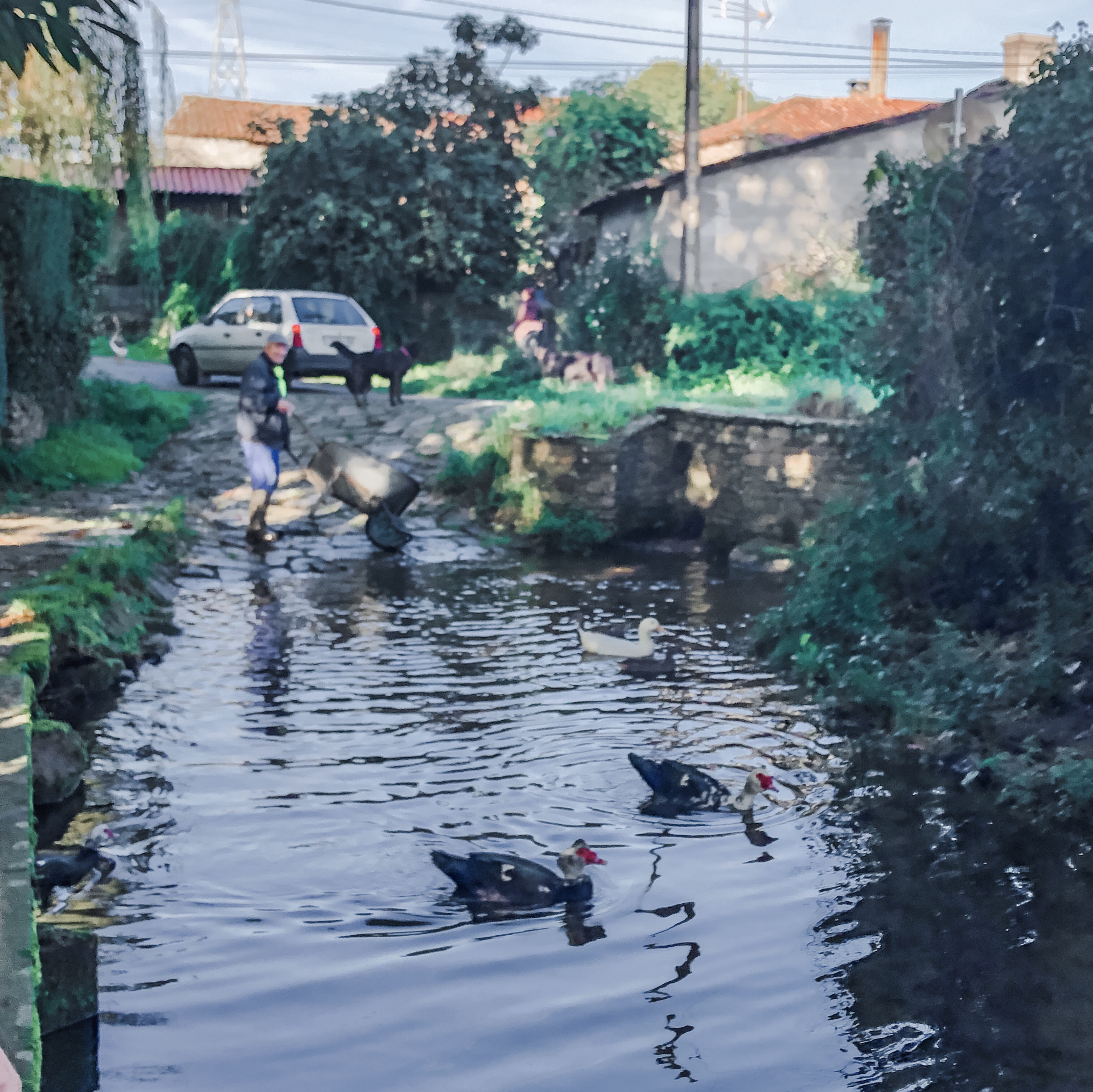
Feeling a bit overwhelmed as more crowds appeared in front of us, I focused on the seemingly insignificant—cats, ducks, colorful doors and flowers that appeared on the Camino. I was even grateful for a wrong turn that gave us a reprieve from the crowds.

We bumped into new friends, Dave & Heather from Connecticut, that shared the same names as our dear friends from Brazil. I had a thought drop in my head that we were Pooh Bear, Piglet, Tigger, Owl and Eeyore dropped in the “Hundred Acre Woods” on the Camino, just trying to make our way. We each had our strengths to help each other. These friendships, more than anything else, were what helped us endure, thrive, laugh and carry on.

“‘Friendship,’” said Christopher Robin, ‘is a very comforting thing to have.’” AA Milne

Tomorrow we finish our last leg and we will start walking in the dark, with headlamps on, to make it to the Santiago cathedral before noon. The trail is supposed to be like a Black Friday sale with everyone jostling and maybe a little impatience. I take calming strength from Milne again :
Rivers know this: there is no hurry. We shall get there…”

Process of Time

CAMINO STAGE 32: Melide to Arzua Joining of the Camino Primitivo to the Camino Frances of El Camino de Santiago, 10 miles, Day 34, 3 days to go

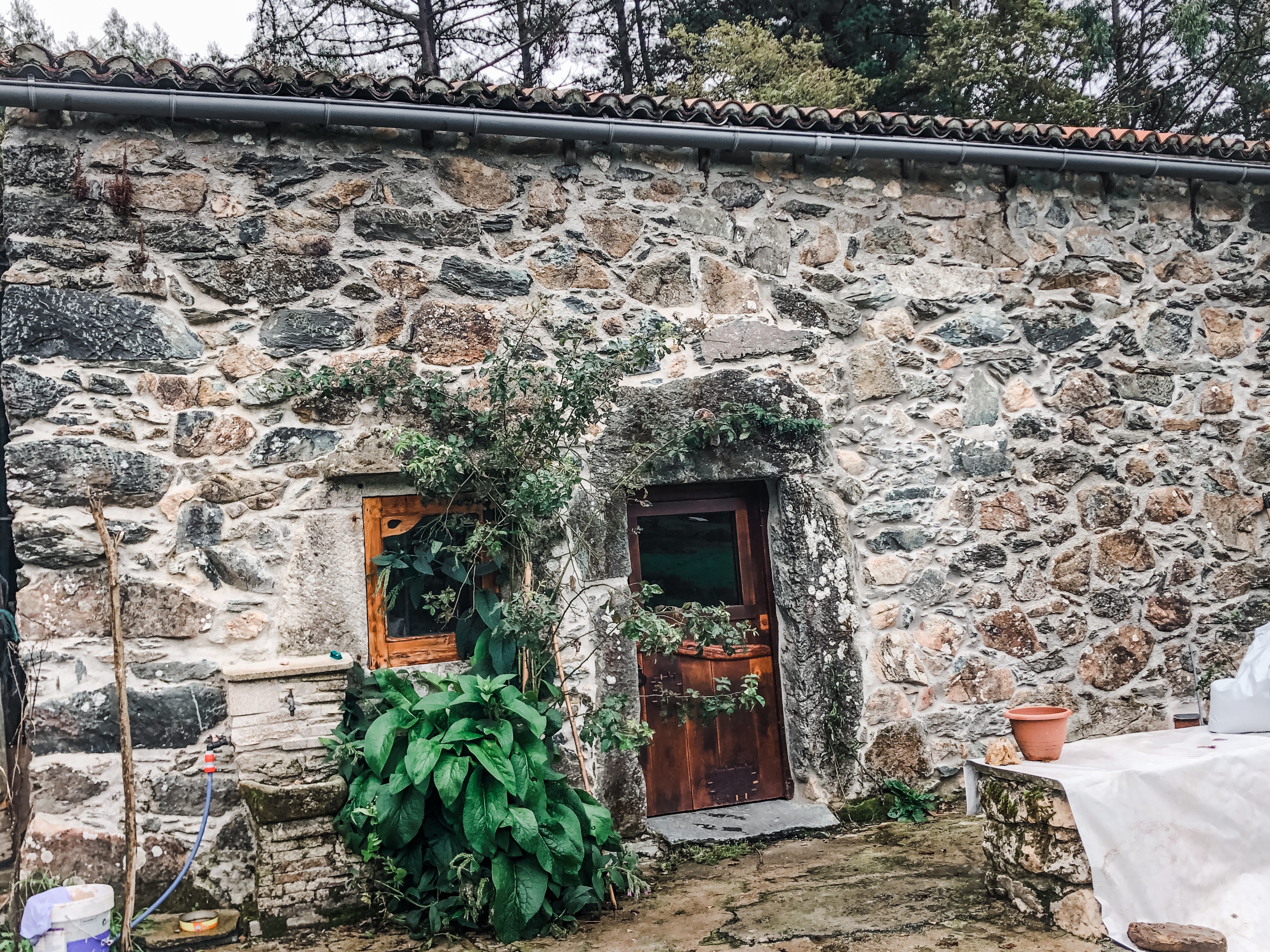
Patina is a thin layer than forms on surfaces. It takes time, and the right conditions to create it. There has been such lovely brown and green patina produced by oxidation or other chemicals all over wood doors and outdoor furniture in Galicia.

Along with the patina there’s another interesting effect called efflorescence on almost all the natural stone and concrete surfaces in Galicia. Efflorescence creates white or grayish deposits when moisture on a stone’s surface evaporates and leaves behind salts & minerals. Or, moisture from inside the stone brings the internal salts & minerals to the surface which creates crystalline “blooms” on the stone.

The word Efflorescence comes from the Latin word – florescere – which means to bloom.

Efflorescent and Grapevine covered homes

I see efflorescence on myself after walking for over a month— salt crystals have formed on my sports bra from lost calcium and magnesium from sweat. But most notable are the invisible efflorescence blooms that have occurred internally. Everyone walks there own Camino and takes away different lessons.

For me, I’m stamped indelibly, like our Camino credencial (passport), from the beauty of the Basque lands, Asturias and Galicia nature, the kindness of Spaniards, the confirmation that I can not only endure but thrive during challenging moments, and through the stories of the hurting but determined people around me, and their friendships. This blooming is marked on us forever.

“I am blooming
into something radiant.

Melody Lee, Moon Gypsy

The best kind of change, is the change that blooms from the inside and begins it’s way out until it emerges on the outside; a change that is born underneath then continues and spreads until it has reached the surface is a true change.” Joybell
Buoyancy

CAMINO STAGE 31: Ferreira to Melide Camino Primitivo Route of El Camino De Santiago. 14 miles, day 33, 4 days to go

They cuddle up to a brighter side of life by expecting to eke out some soothing moments of buoyancy in the wings of their expectant quest.“

Erik Pevernagie

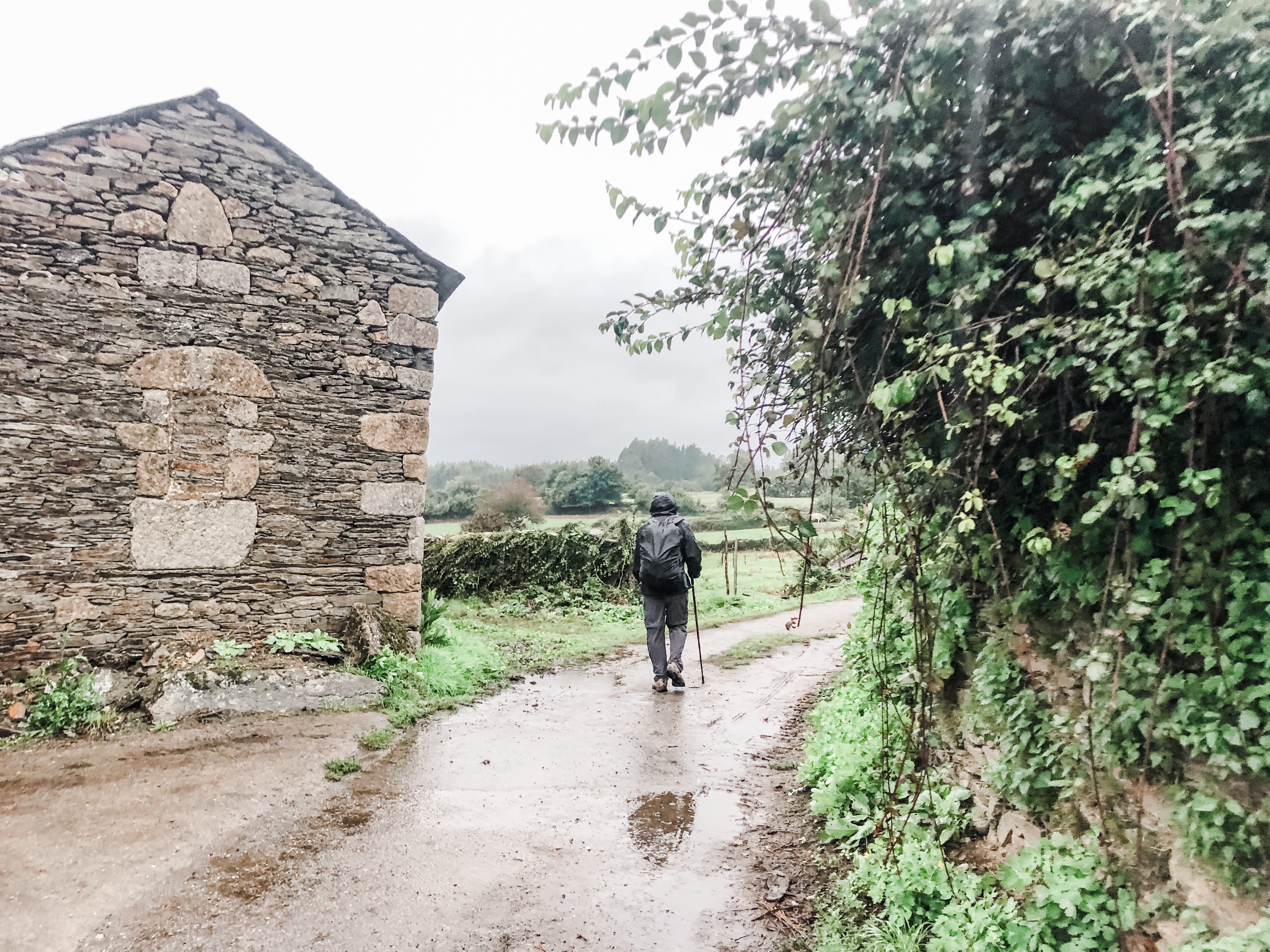
Another day, another muddy rainy slog toward Santiago…. but there was a break in the clouds, and we were gifted a little peek of morning sun through the clouds. We are fluid now at putting on raincoats without breaking stride when it starts to spit on us yet again. We are finding even with aching feet, there is a buoyancy in our steps because we have hit 54 km— just 33 miles to our destination. We have wings now on our quest.

And this seems like a beginning, this here, the start of everything. “ Karen Thompson Walker

Finally decided to ask another pilgrim to take our photo—- it turned out a bit stiff lol. We have been seeing these mannequins used as scarecrows in gardens. Not a bad idea as they scare me.

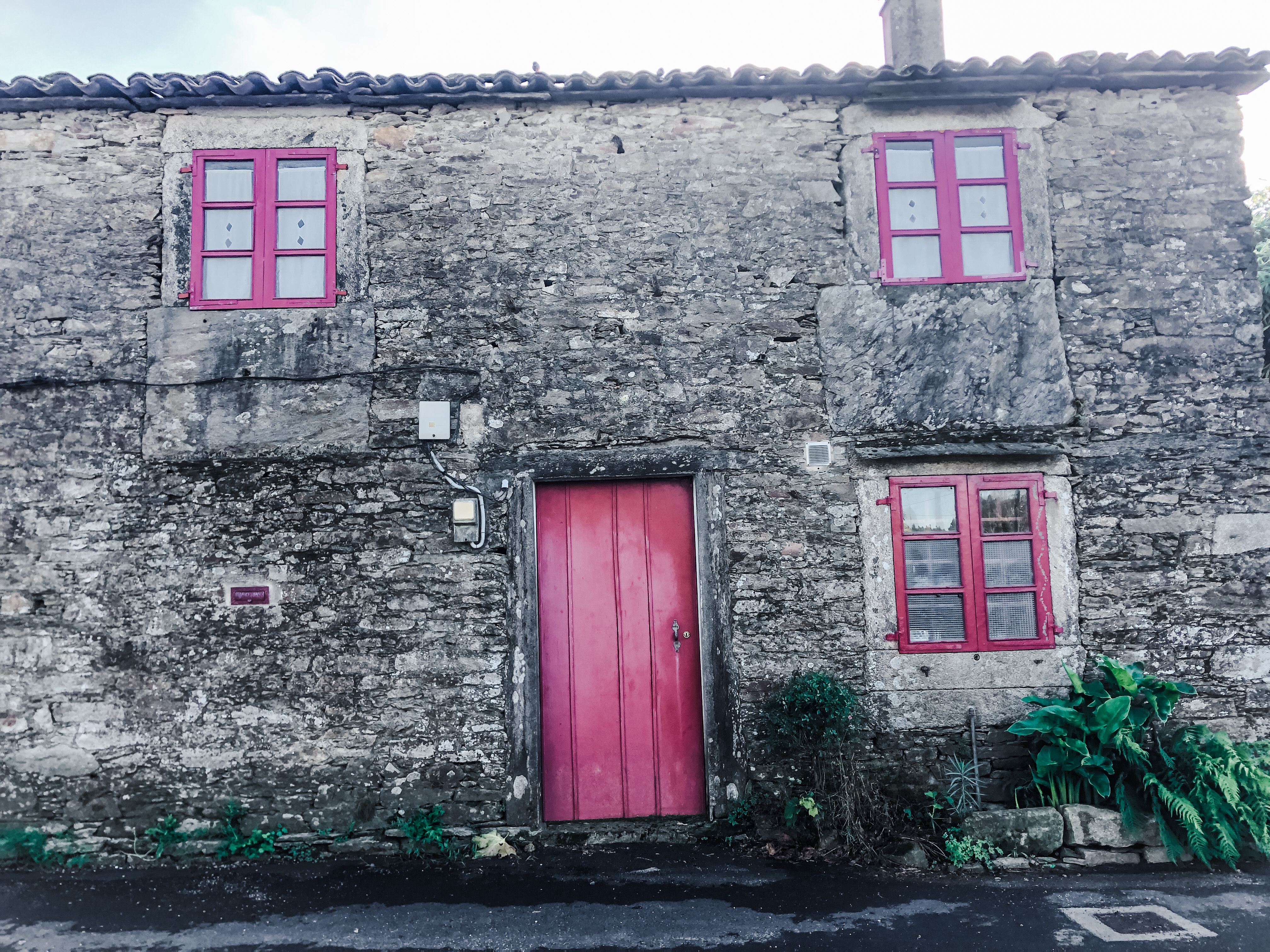
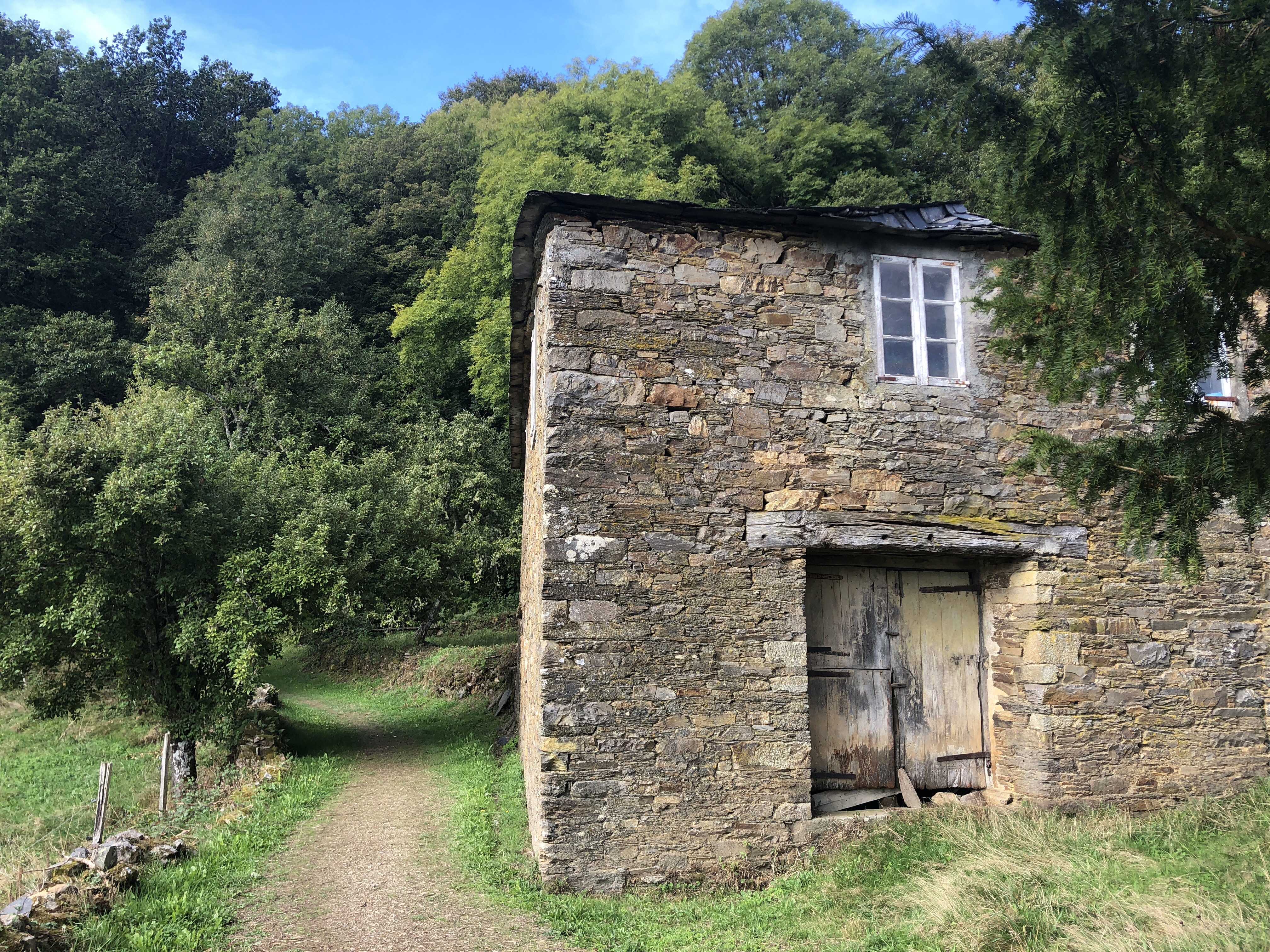
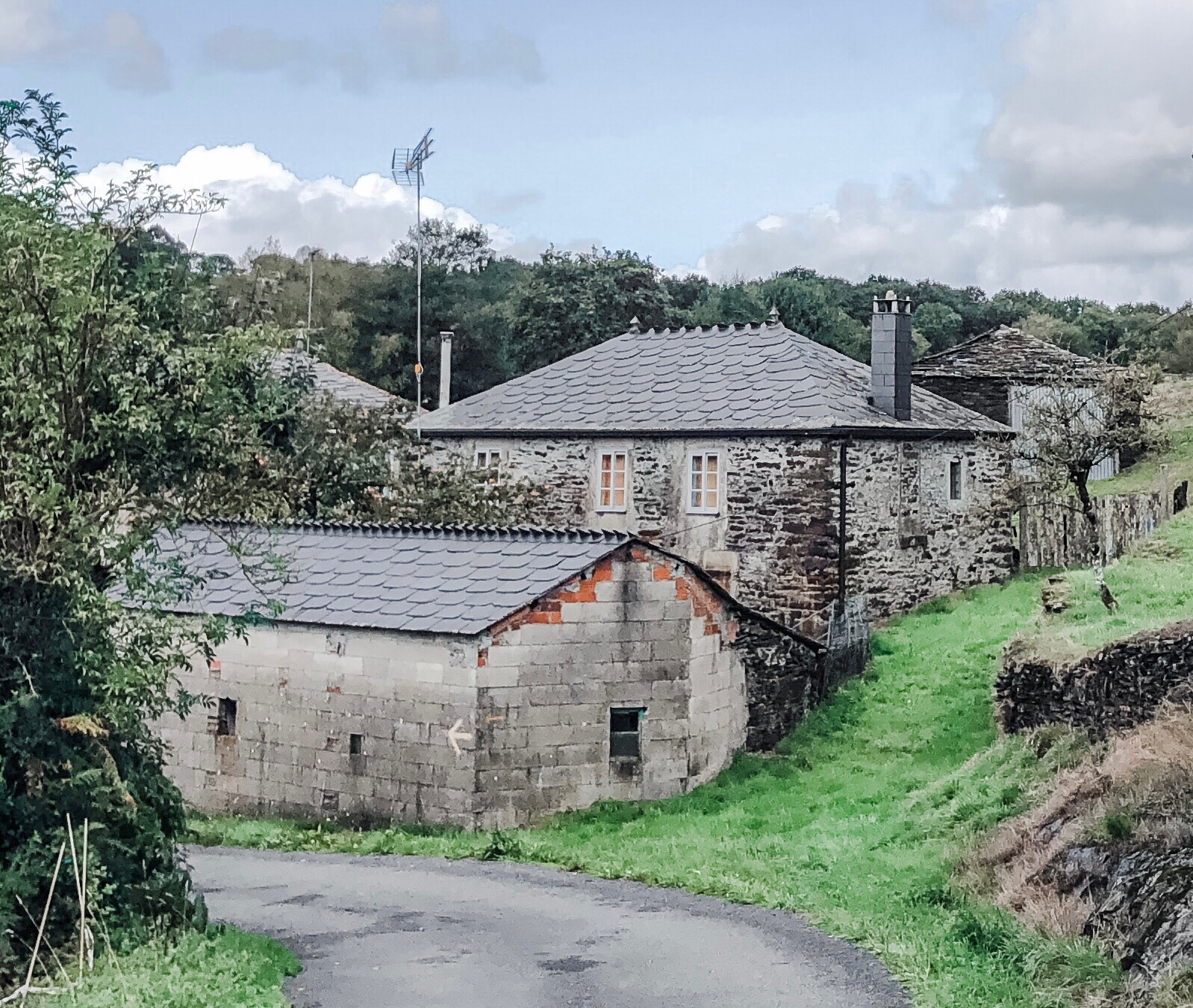
The green accents on faded barn and front doors, window sashes and hórreo blends so well with the scenery. There were Viking raids in this area hundreds of years ago so maybe it helped Gallegos hide in plain sight? Regardless, it feels hopeful and happy in the gloom. In 1906, O. Henry (William Sydney Porter) wrote a short story entitled “The Green Door.” It was a musing on the human need to embrace “the twin spirits of Romance and Adventure.” As we pass through this neck of green door Galicia, romance and adventure, sums it all up.
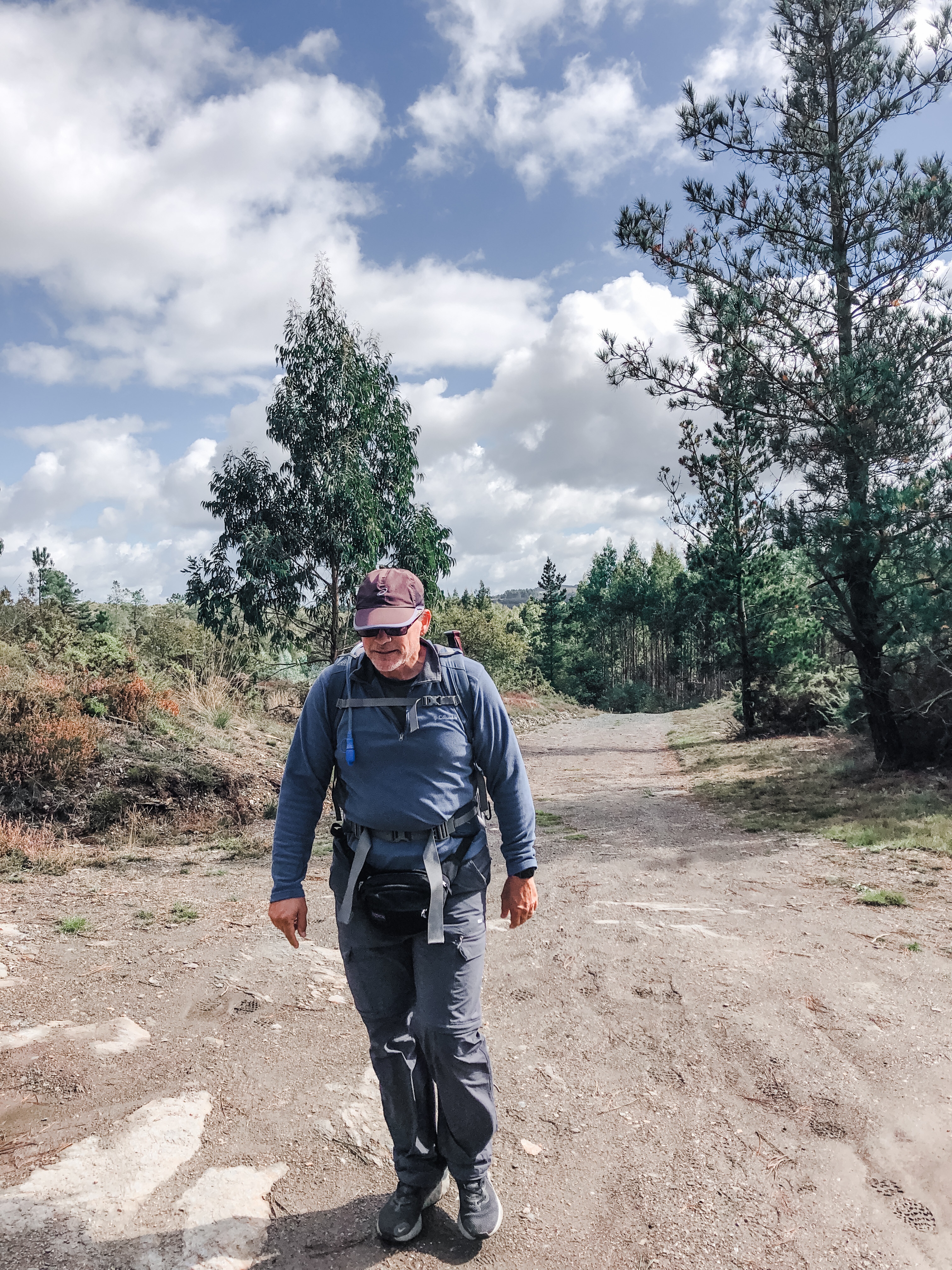
“A beautiful day with the buoyancy of a bird.” Truman Capote

We were so hungry pulling into town that we could have gnawed on the giant mushrooms that were almost knee high. Pulpo or octopus is famous in the area so we planned on being adventurous and stopping to try some local cuisine until we saw the long lines. The Camino Primitivo joins with the Camino Frances trail so pilgrim numbers have quadrupled. We had lamb fajitas at another restaurant and Merluza fish. We felt warm and full as the rain continued falling outside. All is right in our Camino world of love and adventure and its buoyancy carries us on,

Connections

CAMINO STAGE 30: Lugo to Ferreira Primitivo Route of El Camino De Santiago 19 miles, Day 32, 5 days to go

We left Lugo a bit groggy after the city partied until 3 am with rambunctious music, shouting DJs and cheering crowds during their Autumnal Equinox festival. Staying in many Spanish historic Old Towns on the Camino, we’ve discovered Spaniards enjoy their nightlife, chanting and singing until dawn, just as much as we like our sleep at night and getting up at dawn. How their circadian rhythms, driven by the light-dark cycles, differ from ours eludes me. It gets dark, and I get sleepy. But Spaniards seem to suscribe more to the Marilyn Monroe’s philosophy: “Who said nights were for sleep?”

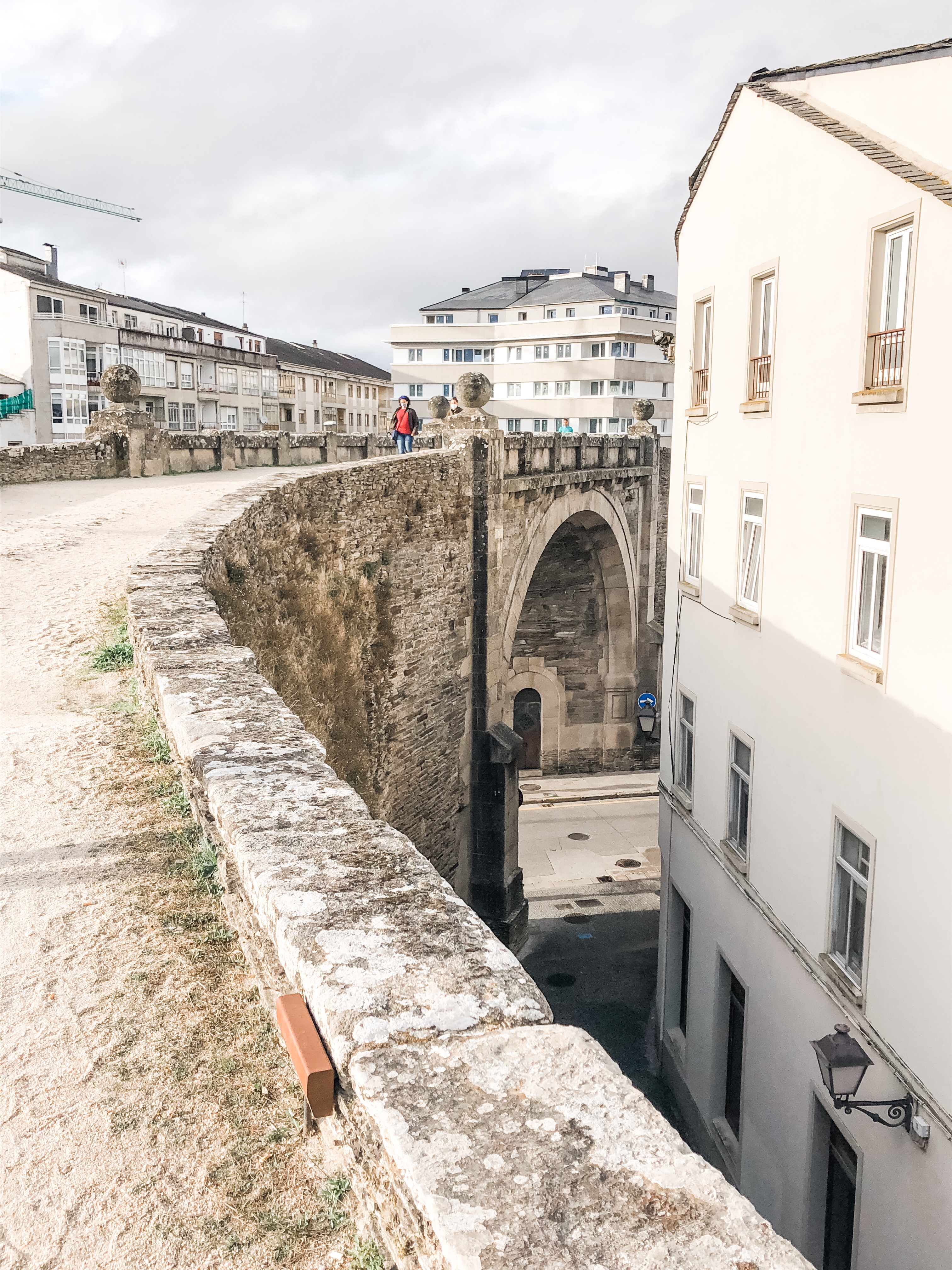
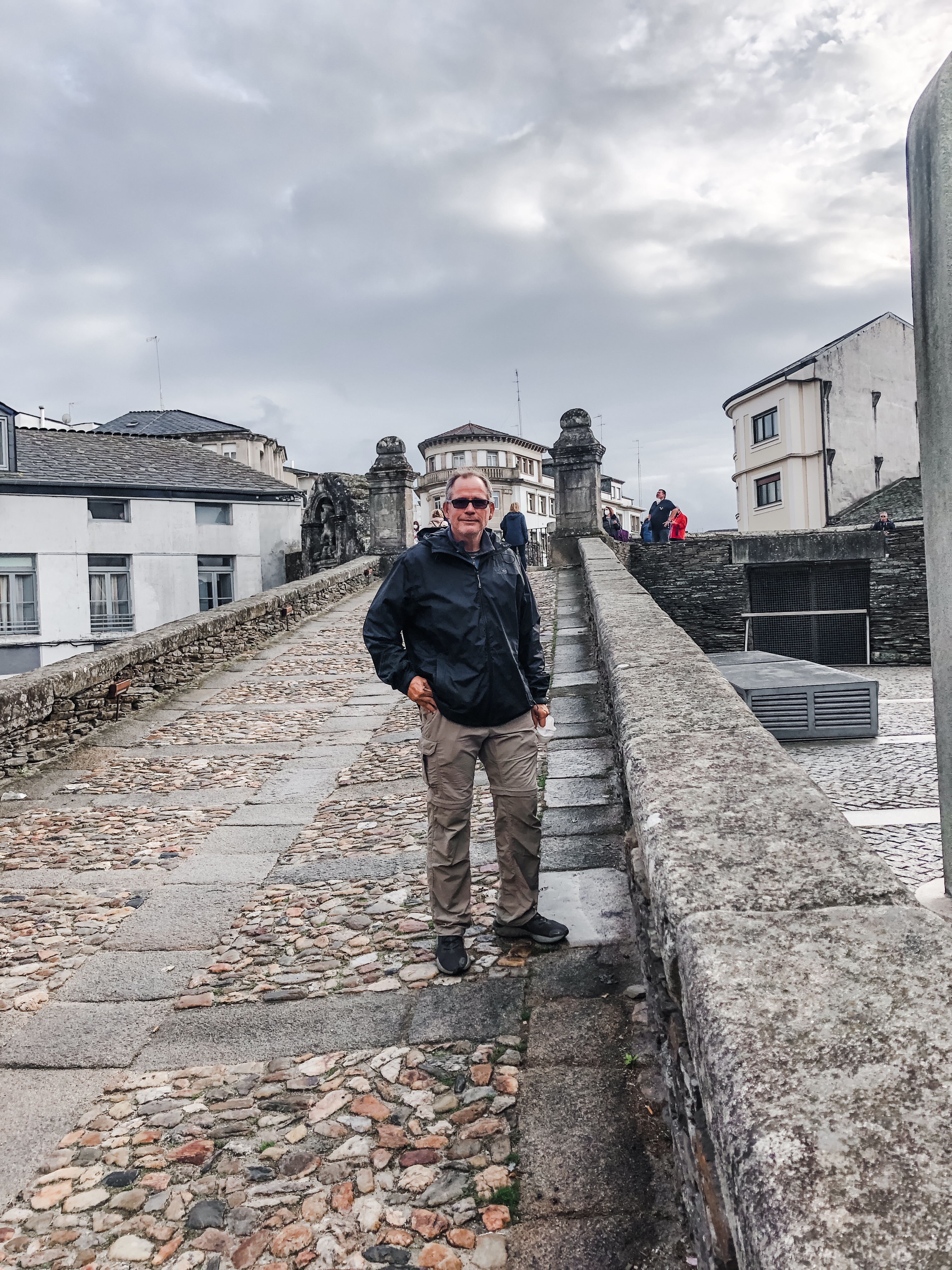
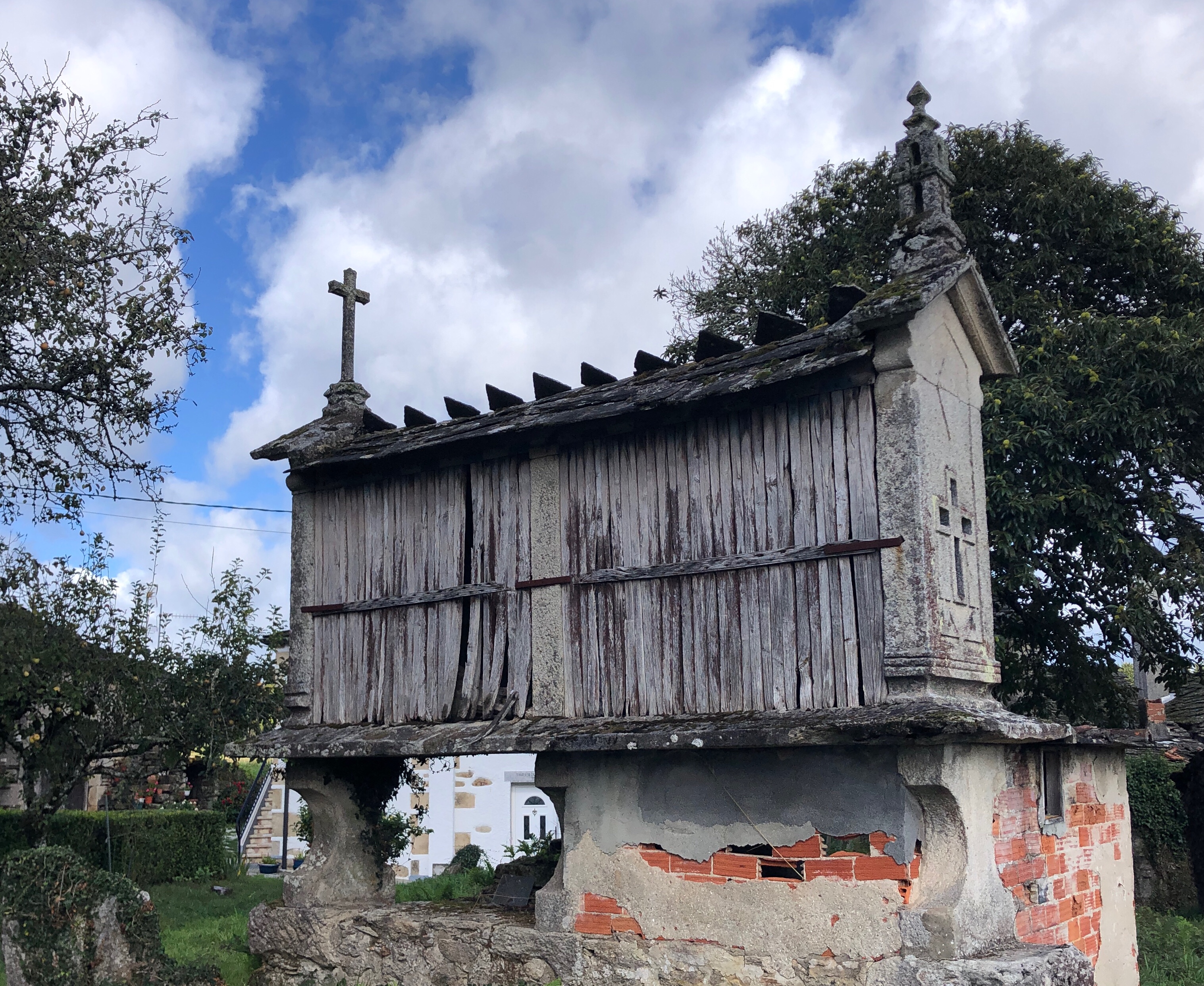
Joining the Camino trail in the chilly morning hours, while the city finally bedded down for the night, I walked, yawning, alongside Steve, noticing several interesting Gallego Hórreo with Christian crosses on one side and pagan phallic symbols on the other, existing right next to churches. At the Minho River, I admired the stonework and repairs over the centuries that kept this Roman bridge connecting the two banks. At the high point of the bridge, zipping up my jacket against the wind, I thought about the unspanned cultural bridges between us and the wild, myth rich Galicia we were walking through—quiet suburban Steve and I on one riverbank, and exuberant, forest spirit believing Spanish Gallegos on the other riverbank —an unbridged gulch between nocturnal night owls and the diurnal creatures who sleep when it gets dark.

Old Roman bridge in Lugo, Spain

Artists find the idea of a bridge between being awake and asleep, and the journey we take into sleep land, very appealing. One artistic image of sleep I find lovely was done by a surrealist artist in 1929 named Man Ray (born Emmanuel Radnitzky). He created camera-less photography called photograms. Man Ray manipulated this photograph he called Sleeping Woman, using heat to melt the medium making it appear dreamy yet real.

Surrealist artists were enthralled with the idea of tapping into the subliminal mind to find answers to mysteries. I wondered crossing the old Roman bridge if it was possible to connect with people on different banks of sleep schedules? And was there a moment, crossing that bridge from alert to drowsiness, where you could connect with the beyond? (I had a brief moment my third week into the Camino, just as I was nodding off into exhausted oblivion, where a family member that’s passed on, leaned in to say hello. A definite first for me.) If sleep was a bridge where we could meet halfway to connect to ourselves and others, was it a place where we could find common ground with Spaniards?

“A bridge connects instead of separates.” Santiago Calatrava

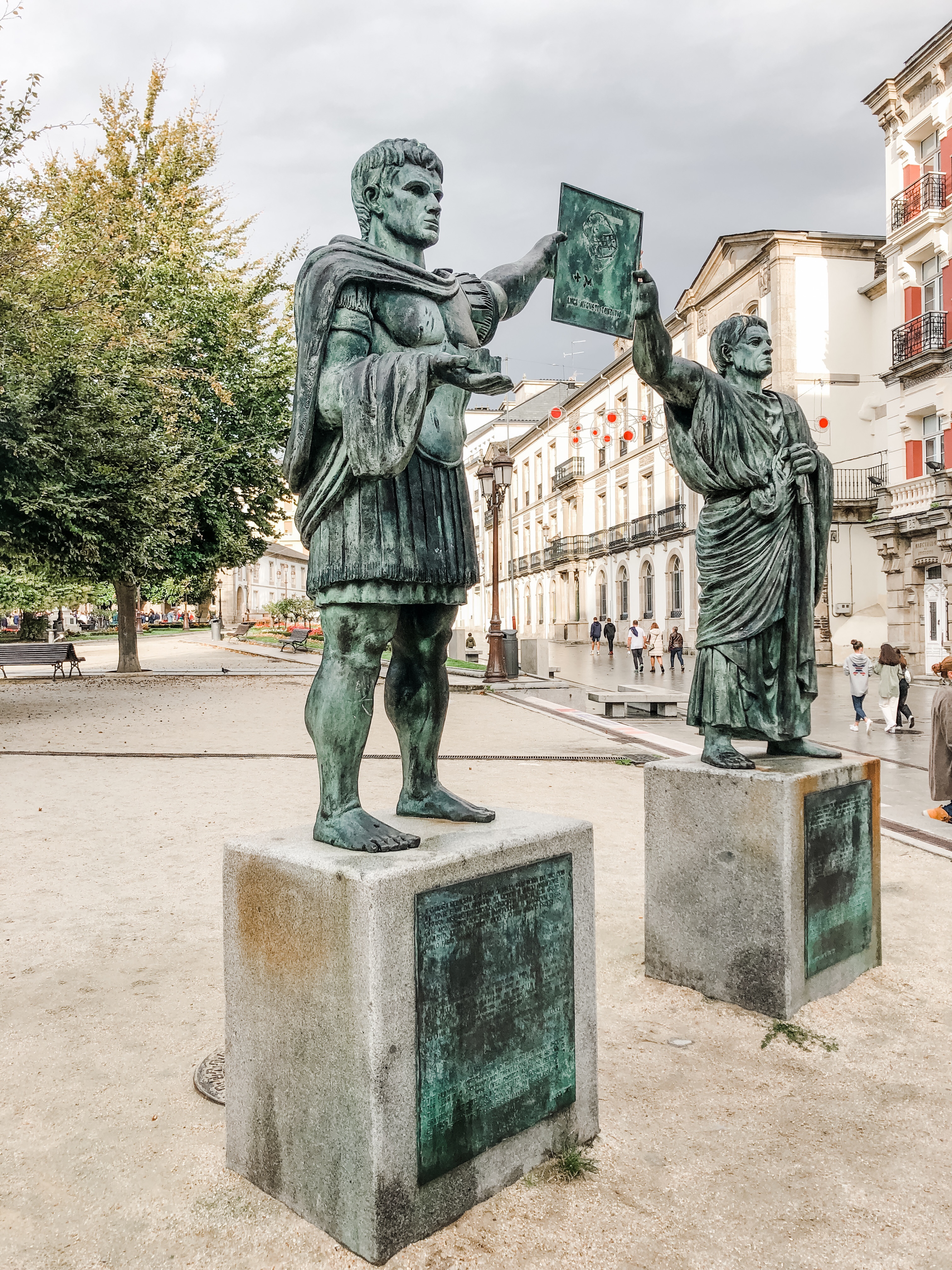
Roman centurion on the Lugo bridge

Wisdom is just a bridge .

Mehmet Murat ildan

The idea circled back to my mind that here is always a bridge to people— it’s just finding the spot where we overlap.

We should always keep a bridge standing and maintain it because bridges are what we all need to improve.” Nick Catricala

Later that afternoon we passed through an ancient segment of the Camino called San Romao da Torta. It had a Roman cylindrical milestone dedicated to Emperor Caligula that marked the distances between different populations. The town also had copies of Roman Hórreo to store corn and grain, that were longer and narrower than their Asturias cousins. This bridge to the past and present was as fascinating as the idea of milestones that mark the distances between people. Nearby, Stonecutters were rebuilding some rock homes of decades past. The binding link of old and new, and Roman and Gallego (Galician) was bridged.

Encourage others to create bridges of their own.” Nikos Kazantzakis

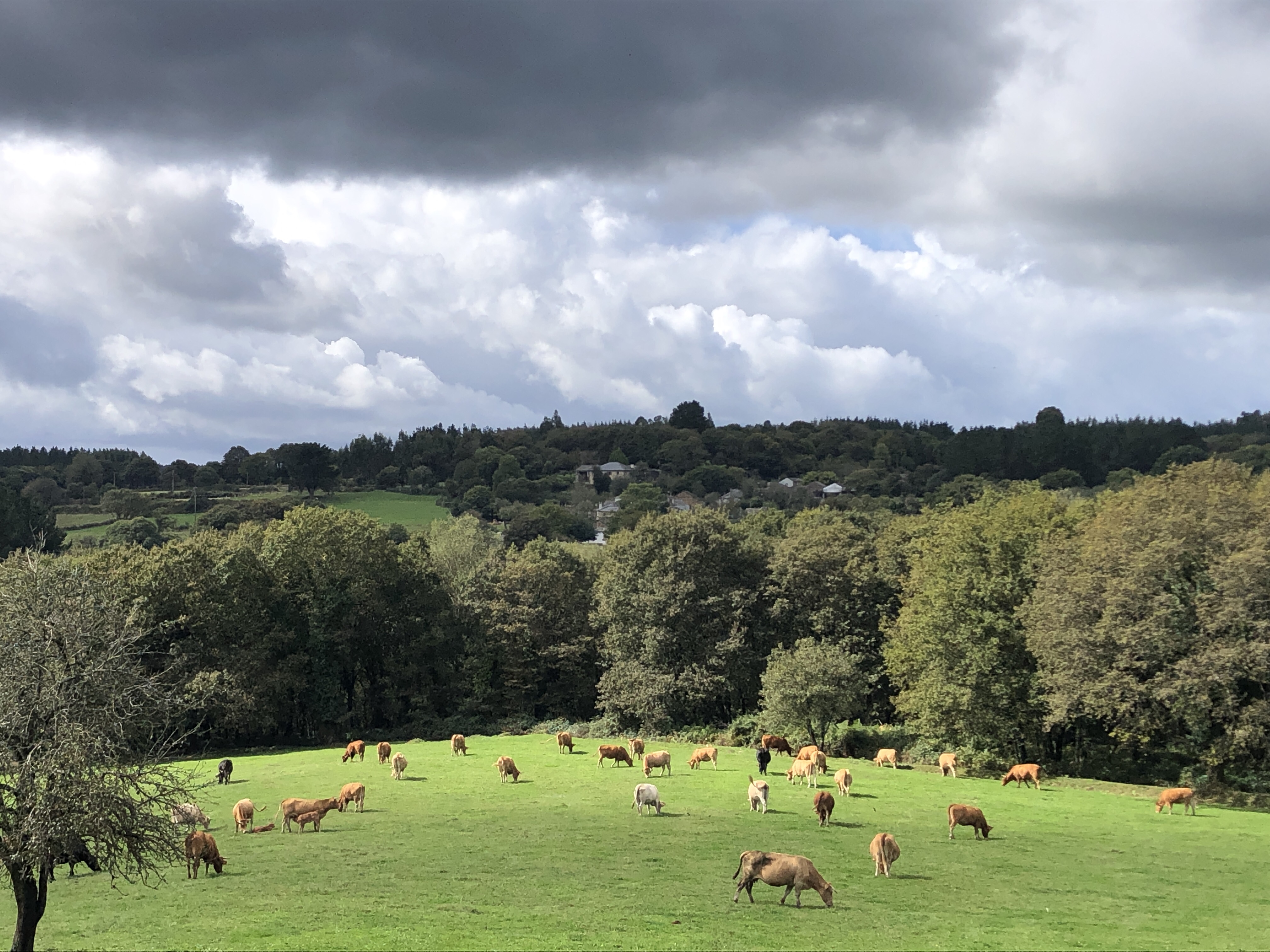
As we rounded a final bend to our accommodation in Ferreira, we ran into a farmer taking his cows from the field to the milk barn. This pastoral scene of herding cattle, flooded back childhood memories of walking cows to the barn to be milked. That moment was my bridge to Spaniards. There were Spaniards who still went to bed before midnight and got up early to tend animals and crops. It was a reminder of reaching out to people even when it seems like our side of the bridge will never connect with theirs. It was a milestone that marked a shorter distance between people.

Ferreira bridge

Now we, strangers in a foreign land, are motivated to find other places where we merge with Spaniards of various communities. We are thoroughly loving the Spaniards we meet on the Camino and appreciate their generous and warm natures.

Little Things

CAMINO STAGE 29: Baleira to Lugo Primitivo Route of El Camino De Santiago 20 miles, Day 31, 6 days to go

It’s small things, even just one step, that have a cumulative effect on the Camino…. Yesterday’s walk took a toll on the psyche and bodies of our little Camino family shuffling on. We saw one hungry pilgrim from Spain eating food scraps off another person’s abandoned plate. Another two Portugal pilgrims had to stop only after a few miles as their legs could not hold them up. One pilgrim from the US hobbled on in her sandals in the mud, boots tied and swaying from her pack, her feet too battered and swollen to get shoes on. Another man could only take a few steps before sitting down again and again to rework the tape on his swollen leg. 135 km to Santiago….

But then a sign on a fence post, a man inviting pilgrims to sit and eat melon, apples and walnuts from his farm. We sat on a tree stump not far from the hungry pilgrim and rejoiced he had something to eat and the man with a taped leg could sit. A 126 km to Santiago…A small gesture had lasting ripples.

Understand the virtue of small things.” Greg Mortensen

We were not without our own pain… when you are in pain, you notice so many others worse off than you. It’s in that suffering that we cheer each other on, one foot in front of the other….a smile anyway….118 km more to go to Santiago,…

Small things are best, especially those done with love.”

Mother Teresa

My vision narrows and simultaneously expands when I’m in pain. Green doors lighten the gloom and whisper push on anyway. Horses whinny an encouragement and a church missing two of its three bells reminds me broken doesn’t mean you have to quit….105 km to Santiago

.

IF YOU CANNOT DO GREAT THINGS, do small things in a great way.”

SACHIN RAMDAS BHARATIYA

Stone village in the rain

So many simple things add up to great things in life and on the Camino. We all need each other and small acts of encouragement … an aspirin here, a ‘you can do this’ there, a friend to walk along with you. A reminder that minute kindness grows and expands….

“The smallest things can make you feel good about being alive.” Marty Rubin

Round rock building carried over from the Iron Age

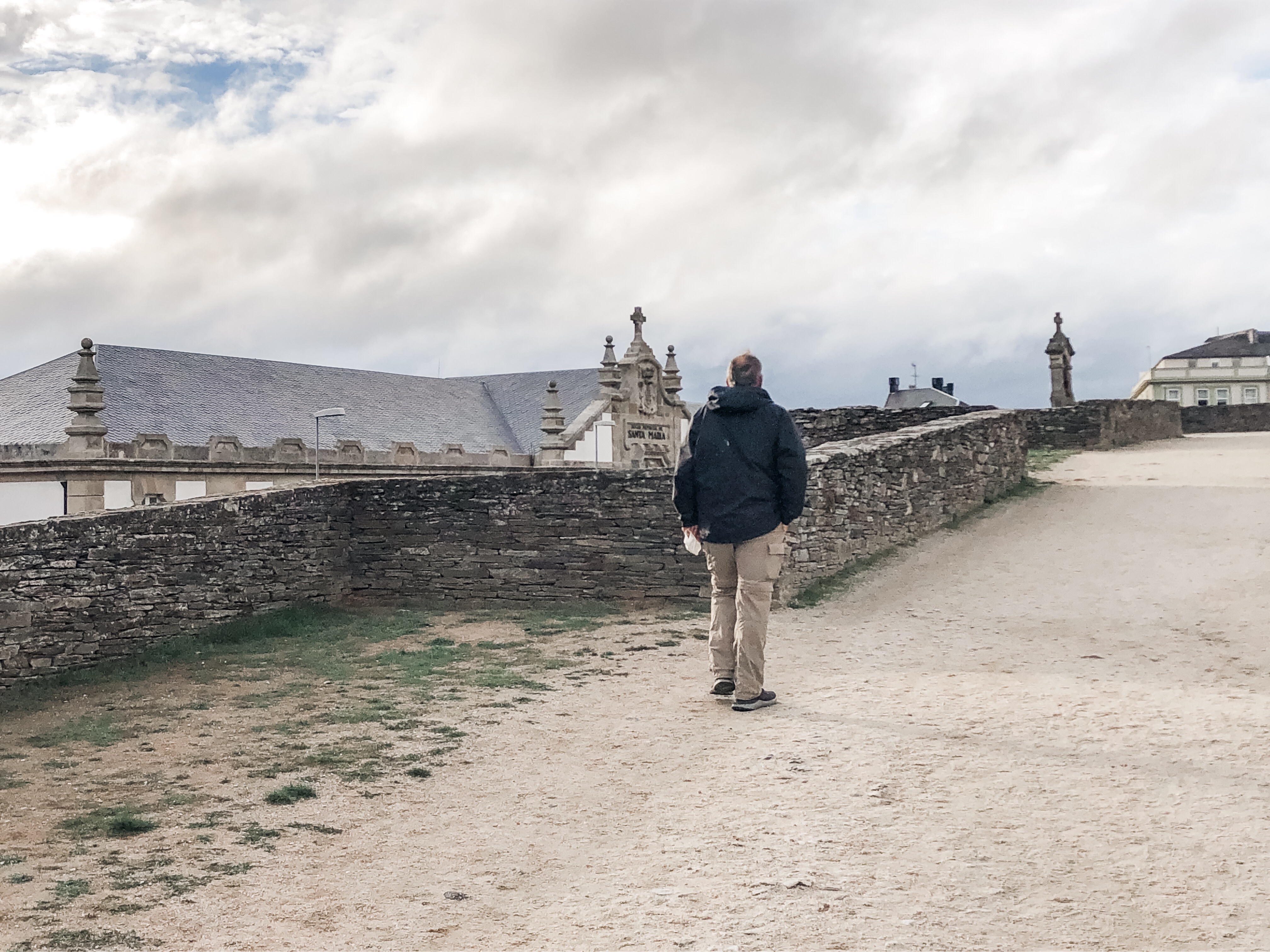
100 km… we reached the old walled city… heavens opened with crazy wind and rain as we staggered into Lugo. But shortly after, the sun came out so we could see the end of traditional festival dance, and could walk the Roman wall ramparts. This incredible UNESCO wall with 10 gates and 71 towers rings Lugo for nearly two miles.

Sitting on the 3rd century ramparts of the only intact Roman Wall in the world
Saint Froilan festival

As we wove through festival music, parades and crowds and saw other limping pilgrims smiling and waving and appreciating the victory of finishing another day…. I thought maybe the real Camino begins now…98 km to Santiago…

Stirred the Soul

CAMINO STAGE 28: Fonsegrada to Baleira Camino Primitivo Route of El Camino De Santiago. 16 miles, Day 30, 7 days to go

Rocks, wood and water, brooded the spirit of repose, and the silent energy of nature stirred the soul to its innermost depths.” Thomas Cole

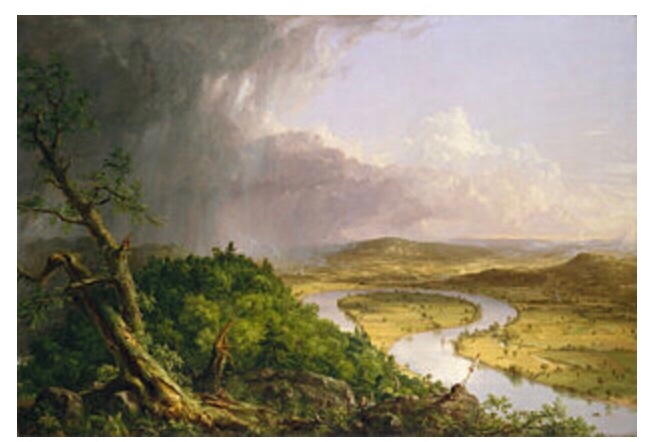
Early this morning, as we stepped outside into the dawn, it felt like we stepped into a Hudson River School painting. This school of American artists painted nature and landscapes in “En plein air,” or outdoors, in the mid 1800s. Thomas Cole, spearheaded the movement. I’ve bumped into several of his paintings in the Thyssen-Bornemisza museum in Madrid, DC’s National Gallery of Art and NYC’s Metropolitan Museum. His paintings of the American wilderness show a time before industrialization, railroads and factories, and uninterrupted rural vistas. Galicia’s still and peaceful countryside would have inspired Cole.

“None know how often the hand of God is seen in a wilderness but them that rove it.” Thomas Cole

Thomas Cole’s Oxbow & The Catskills

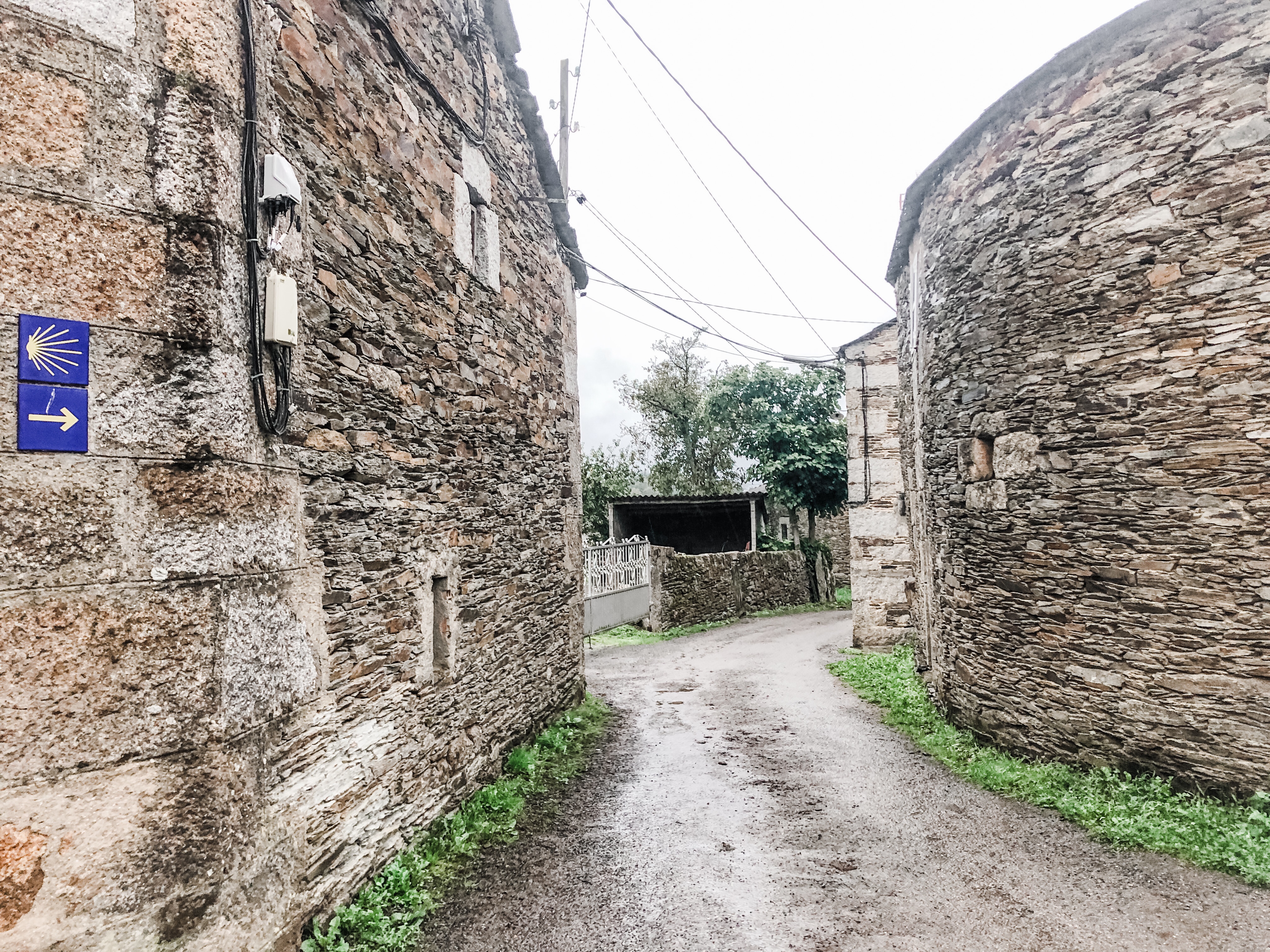
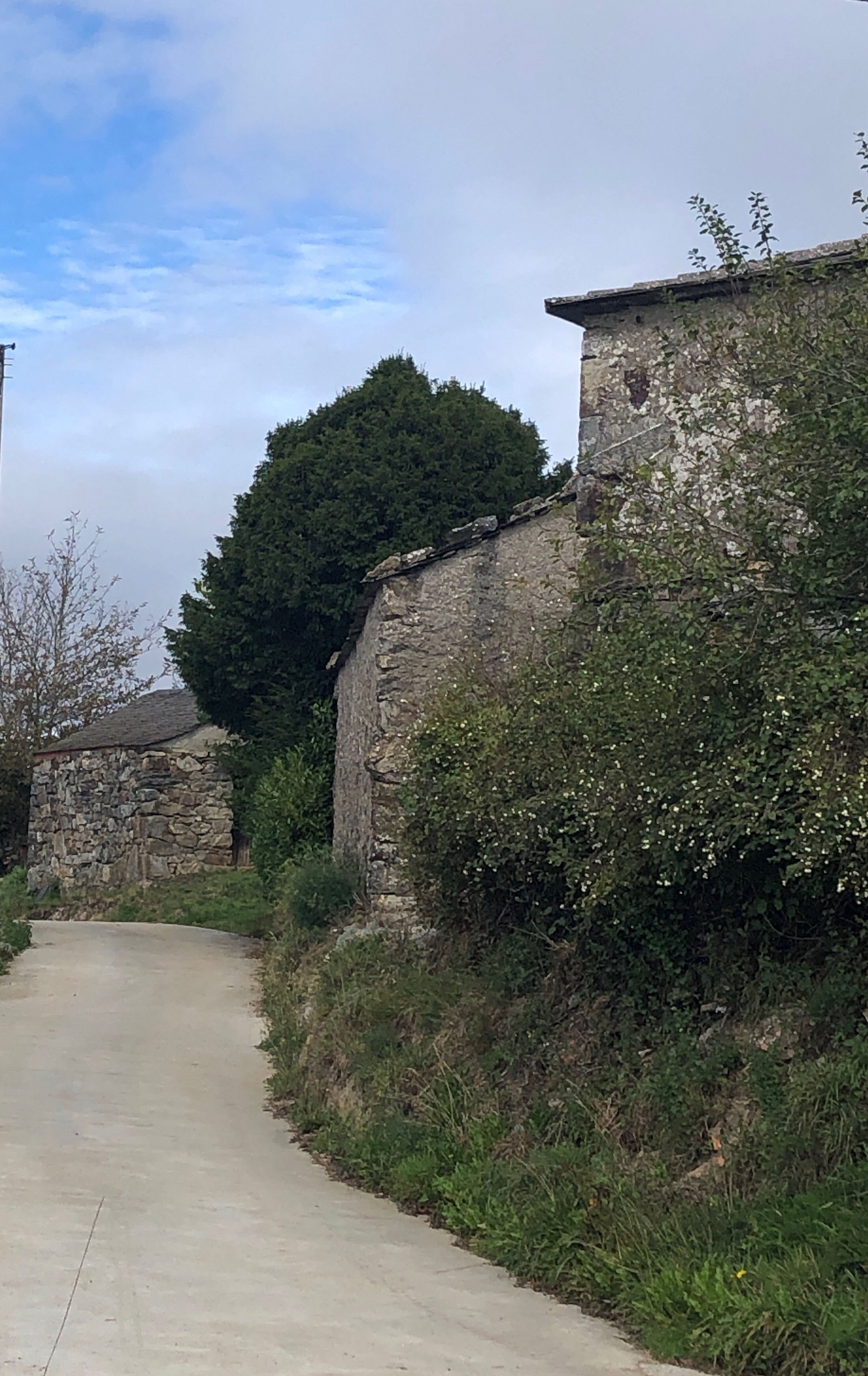
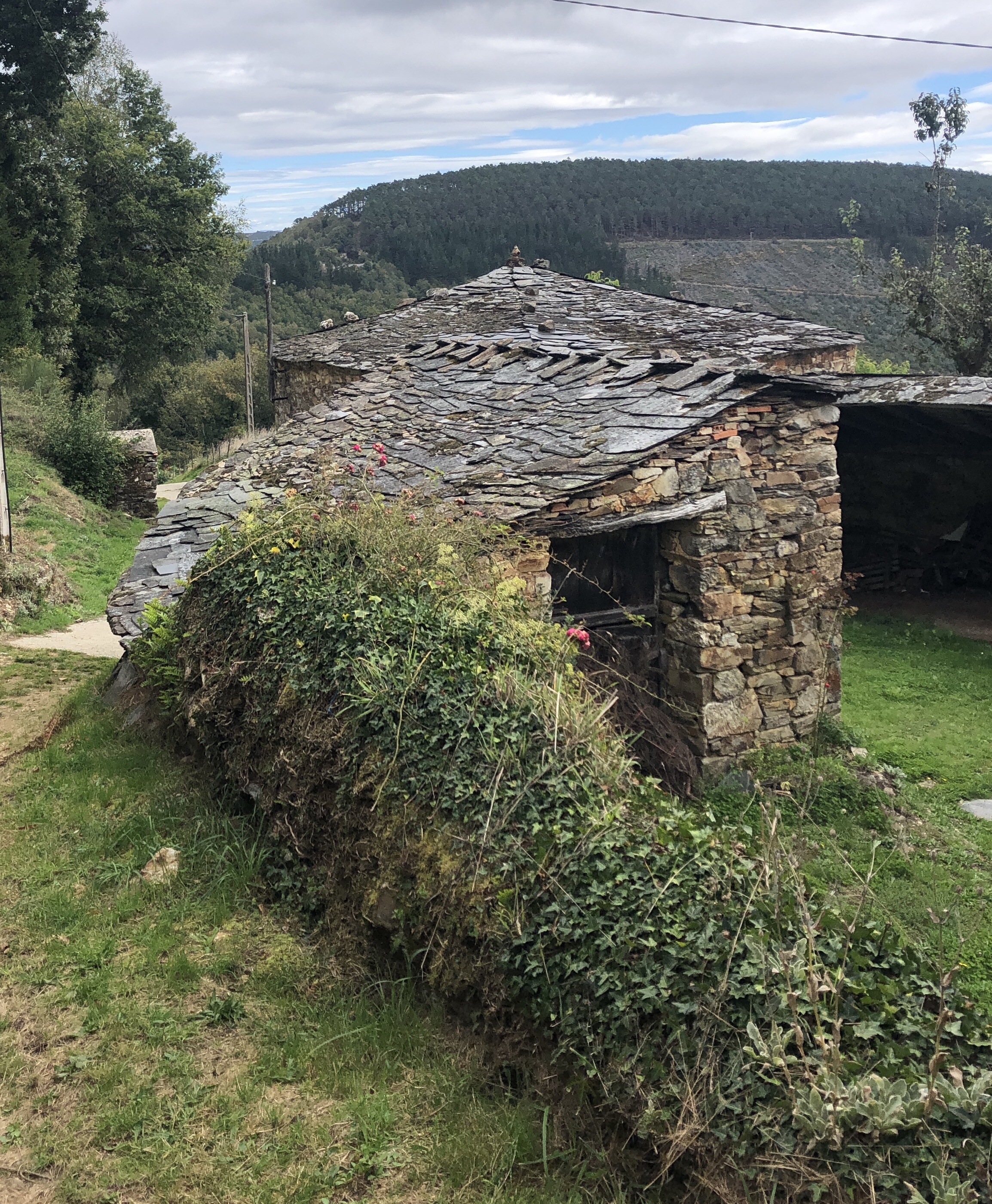
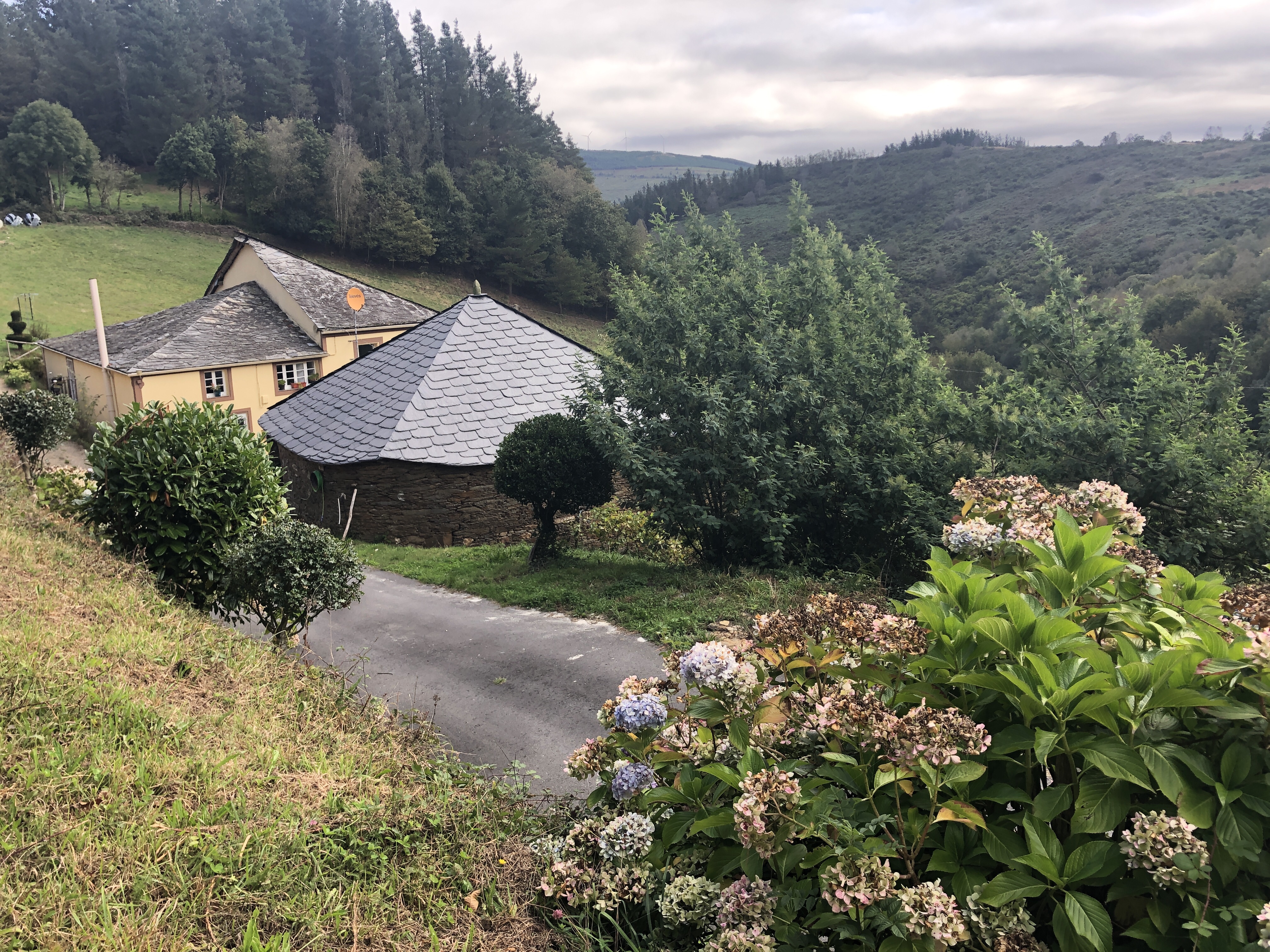
We tackled several of Galicia’s hilly mountains (thankfully not the ones that rise up 7,000 feet) on today’s Camino. While doing so we started noticing all these stone villages with slate roofs and one large rock balancing on all the edges. I learned the people of Galicia are known as the “Stone People” because they work(ed) with stone.

Rock village from the past

The only thing we knew about Galicia before the Camino was the people speak a language which is a combination of Portuguese and Spanish. We learned this by watching a thriller mystery series called Bitter Daisies (O sabor das margaridas ) on Netflix. The lead is a female detective trying to find her missing sister who disappeared in the town of Murias (just 30 miles from where the Camino trail lies). Galicia is a great setting for a mystery with the dark clouds, rain and unpopulated areas.

Heart Attack hill

It was a brutal day on the feet. We bought inserts at a pharmacy yesterday but it made little difference. We heard from people walking a day or two before us that there were people crying on this leg from foot, knee and hip pain. Switchbacks are not a thing here and pilgrims go straight up and down on slippery, rocky trails.

Regardless of pain, our imagination is stirred by the beauty all around us.

Masterpiece

CAMINO STAGE 27: Grandas de Salime to A Fonsegrada Camino Primitivo Route of El Camino De Santiago. 16 Miles, Day 29, 8 days to go.

It was one of those days—- my Spanish walking companion Amerika tripped on a rock in the fog and fell, and I helped her up only to step in a huge fresh pile of cow poop a few steps later as my eyes were on her to make sure she was ok. The poop was followed by a snake slithering right in my path. Dung beetles entered stage right and pushed more poop to my boot. I thought I must be out of sync and off step but the Spaniards walking with us laughed and said “no, stepping in manure is good luck on a Camino.”

Snake

In 1498, when Michelangelo was 24, he spent a year sculpting Carrara marble to create his masterpiece the Pietà, which means. compassion. His mother Mary lovingly holds the Savior after he was removed from the cross. At age 72, Michelangelo sculpted his “Florentine Pietà,” The Deposition, that sits in the Duomo in Florence, also of Christ taken down from the cross. Michelangelo looked at his second masterpiece but was completely disappointed with it, especially the leg. So he took a hammer and broke off the statue’s lower limb. Thinking about what we consider imperfect in our lives, viewing the The Deposition made me reconsider the role of “imperfection.” The truth is everyday is a masterpiece and we by extension are too. We can view all the problems we encounter, the gunk we step in, and all that we don’t like about ourselves and try to chip away as imperfections, or view the imperfect moments, mistakes and cracks as wisdom learned and perfection. Walking on an animal trail and smearing green poop all over my boot may not have been an imperfect day at all because laughing with friends and walking through wet weeds, and wild flowers cleared the mess away, and in its stead a memory of sweetness and perfection was left behind.

“Discovering that place where your passions and strengths meet is the first step toward sculpting your masterpiece, Your Life.” – Michelangelo

By late morning we had climbed above the clouds and up to a line of wind turbines on the Camino. They were a bit too tall to have a Don Quixote moment of fighting windmills, but I thought again of the battles we do pick, the hammer we take to the imperfections in ourselves and how many times it’s wasted energy and the wrong battles. Shortly after we left the wind turbines and Asturias behind, we entered a new comunidad — Galicia.

Perfection of imperfect days
Above the clouds

Those happy, grazing, fertilizing cows we walked past at the beginning of the day made the best chuletón at Catro Ventos restaurant for lunch. It allowed us to eat and have strength to keep walking. Stepping in mess, really is good luck.

I’m learning it’s having faith in the imperfect around and in us that makes a perfect life. There is strength in such

“Faith in oneself is the best and safest course.” – Michelangelo

Website Built with WordPress.com.

Up ↑