

“Underlying the beauty of the spectacle, there is meaning and significance. It is the elusiveness of that meaning that haunts us, that sends us again and again into the natural world where the key to the riddle is hidden. It sends us back to the edge of the sea...”
Rachel Carson
It’s been six months since we chucked our Camino de Santiago backpacks in a cupboard with our dusty boots, still adorned with bits of grass on the grooved tread. We have recovered from the ailments that compounded by walking 38 days on the Camino del Norte and Camino Primitivo– the shredded feet, yelping knees, fatigued limbs– but elusive remnants, phantom prickles and twinges of memories cling, grass like, to our minds, to the grooves of the cerebral cortex that processes pain and attempts to assign meaning. My thoughts, unbidden, work their way back to the Camino coastline of Northern Spain, to the trail and sea, to prod and poke around at the unexamined, on a second walk with the heart as a guide, to get at the meaning, a clearer picture of the Camino’s significance.
“In the attitude of silence the soul finds the path in a clearer light, and what is elusive resolves itself into crystal clearness.”
Mahatma Gandhi
One memory that circles back through my heart occurred twenty-three days into the Camino de Santiago on the Camino Primitivo where we noticed initials cut into the dirt on the trail and along side were grooves from boot tread that reminded me of university days looking at grooves, called sulci, in the outer gray matter of the cerebral cortex. These grooves in our brains divide the primary motor cortex (planning and execution) from the somatosensory cortex (receiving and processing sensory information). With stimuli like pain, and touch, these grooves in the brain change depth and shape, and as a fascinating byproduct, can create empathy when viewing ourselves or another person in pain. Because we were both in pain, the morning we saw the initials and grooved tread on the ground, our empathy, not just sympathy, kicked in for the pilgrim who sat, with upturned boots, rubbing his shins and examining his thrashed feet on the wayside. We stopped and asked him if we could help and upon finding out he suffered terrible shin splints, I shared with him how my physical therapist mother helped us recover from the terrible pain. He was so surprised and grateful for the help. I didn’t ponder it then, but I mull over the implications now that for empathy to surface in society, it requires acknowledging and looking beyond our pain and using our eyes and ears to observe suffering and pain in others — this is the mechanism for empathy. Looking away from others distress, downturning our eyes to our phones, filling our ears with wireless earbuds, leave us disconnected from humanity and from our empathetic self that was designed to reach out to lift and help another. As I sit turning over the soil of the Camino my mind, I wonder about the connection to boot grooves and brain grooves– both designed to stabilize and help us navigate depressive bogs as well as scale heights in the steep trails of life.
Another memory that still clings to me is interwoven with the pilgrim phrase: “Ultreia et Suseia.” Spaniards and weary travelers say it to other exhausted pilgrims on the camino as encouragement to keep walking. It translates to: “Let’s go higher.” The idea of Ultreia helped us up a difficult and steep ascent, along a shadeless mountainside, on the third day from Deba to Markina Xemein where thirst, discouragement and pain intersected. I was gritting my teeth from nerve pain in my shoulders and hip, and Steve was hobbling from his torn, blistered feet. But Ultreia coaxed us to look up and see other pilgrims slumped on the side of the trail and stop and get them up emotionally and physically. Getting to our destination for the night, I could barely move my legs to go do laundry. Hearing the sobbing of a woman so debilitated and exhausted that she couldn’t even lift her hands to wash and hang her clothes to dry, I paused and asked for a strength higher than myself to help her… enough strength was given to me to do her laundry so she could rest and continue her journey the next day. It came to me today that experience was not just the Camino providing the way to “go higher” for that instant, but as a way of living forever. Higher living– with kindness and patience, with eyes quick to observe, with a heart that discerns real need, with strong resolve to help the despondent no matter your fatigue level.
When we got home from Santiago de Compostela and kicked up our battered feet, we watched the movie “Don’t Look Up,” about a comet rushing to destroy earth. There were people who looked up and tried to change their course of action, but there were many others who ignored the prompts and everyone suffered. The thought occurred to me today that destruction is always rushing towards us, and if we are all connected empathetically to everyone around us, then wisely lifting our heads and looking up, and ‘asking up’ for a better way to live, means we also need to encourage everyone around us to lift their heads and do the same. Shortly after I saw the movie, I came across this: “There shall be great distress in the land … the sea and the waves roaring… distress of nations…When these things begin to come to pass, then look up, and lift up your heads for your redemption draws nigh.” (Luke 21) It seems an elusive thing to try and make meaning of our lives as we spin faster and faster on our planet. Banishing distrust, disgust, disinterest, and despair is as simple as smiling at someone, offering a hand, or being quick to praise the good in others. More profound living, a healthier brain and society is summed up in Looking Up and Ultreia–going higher emotionally, mentally and physically by setting down preoccupations, unplugging ears, and simply looking up and acting on empathetic impulses.

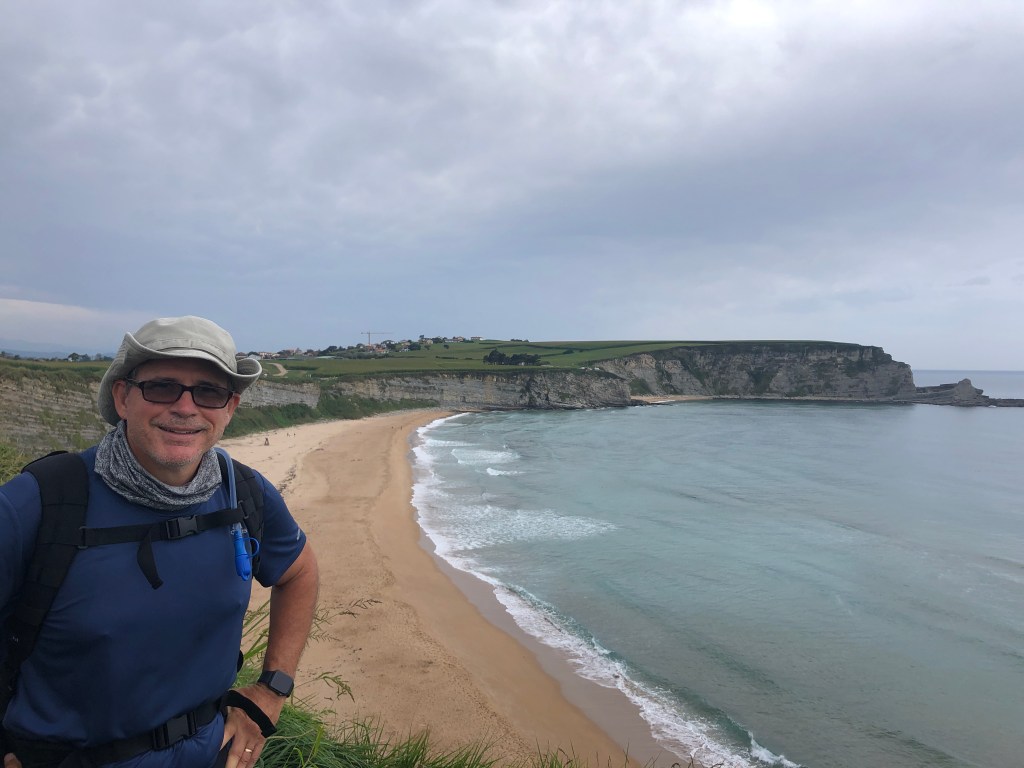
It circled back to my mind that the last two weeks of the Camino despite storms, wind and mud, we no longer hung our heads and endured the camino but raised them to see a pony standing over and sheltering a lamb from the rain, to see the beauty of the raindrops on spider webs, to watch the waves of a stormy sea crashing against jagged rocks and not be diminished but gather momentum, and this has changed my heart and helped me view everything with new eyes and with love where it seemed impossible.
“What we practice we become. [We can] move through the world mindlessly and destructively or generously and gracefully. There are superstar virtues… love, compassion, forgiveness… gentle shifts of the mind and habit that make those possible. Work patiently though the raw materials of our lives.” Arita Tippett
“It is through the passage of time that life acquires its meaning… we are always revising, ordering and rendering our understanding of the past.”
Natalie Hodges Classic Violinist
One other thing that has clung to me post camino is proprioception, also known as the sixth sense. It is Latin for knowing ones self. Knowing ones self is also the mechanism to knowing others. In the groves of the cerebral cortex, sensations are received through receptors specifically by the hands and touch. Through tactile experiences, the body perceives its own position in time and space. When we affectionally touch loved ones and reach out with our hands to people in distress, we gain a sense of ours and others embodiment, and learn deeper emotional communication. Devastating consequences happened during the quarantine when we were denied contact with others. Misanthropy, dislike of mankind, grew among other things because people were isolated and not touched emotionally and physically. The Camino confirmed to me that hugging those around us, the downtrodden, the hurting and grasping someones arm or hand and helping them up helps both parties feel connection, grounded, loved and seen.
Grasping the elusive messages of the Camino, a microcosm of life, may not be so elusive after all. While we are wired to escape pain and hardships, we also have the capacity to be in a moment, embrace pain in ourselves and others, and evolve into living a higher, more compassionate life. This is the secret to happiness. “Wherever you are, be there. Until we learn to be there we will never learn to master the art of living well.” Jim Rohn
 The Unhurried Traveler