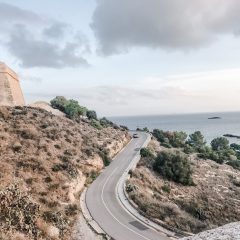

“You might be tempted to avoid the messiness of daily living for the tranquility of stillness and peacefulness.”
– Jon Kabat-Zinn


It’s been nine months this week since we left Santiago de Compostela with our Camino shells, completion certificates, and equal parts struggle and resiliency etched upon our bones. I truly believed a few months after we returned to Valencia, that we were done with the Camino lessons. However, we are rushing toward the year mark, and the Camino lessons don’t seem to be done with us, todavia — not yet. In Spanish todavia means “still,” an action that happened in the past but continues in the present. Or, something that continues happening, “on top of” the original experience. The eyes of my heart have been slowly opening to todavia, the evolving taking place “on top of” our camino experience. It started as a gentle tide, flowing and pulling me along, but the current has grown stronger, and I am learning resistance to lessons deemed necessary by the universe is a waste of energy, and acceptance is the flotation device that rights me after crashing waves do their best to submerge and drown hope.
My first inkling of continually running Camino lessons occurred with glass breaking on the Camino, a quick succession of glass items breaking right after the Camino, and its continuance nearly every month since the Camino. It went from a bottle of perfume, a tumbler, a wineglass with water in it, to a gallon jar filled with distilled water, and finally a brand new mirror I’d hung that fell and broke right beside my bed, waking me up from a dead sleep. The first couple broken items, I chocked up to clumsiness, or the full moon, a Twilight Zone moment, then worried it was a neurological COVID symptom, but the final straw of the mirror glass breaking made me sit up in bed and ask out loud “what is up?” And craziest of all, after I replaced and hung a new mirror in its place, that new, well anchored mirror also fell broke beside me as well. The universe shook my by the shoulders with all the annoying broken glass synchronicities. I am not a superstitious person but as an English Major, drawn to repeated symbols and motifs, the increasing mountain of broken glass has given me great pause.
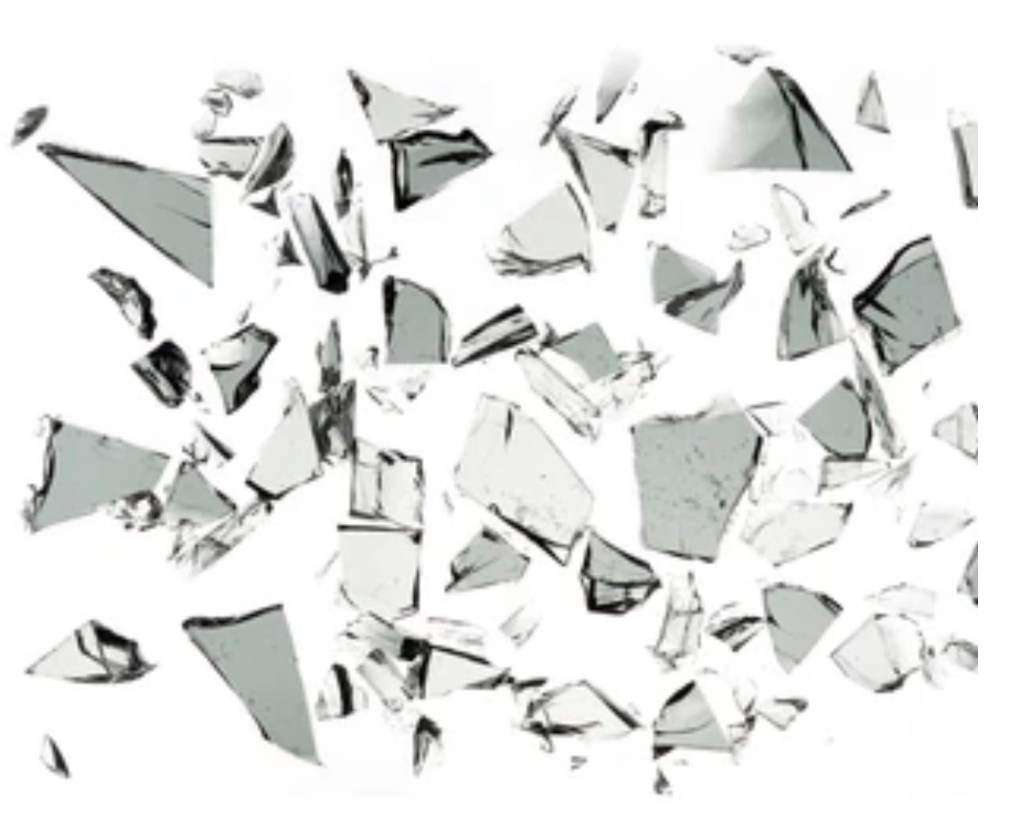
Glass as a property is quite fascinating. It is made of sand grains of quartz crystal, heated until molten, and then cooled to an amorphous solid (meaning it becomes a non ordered crystalline). When glass breaks, it can be recycled, re-melted and transformed into something else…even though its elements remain the same, the lack of orderly arranged atoms means it can be reworked and evolve to a new thing. But even in the evolution, glass still possesses its unique qualities of both strength and fragility. This dichotomy of glass, strength and weakness, has occupied my mind. As a farm girl, prone to think of myself as strong and capable after all the physical labor, of late I’ve had to accept that I am also fragile after several bouts of COVID. I am durable yet delicate like glass. And in this state of being weak yet strong, with broken glass all around me, all the introspection has still left peering “through the glass darkly,” as Paul wrote to the Corinthians, still searching for a sliver, a shard of light and understanding. My thoughts circle often to my sister who is suffering with compounding mental illness. She has broken from reality and no amount of positive thinking, prayer or psychiatry has returned her to cognitive soundness and able to raise her three teenage children. I have felt the loss of her as if she has actually died. But the symbolism of the broken pieces of our relationship evolving, glasslike, into something else, eddies in the currents of my mind. In the sweeping up of broken glass, two thoughts have come to me: one, things break and I need to move past broken things in my life, and two, I needed to change the glass lens I am looking through.
On our first week of the Camino del Norte, once scorching afternoon I was so parched upon arriving at the hotel in Zarautz, I straightway poured myself a glass of water, but before I could drink it, broke it by knocking it off the bedside table with my phone cord. A few minutes later, cleaning up the watery glass, I started hearing glass breaking. Going to the window, partially encrusted with salt, as we were near the Cantabrian Sea, I made out that our room was directly above a glass recycling container. All evening long, I could hear glass being dropped and broken in the recycler. I went from cringing to appreciating the universe’s nod that we too were being broken on the Camino, but were in the makings of being repurposed. And on the last week of the Camino Primitivo, my iPhone fell off the lanyard around my neck and broke the glass lens inside my camera. It was rainy and foggy on the trail and it took me a while to realize the camera lens had broken with the fall. In the video below, of our sixteen days on the Camino Primitivo, the last few days are blurry because of the broken lens. I was irritated compiling the video because of the blurry images, but it dawned on me the dark areas were fuzzy but the light areas were not. The light areas were clearer……
General George S. Patton’s wrote a poem during the dark days of war: “So through a glass, and darkly, The age long strife I see, Where I fought in many guises, Many names but always me. And I see not in my blindness… ” George Patton
The lens I peered through at life, at my sister, appeared dark, distorted and broken, and in my blindness I didn’t comprehend the cracks of light. “There is a crack in everything. That’s how the light gets in.” (Leonard Cohen) I was not “seeing” or focusing on the light with my sister. The kaleidoscope pattern of all the months of broken glass, shifted just enough in my head that I caught a glimmer that I was seeing not in my blindness… All the broken glass and cracks were designed so I could find the path, the trail, the camino to seeing in my blindness.
Ancient Romans were fascinated with glass and picked up where their predecessor, the Mesopotamian’s, left off with their glass blowing techniques. Romans began experimenting, blindly at first, trying to create the strongest, clearest and loveliest colored glass. Breaking bits of old glass, heating it and adding new crystalline as well as limestone, potash, cobalt, manganese, gold and silver, they discovered while the liquid glass became very dark and opaque in the melting process, once the mixture was removed from the furnace and blown, the glass would become translucent, and the light could come through. New possibilities, discoveries and blindness to sight could only take shape in me when I repurposed all the glass wreckage, my misguided thoughts and actions and purposefully and methodically searched for the translucent.
“It is not what you look at that matters, but what you see.”- Henry David Thoreau
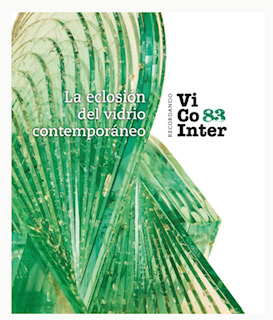
A friend just visited me in Valencia, and because 2022 is the International Year of Glass, we visited the Vicointer ’83 contemporary glass exhibit by Spanish glassmakers, (Joaquin Torres Esteban, Pablo Picasso, Gaudi, Jorge Oteiza) dedicated to the new glass movement. We came across one cut glass exhibit where the artist had broken the glass he was working on. Instead of trashing it, he kept it as a guide and started again. He appreciated the reminder that progress only comes after things break. After the exhibit we reminisced about a Museum visit in Tokyo, where we saw a glass bowl that had been broken and repaired with gold. The broken part, instead of detracting from the beauty, added a unique dimension and internal strength. We mulled over the idea that tragedies, illnesses and breaking points are designed to give depth, resiliency and beauty. It would be nice to bypass and sidestep the “messiness of daily living for the tranquility of stillness and peacefulness,” but such a life cannot give us power or true strength. I just finished rereading Ernest Hemingway’s Farewell to Arms. One of my favorite lines in his sparse narrative is: “The world breaks everyone and afterward many are strong at the broken places.” How backward and counterintuitive it seems that the struggle is the purpose, and yet, todavia, the camino lesson continues to teach that weak places only become strong places after we are broken.
“She understood that the hardest times in life to go through were when you were transitioning from one version of yourself to another.” – Sarah Allen Addison
“Change and growth is so painful. But it’s so necessary for us to evolve.” – Sarah Mclachlan
This reminder that evolving only happens after pain and breakage pressed in on me one stagnant Valencia summer evening where the sunset turned all the white Mediterranean buildings a beautiful terracotta hue. I was fighting a fever and another bout of COVID, and I had just broken the lid to the sugar bowl and dropped a teacup trying to make a hot lemon and honey drink for my sore throat, and the despondency of broken me and the broken cup all seemed too much to endure. Steve had just flipped through the channels and paused on an old Star Trek Next Generation movie, where a sentient robot character named Data, who had been severely injured, fights off the Borg queen’s poisonous, invading thoughts ‘to just give up.’ Data fights back and declares: “I will not give up. I am programed to evolve.” This gave me another nudge and reminder that this was my moment to evolve. To become better and stronger in the broken places.
“Look around you. Everything changes. Everything on this earth is in a continuous state of evolving, refining, improving, adapting, enhancing…changing. You were not put on this earth to remain stagnant.” – Steve Maraboli
Charles Darwin, while writing The Origin of Species, suffered debilitating stomach and chest pains, and various panic disorders. Reading a biography about Darwin and his wife, I caught a glimpse of Darwin’s evolution from faithful, to unbelieving, and back to faithful as he wrote: “It is not the strongest of the species that survives but the most adaptable to change.” Breaking, adapting and evolving. Maybe all the breaking of my kitchenware and mirrors set the course so I could evolve enough to embrace the future. The Camino was just the beginning of embracing the messy, the blind curves, the breakable and chaotic, and was always meant as a reminder to search for trail markers of changeability and adaptability. Maybe the Camino was always an evolving journey without a finish line or end.


A Coruna – The City of Glass
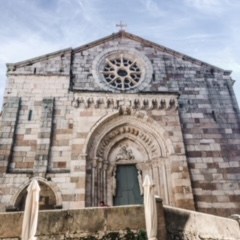
The day before we left Santiago, and headed home to Valencia, we took a train to A Coruna, the Glass City, where the Camino Ingles traverses, to see the Iglesia de Santiago Apostol, where St. James appeared in a vision to a discouraged Spanish Commander, in the 8th century, who was outnumbered while fighting off Turks. The vision gave insight and courage to the Spanish Commander, and he rallied his troops and pushed back the invaders. Looking back, I find it interesting that the church doors look like broken glass pieced back together. And around the corner, the City of Glass “Galerias,” glass enclosed balconies, shimmered. The glass allows Galegos to still see the sun and sky during the rain and dark skies of the harsh winters of Galicia. They see through the winter glass darkly and find light.

Looking out at the big bright orange moon tonight reminded me of looking through my Aunt’s telescope. She loved to pick out constellations and planets, and tell stories, and show my siblings and I far off planets through the glass lens. I remember I was upset that I couldn’t see what she saw so clearly through her telescope lens. One night after hearing me sigh in frustration, that I couldn’t see, she told me to keep both my eyes open (not close one eye like I had been doing) and then look though the lens. And for the first time, I could see clearly and admired the planet Venus. I think again of all the broken glass around me, my poor sister’s broken brain, my broken health, and I wonder if I open both my eyes, my physical eyes and the eyes of my heart, if I can see better through the lens, through the dark, and see how to love her best despite the pain and destruction she causes, how to love my life even when I’m Long COVID exhausted all the time now ( I could walk 22 miles a day on the Camino and struggle now to walk 2 miles without extreme fatigue). I wonder if this is the camino lesson “todavia,” still carrying on long after leaving Santiago…. broken isn’t really broken… just change the lens I’m looking through…..
One last thought about the broken glass… In Japanese culture, broken glass is a positive thing. It signifies an end of something, an end of a cycle, and the beginning of possibilities, new life phases, adventures, people and new paths. Feng Shui tradition says when glass breaks in uncountable pieces, it is a time to embrace change. I can’t count the pieces anymore, and it feels like a time of change. Steve has taken up sailing, and we have been talking about buying a used boat to sail the islands in the Mediterranean. The tradition in the Med after buying a boat is to break a bottle on the ship’s bow to ensure good journeys ahead. Perhaps that’s fitting end to all the breaking glass. We purposefully break the glass and move on. Join me breaking through the old, breaking out of blindness and moving towards clearer vision, mindsets and journeys with both eyes open.
 The Unhurried Traveler
Leave a comment