Wisdom in Waiting

A pause gives you breathing space to listen to the whispers of the real you waiting to happen.” -Tara Estacaan

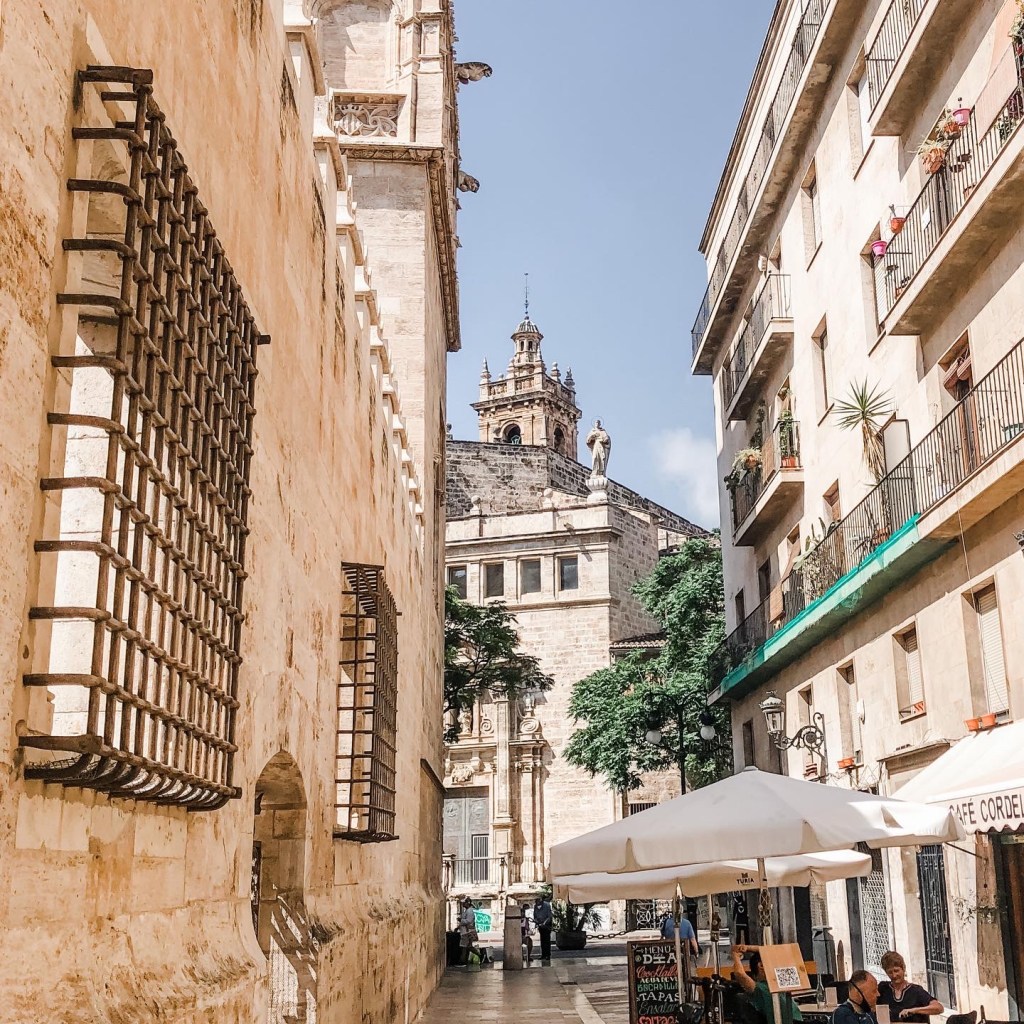
There is a “para llevar” cafe on Calle de Calatrava, in Valencia Spain, where we frequently take away Argentine empanadas. Steve’s mom spent part of her childhood in Mendoza, Argentina, and perfected the tiny pocket sandwiches, filled with a picadillo of green olives, eggs, raisins and ground beef, and they’ve become a family favorite. Spaniards, Latino transplants and tourists alike adore empanadas from this cafe near our apartment, so waiting in line is a reality. Trying to purposefully tick off minutes while we wait… deciphering garbled graffiti on a wall, admiring the palace decorations a few paces away, smiling at the pod of nuns heading for St. Nicholas cathedral…I usually only kill off around thirty seconds. For a farm girl conditioned to constant movement and productivity, WAITING—whether for food, our turn, a job offer, post-pandemic normalcy— must be filled with something fruitful. And yet, while “The Great Pause of 2020” continues, at least here in Spain where vaccinations are only at a 26% and cases have started going up again with restrictions lifting, it is not lost on me that the uncomfortableness of standing still, and waiting, has metamorphic lessons. Slowing down further, not pursuing distraction, and not distancing from ourselves and our emotions, these are the transformational messages available for para llevar, or take away.

Be patient and tough; someday this pain will be useful to you.” Ovid

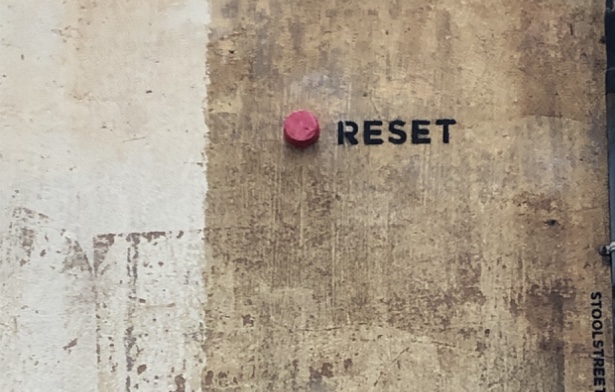
This last weekend was a festival to commemorate a patron saint named Isidore born in sixth century Spain. As a young boy Isidore was punished by his older brother Leander for not learning his studies in a timely manner. After reaching the end of his patience in Leander’s abuse, Isidore ran away. As he rested on a boulder, water dripped on his head. Looking about, he noticed the water dripping from above had, over time, worn holes in the rock below him. A notion came to Isidore that if he worked at his studies, evenly slowly, and endured Leander’s impatience, it would pay off drop by drop. Isidore returned home and didn’t protest when Leander locked him in a cell. He spent his days and nights for years, studying and learning, and eventually became the Bishop of Seville, and made education available for all through seminaries. As I read this, I was locked in my apartment, a Covid Cell, due to an uptick of tourists and virus cases, enduring yet another day of “skunk smells” from the pot smokers below us. I felt pity for Isidore and myself and wondered what lesson I was supposed to be learning. At my saturation point of secondhand smoke, I escaped and ran out to get groceries, and on the way back noticed a couple new “RESET” buttons, which have cropped up around Valencia. It occurred to me, as I shifted my heavy grocery bag from shoulder to shoulder, that I wasn’t poor Isidore being locked in a cell. I was Leander trying to beat more out of myself, others, and from the day, and it was time to reset my thinking.
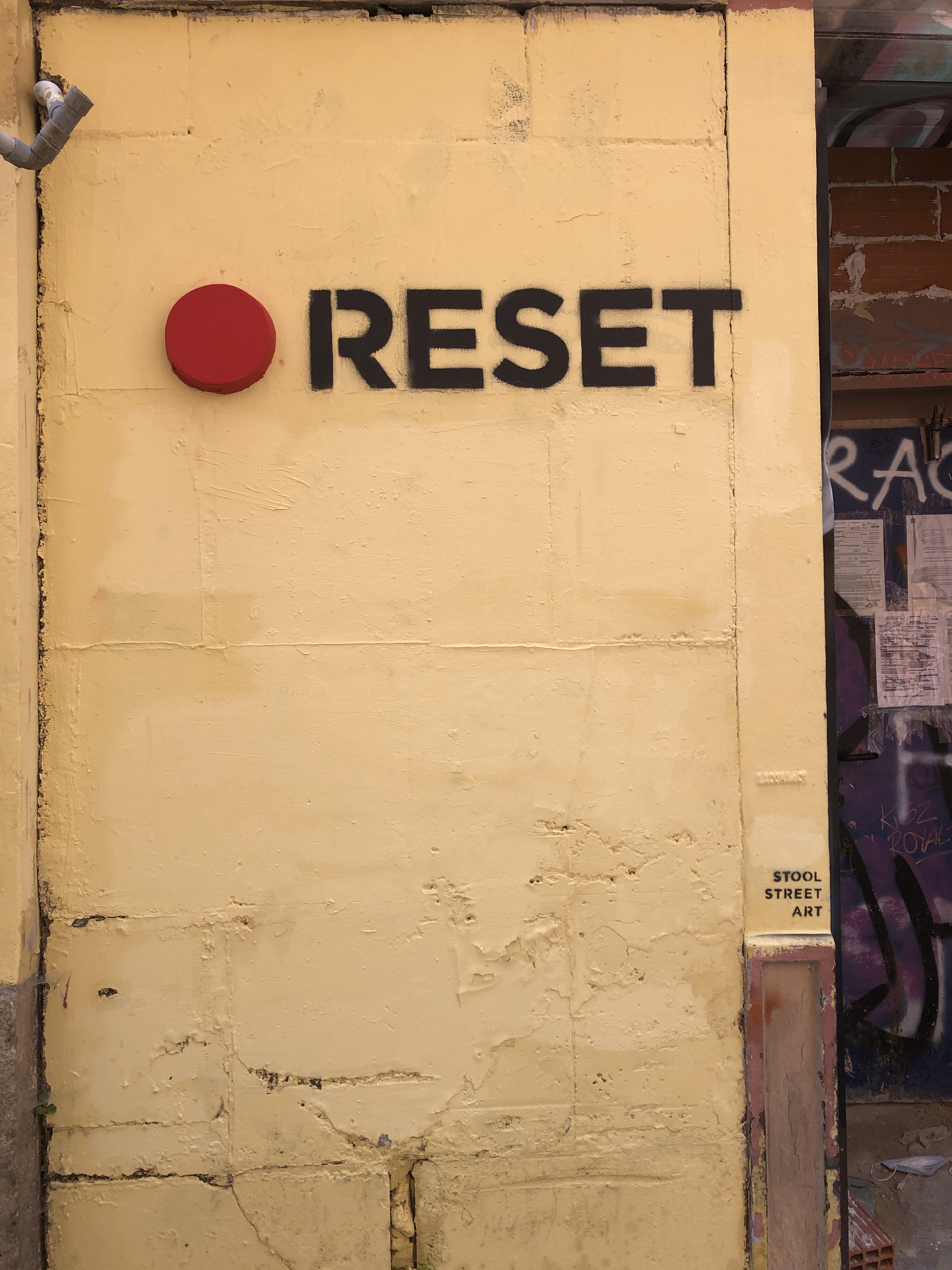
โ€œIf positivity is not your mindset, then resetโ€ 
โ€• Josh Stern

While mulling over ‘reseting,’ we watched a Vlog on Netflix done by a 60+ year old man doing the Camino Del Santiago. We are walking the Camino del Norte, a 560 mile journey across Spain in September, (roughly 15-20 miles a day for 35 days), and we thought we’d get a feel for the trail via his walk. This Dutch man, with terrible knee problems, an invalid mother at home, a girlfriend who had just passed away, and a friend diagnosed with a terminal disease, decided to just start walking to release his fear and find direction for his life. He felt the days walking in solitude would reset his mind and return his confidence in life. As he walked from Summer to Fall, he noticed his shadow went from really tall in front of him, to a shorter shadow behind him. The thought came to him as the days ticked away, that he had spent his whole life always looking forward to the future, a tall shadow ahead, or thinking about his past, his short shadow behind him. It was impressed upon him that he need to stop looking forward and backward and just be in the present moment. Not be a shadow of himself. After two weeks of walking, he reset his thinking and stayed present listening to bird calls, noticing the sound of the trees moving in the wind, and the way the color of the sky changed. Fear left him and a love for life returned after he slowed down and stayed in the ‘now’ by observing, feeling and appreciating. He was no longer a shadow of himself. This resounded with me, not going through life as your shadow self….always rushing and moving and stuck in front or in back of your life. I have been a creature of the past, i.e., missing aspects of my family, how they used to be, and not appreciating them fully for who they are now. And purposefully staying busy and wishing for the future, when confinement and mask wearing is finally finished. Living in both shadows, I had set aside the joy of ‘right now.’ My Reset, the button I hold down to restart my life, is not escape mode through productively and accomplishment. My reset, now and after the Great Pause, is to ‘pause’ in my own life, as uncomfortable as it is locked in the COVID cell, to feel pain, loneliness, discomfort, and from it walk away with more self-awareness, empathy and courage. To become less shadow, and emotionally stronger by being still and releasing the numbness of constant motion.

“Patience is not passive, on the contrary, it is concentrated strength.” Bruce Lee

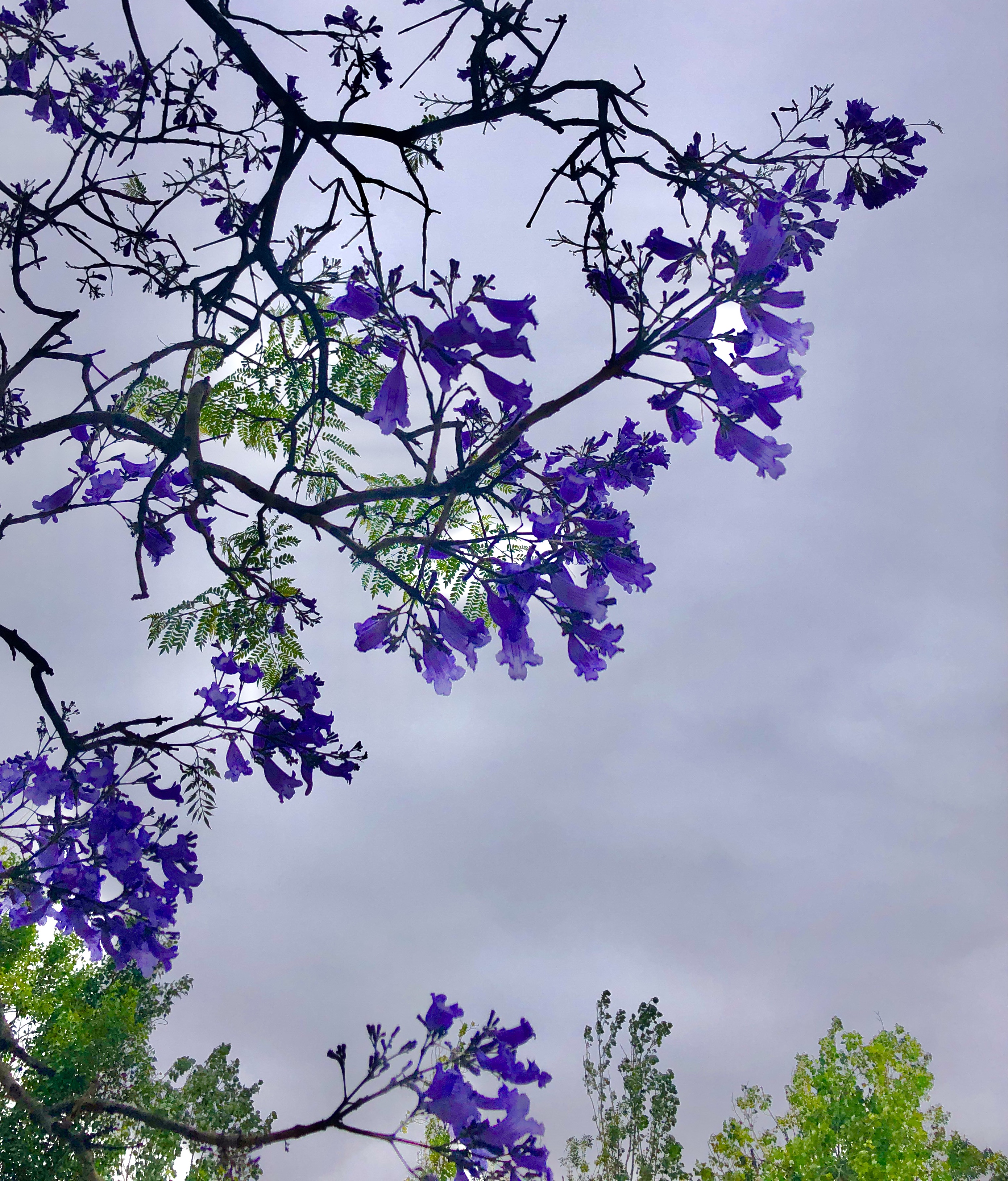
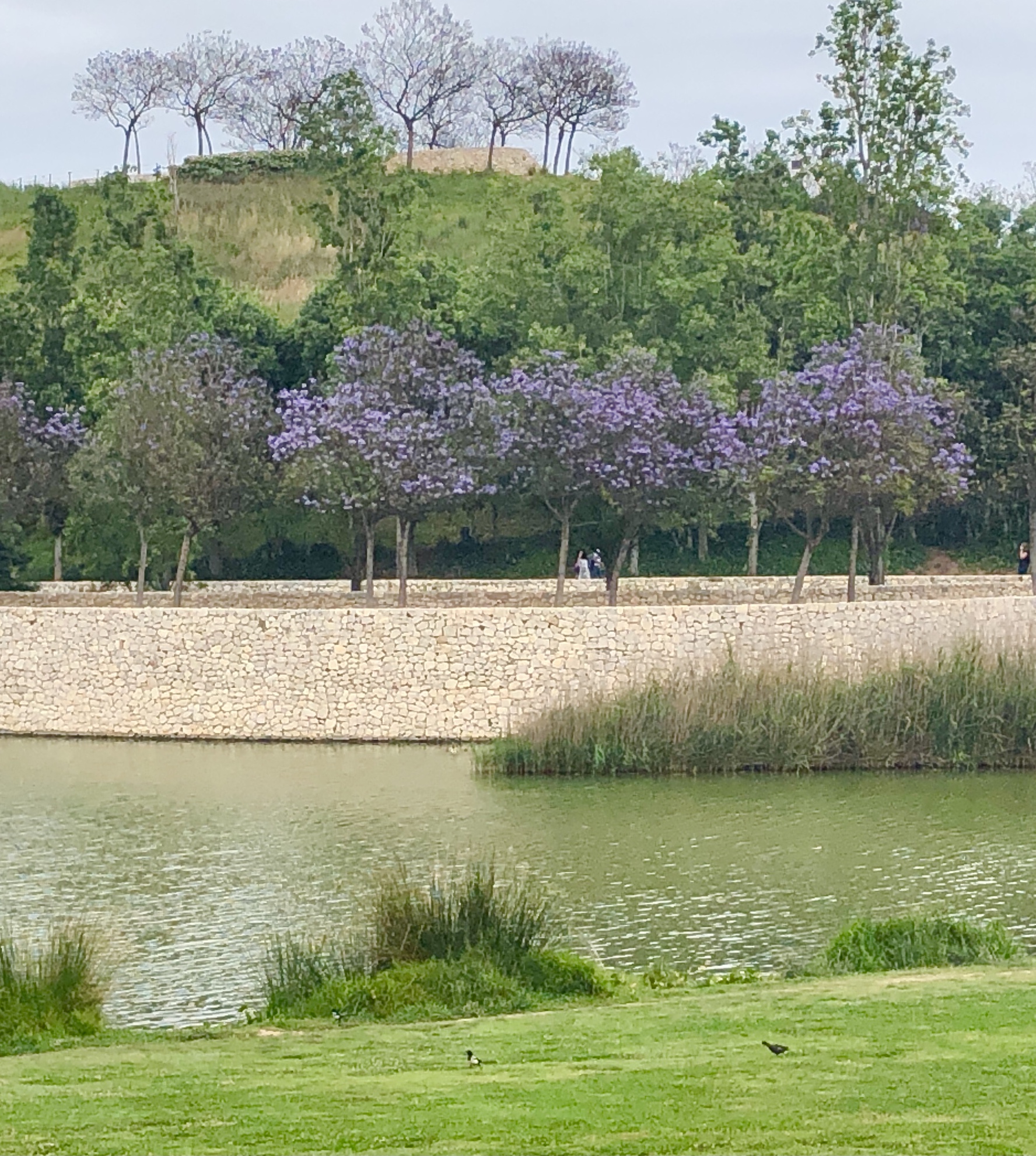
As a visual learner, a tree helped me learn to ‘reset’ and be present. After living in Spain for eight months, and observing a slower rhythm of life by Spaniards, I still continued ‘full steam ahead.’ I tried to rush the lockdown by setting a goal to move my 15 minute mile down to 13 minute mile in hiking boots for the Camino– achieved at the cost of hurting my knees and destroying Steve’s feet. One day while I was zagging around slow walkers on the trail, Steve tugged my sleeve and said “slow down.” He reminded me we had come Spain to find a better pace and rhythm for life, and yet I was still speeding through life. Not a coincidence that a ‘Mindful Meditation While Walking’ showed up in my inbox. It said “if you look up, you will automatically slow down.” So I headed out, looking up and immediately tripped over an exposed tree root and twisted my ankle. I got up and tried again, slowed my step and my breath, and a little further on, twisted my other ankle stepping in a hole. I hobbled away ready to abandoned the whole attempt, except I noticed this row of stark trees that looked dead except for a handful of sparse blossoms here and there on bare branches. Upon closer inspection to one of the trees, I realized they were purple Jacaranda trees. (We had yellow Jacaranda in Brazil that exploded in vibrant yellow flowers in the Fall) The thought came to me “The Jacaranda grows through patience.” Point taken. Over the next week, more of the dead looking branches on the Jacaranda sprouted more purple trumpet flowers. By the following week, the dead looking branches had sprouted vibrant clusters of lavender-blue flowers. I stood rooted under the Jacaranda with the wind throwing purple confetti, and I understood you could be mindfully present while walking. My watch kept prodding me to get moving, but there I stood smelling jasmine and honeysuckle from other corners of the Turia park and smiled at the breeze dropping blossoms in my hair. I was alive in the moment. The Jacaranda bloomed in May, two months after the almond and cherry tree blossoms had come and gone. While the Jacaranda took longer, the flowers were more beautiful and lasted twice as long. The patience of the Jacaranda gave me hope and courage to reset and be grounded in the present.

Patience is also a form of action.” Auguste Rodin (The Thinker Statue)

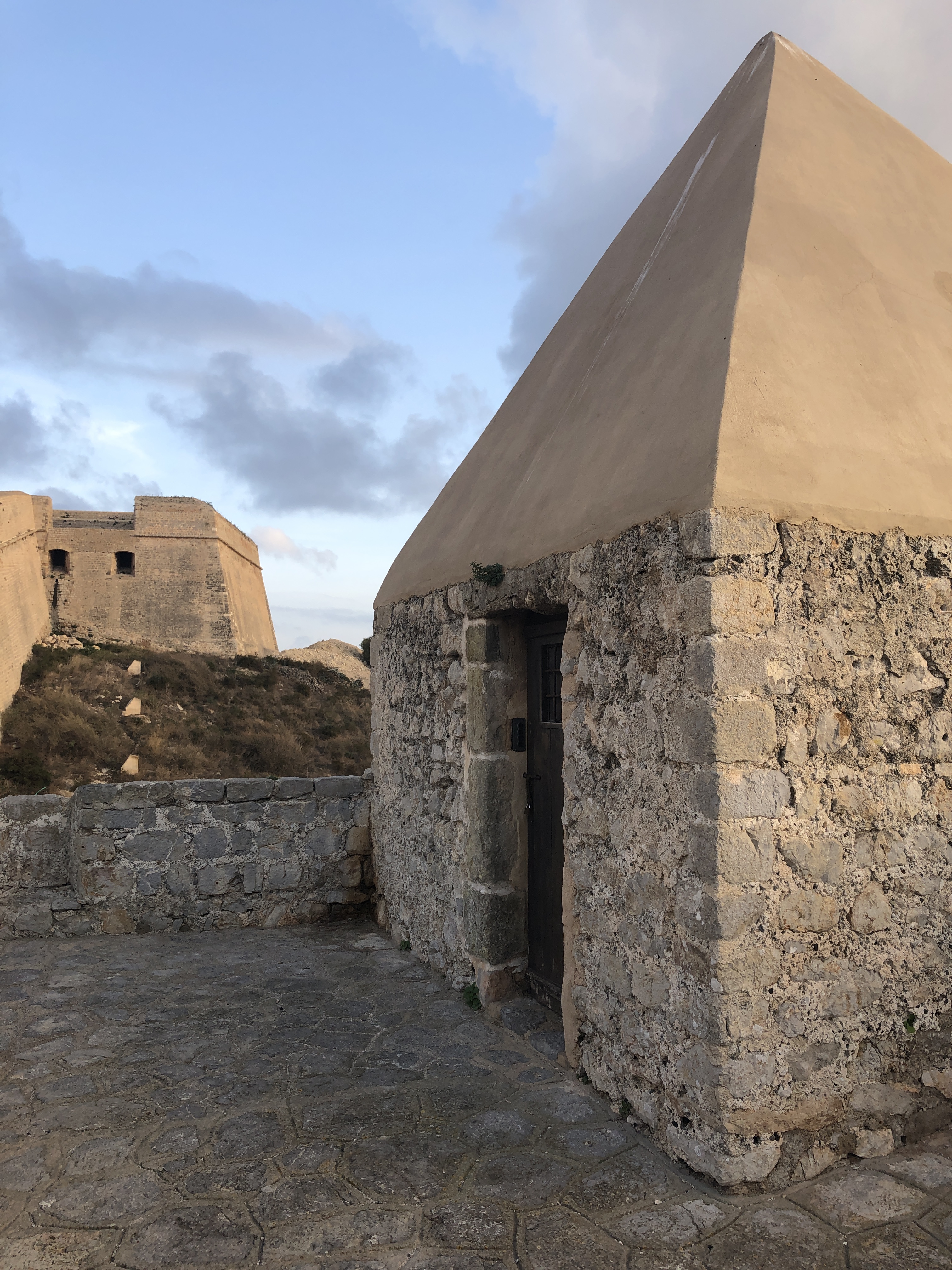
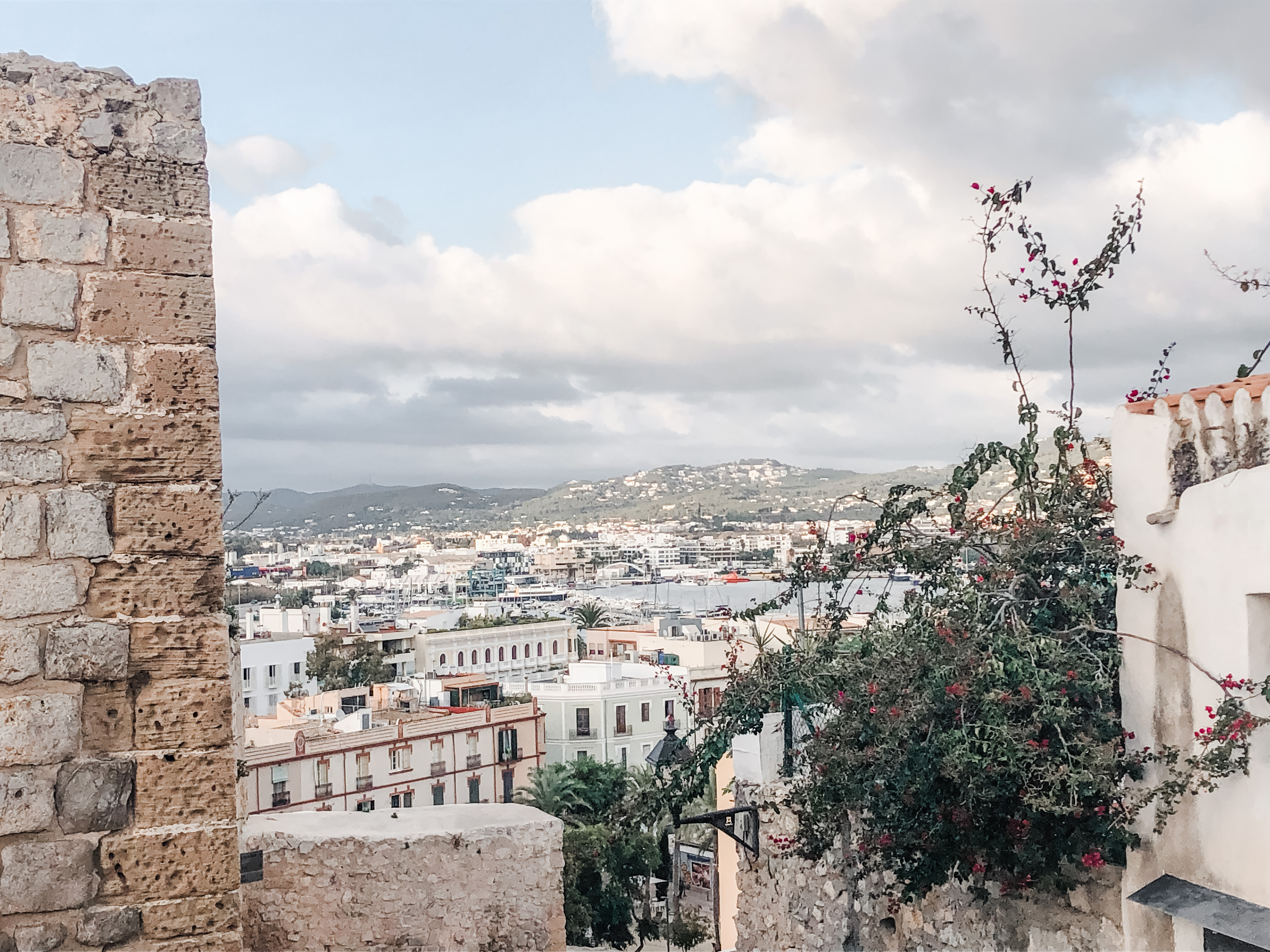
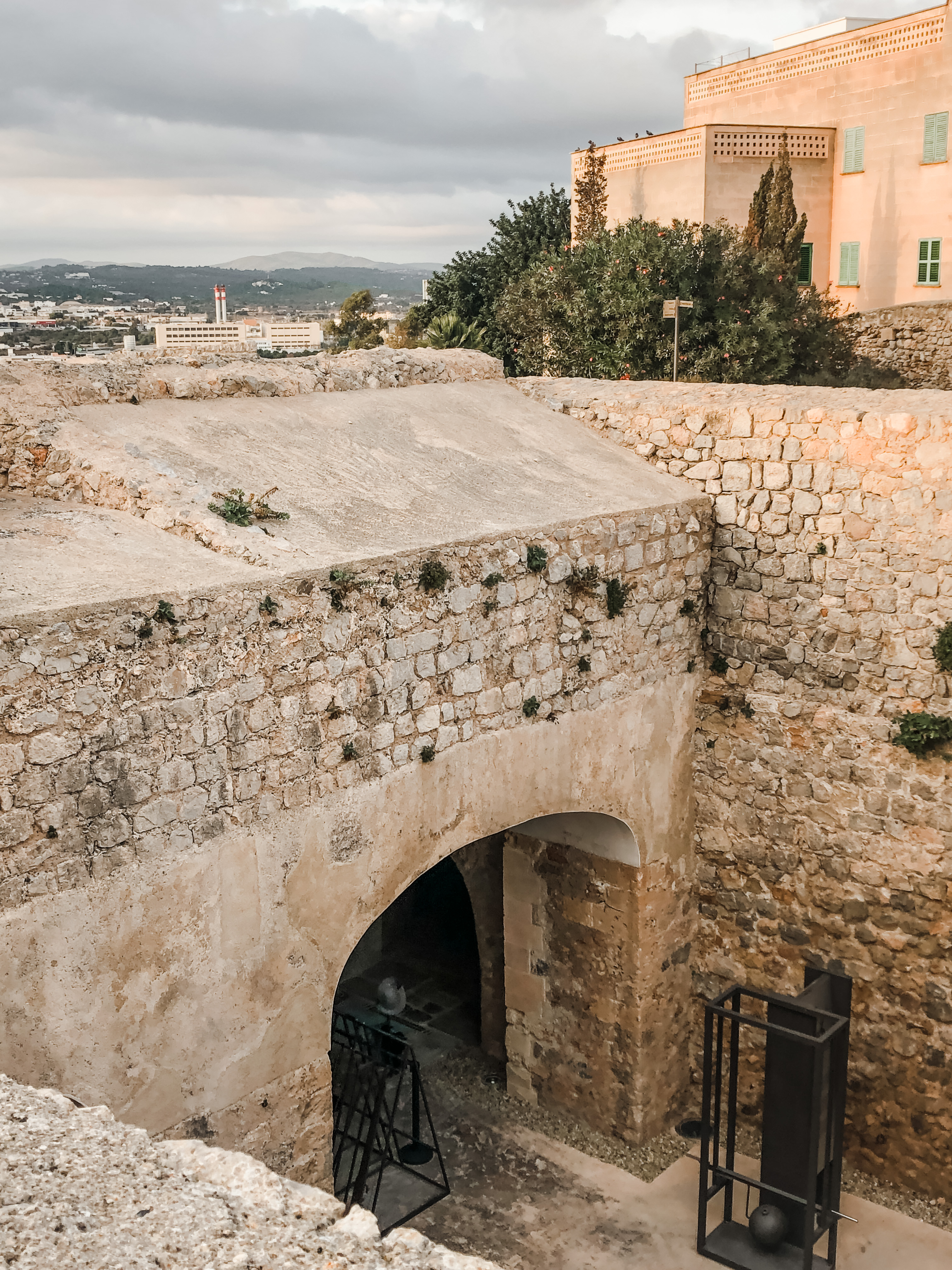
To prove that patience and thinking is an action, Jennifer Roberts, a Harvard Humanities professor, challenged her students to stare at an object for three hours in an exercise she called “deceleration and immersive attention.” To illustrate the value in waiting, she chose a painting and sat with her students. It took her ten minutes to notice a matching curve on the boy and the animal. It took her another 22 minutes to notice his fingers holding a chain were the same diameter as the water glass below. Deeper revelations came during the three hours as she slowed and decelerated her thoughts. The professor’s appreciation and understanding was enhanced through waiting and pondering. By immersing them all in the present, her student’s also cultivated a deeper relationship with time. It was not about using time wisely to get more done, but letting periods of slowness, deep breathing and pause create greater wealth in their lives. We decided to experiment on this professor’s challenge while visiting the Balearic Island of Ibiza, 93 miles off the coast of Valencia, at a Mediterranean rock fortress called Dalt Vila. The Phoenicians were the original inhabitants in the 8th century BC, and then the Romans, Goth and Visigoths and Arabs before the Christian reconquest in 1235. Dalt Vila fortification with its Renaissance walls and bastions was built as a defense against Barbary pirates, Ottoman corsairs who operated from North Africa and raided villages and islands in Spain, Portugal, France and Italy.
“Patience and fortitude conquer all things.” Ralph Waldo Emerson

It was a long climb up the stairs to the fortress summit to see the cannons that guarded the coast but the views on the high ramparts and Bastion of Santa Lucia were breathtaking. After we caught our breath, we didn’t hurry off. We stayed and admired the sunset on the water, and the way the setting sun highlighted the windmills of Puig de Molina (Windmill Hill). We could finally imagine the army of giant windmills that Don Quixote fought. The windmills had been standing guard on Ibiza since the 15th century and used to bring energy and grain to the inhabitants of the island. Their cylindrical towers stood 8 meters or 26 feet high and rested on a medieval islamic Necropolis dug in the hillside below. People paused momentarily to see what we were looking at in the distance but climbed on leaving us alone to think our thoughts. Just staring at the windmills energized our minds and bodies. I could feel myself resetting as we paused to just observe the sea moving below the fortress. We waited hopeful for the green spark that sometime flashes when the sun dips below the horizon on the water. We were rewarded with this fleeting spectacle as the atmosphere bent the sunlight passing through it, separating the light into different colors. The reds and oranges were absorbed, leaving the green light visible for a split second. It was astounding. Even though my initial response while visiting a new place is go go go and see see see, I said to Steve as it started to get dark, “let’s come back here again tomorrow,” and he readily agreed.

โ€œEvery sunset is an opportunity to reset. Every sunrise begins with new eyes.โ€ 
โ€• Richie Norton

We could never learn to be brave and patient if there were only joy in the world. ” Helen Keller

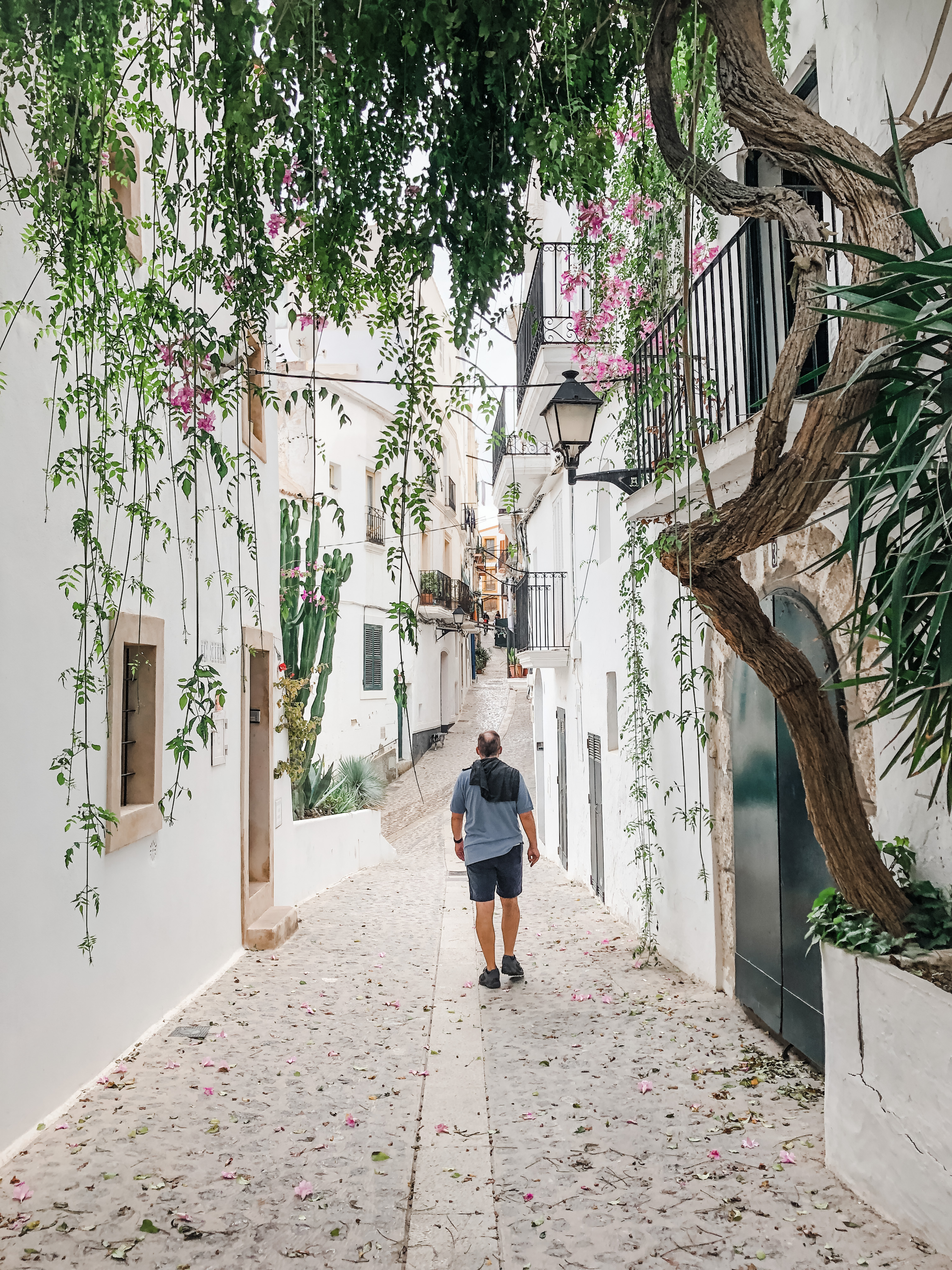
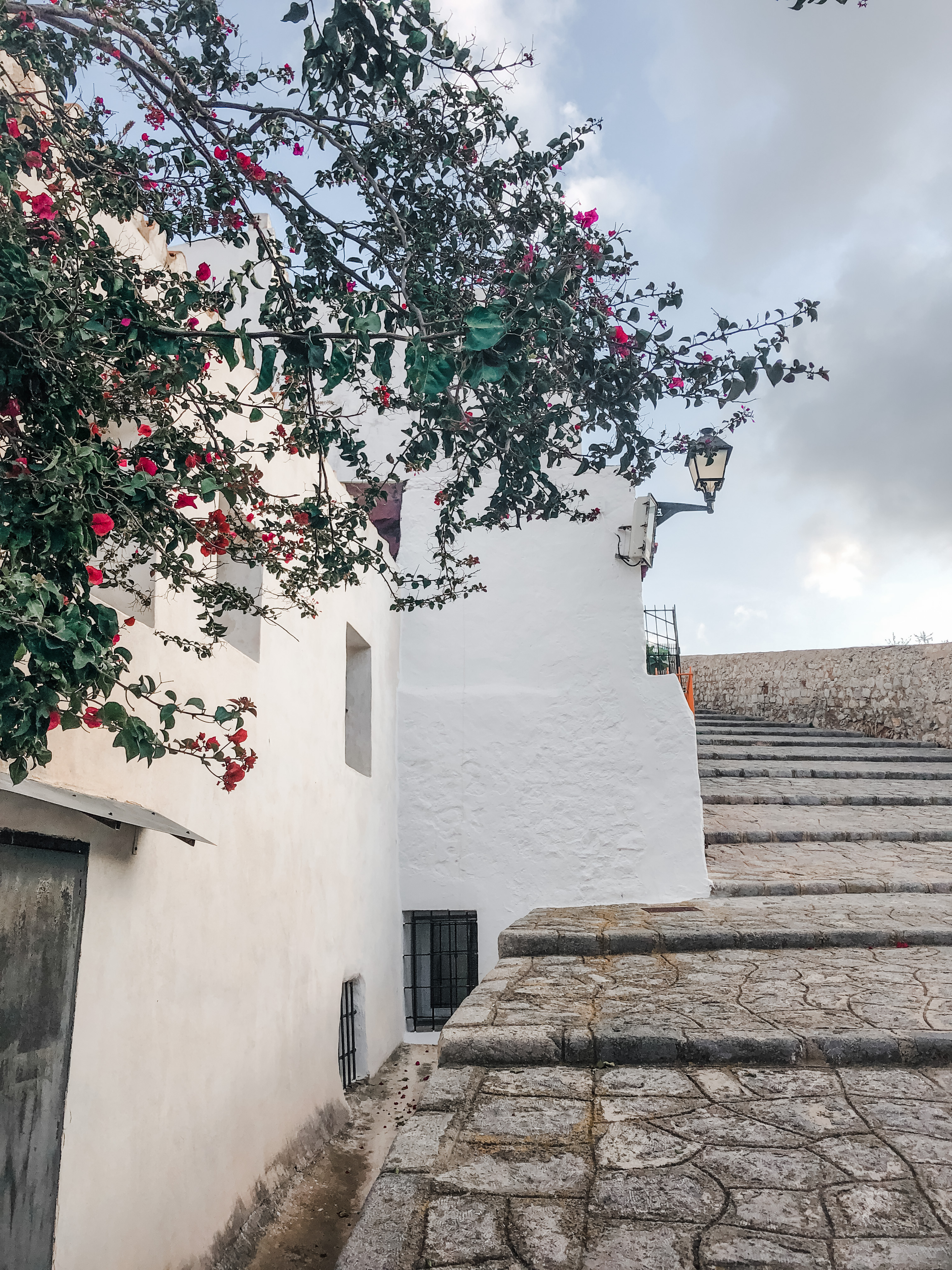
The next day we wandered up and down more steps and through tunnels and admired pink bougainvillea cascading down white walls and over fences. We poked into little churches stuck in crannies. We read little signs stuck in the walls saying someone lived there long ago. We admired green shutters and blue doors and wrought iron decorations. We watched boats and ferries come to shore and people disembark. We lost ourselves in the mini grandeurs of life. I read in the Journal of Positive Psychology once about a researcher named Dr. Sweeny who said “Typically, ‘awe’ is generated through experiences that help us recognize the ‘bigger picture’ in some way through observing grand natural phenomena, profound human experiences or incredible human accomplishments.” But I found awe on Ibiza not by the grand phenomena of Dalt Vila but through its minute details.

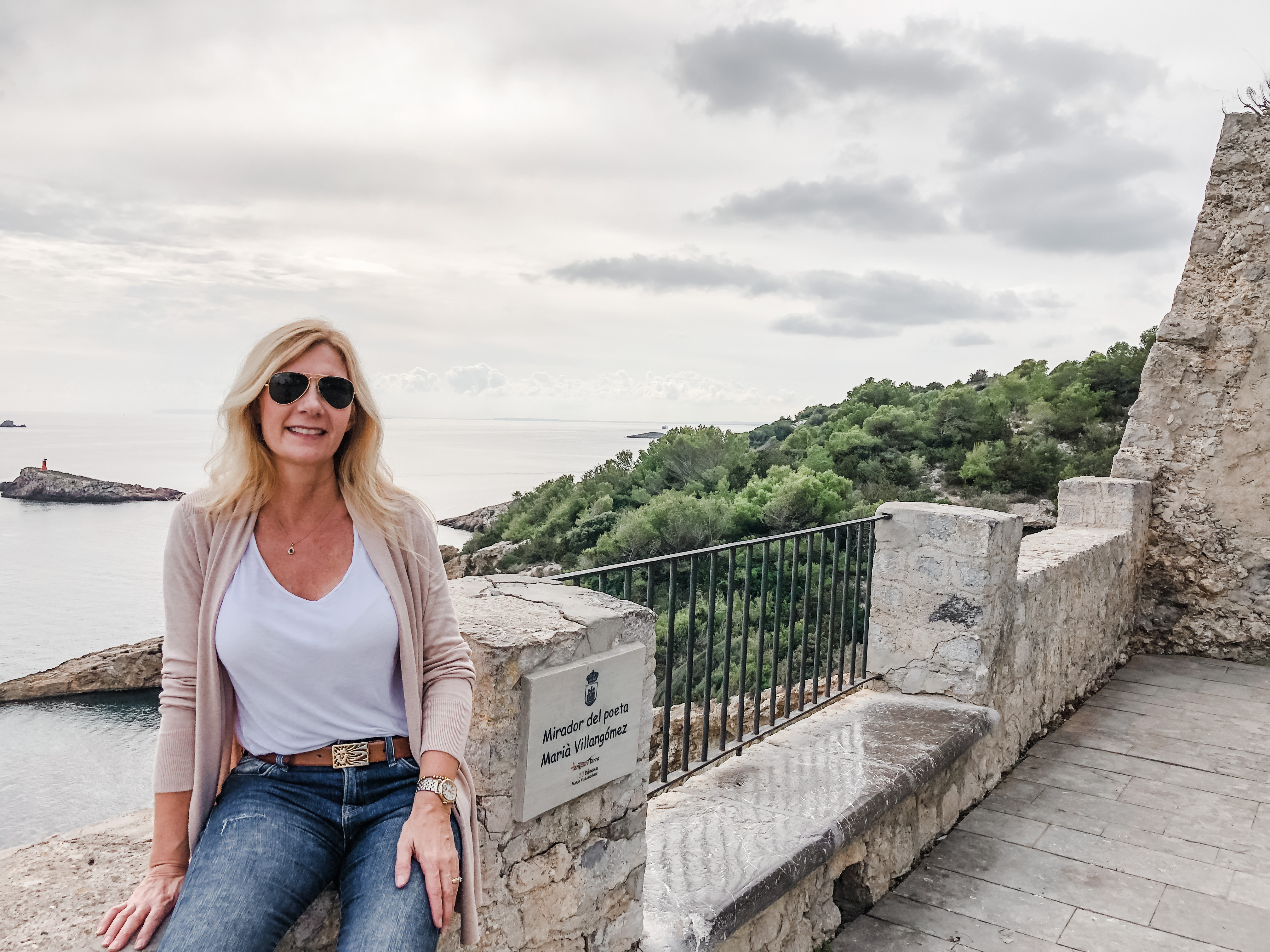
As I sat on the old Renaissance wall of Dalt Vila, looking at the vibrant Mediterranean Sea surrounding Ibiza, a novella by Margaret Atwood, “The Penelopiad,” fluttered through my mind. It is a modern rewriting of The Odyssey that recapped Penelope’s story. She waited twenty years for Odysseus to return and while she waited she raised her infant son Telemachus and wove a death shroud every day and unpicked it every night, in an attempt to waylay her suitors wanting her to remarrying. (She told the men pursuing her, who said Odysseus was dead, that when she finished the death shroud she would pick a new husband). Telemachus, now 20, grew tired of waiting for his father and waiting to inherit his kingdom and Penelope said to him: “Water goes where it wants to go, and nothing in the end can stand against it. Water is patient. Dripping water wears away a stone. Remember that my child. Remember you are half water.” In the vein of Penelope, I thought about patience like water doing its magic during the great pause. Did we wear away the nonessential in our lives drop by drop? Did we succeed in unearthing wisdom while we waited? Like the Jacaranda, did we bloom slowly and surely by tapping into dormant knowledge inside us? Was the real part of us waiting to happen, become unearthed when we no longer ran from stillness, solitude and ourselves? Maybe that is the Para Llevar, the take away.

“From our solitude we shall create, forge songs, pour in the reflection of the stars and refresh the mind about the silk-ridden roads that wait for them who have forgotten to feel.” Tara Estacaan

Refugio

On our walks to “Il Rio,” the river turned Turia Park, we pass a gated door on a walled corner garden of the ancient city of Valencia, Spain, with yellow birds coloring the air and flowering trees stretching skyward. Valencian restoration recently painted one word beside the secret garden door: “Refugio.” An affinity and pang for refuge knocked on my heart, as a dawning 2021 proved challenging with an unstable man loitering by our door hurling obscenities, neighbors’ non stop parties despite COVID restrictions and six straight months of construction noise. Refuge, that gated secret garden, beckoned during unsuccessful attempts to drown out drilling, subwoofers, echoing chatter, and reverberating high heels until dawn. Rose colored life in El Carmen, with its late night culture, reached maximum saturation. In Old Town Valencia, 2 am is a normal bedtime, and residents have remarkably high thresholds for loud noise while they sleep. Noise pollution, traveling up the walls and through floorboards during quiet hours, doesn’t register on their radar. Attempting to adapt, as we wanted the ancient ambience, we pushed off bedtime until the last midnight church bell sounds and wake up at the first 8 am bell. But being born with an extremely sensitive nervous system, the intrusive noise at all hours brought on a wistfulness for refuge.
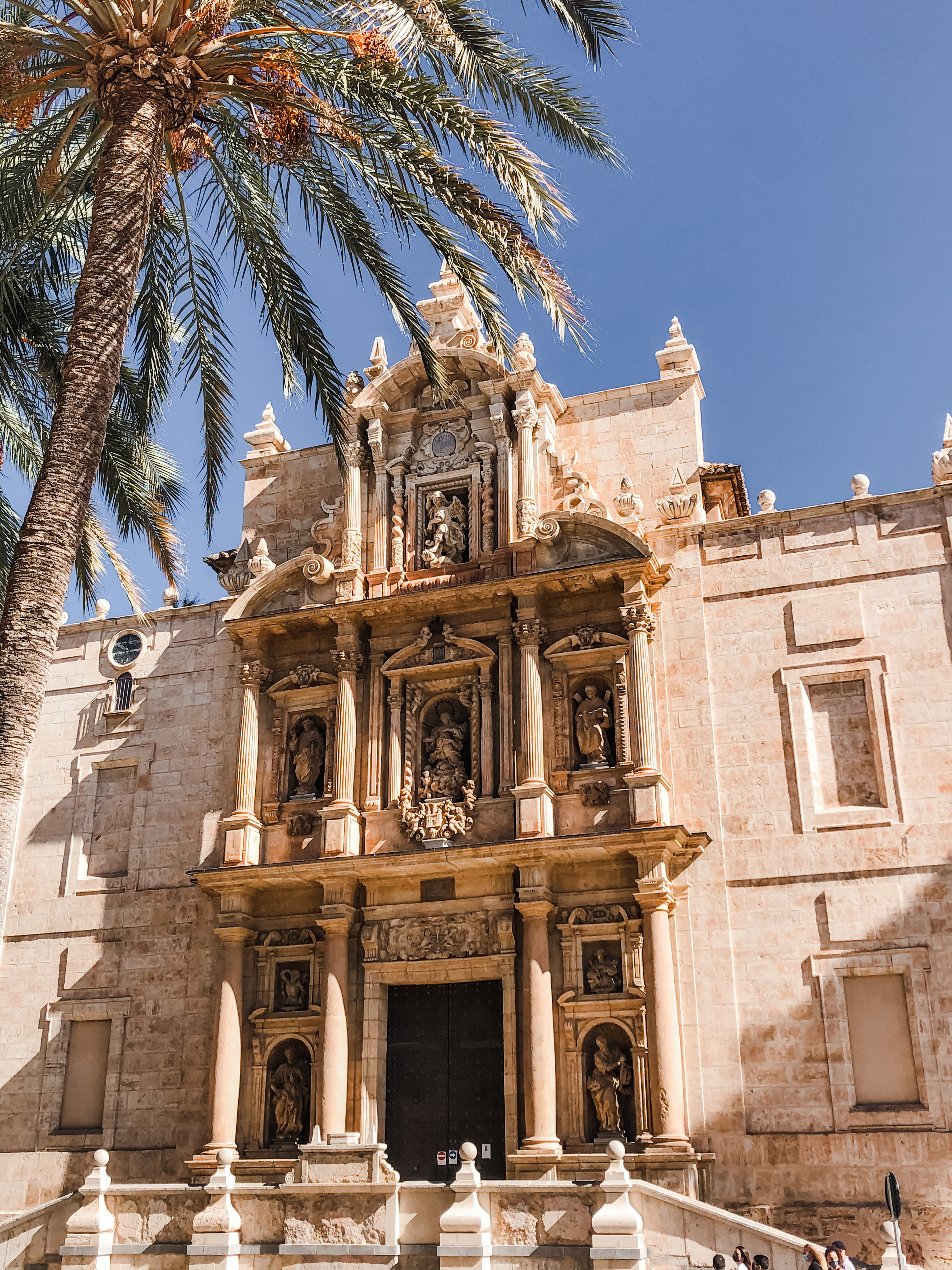
This last week while walking down Carrer dels Serrans, I noticed another newly painted “Refugio” sign with the same art deco letters by the secret garden door. A little research uncovered that in 1936, during the Spanish Civil War, the Second Spanish Republic moved the Capital to Valencia. Because of it, Valencia was bombed over 400 times, killing 800 people and maiming three thousand. Nearly a thousand buildings were leveled. To protect Valencianos, 250 air raid shelters or Refugi were designated all over the city. This Refugio on Career del Serrans street was built to hold 300+ people at a time. After Franco’s dictatorship ended at his death in 1975, this bombing refuge was turned into a banana warehouse, later became a space to build floats for the Fallas Festival and now has been designated as a monument of cultural significance. The Refugio’s back exit is none other than the secret garden door. We reserved a tour online to visit the Refugio shelter in March when restrictions are lifted, and we will eat lunch at another recently refurbished Refugio, now a Michelin starred restaurant. And funny enough, in another moment of synchronicity, yesterday walking through Placa de Tetuan, I paused at a tucked away cultural sign that I had passed numerous times but never understood its significance until that moment– ‘near this plaza are more hidden Refugi.

“We can find true refuge within our own hearts and minds-right here, right now, in the midst of our moment-to-moment lives.”- Tara Brach

Being off kilter and floundering in all the chaotic noise, I started doing a morning Mindfulness meditation to become more resilient and restore my equilibrium. I found it interesting to learn that floundering, while an extremely vulnerable and distressful place, it is where we can gain more clarity and find firmer ground. While I wanted to tuck tail and run from Old Town Valencia, I am discovering there is wisdom in floundering. I am learning there is a grace in giving in and feeling the destabilizing qualities of floundering. I am learning about equanimity, being comfortable in uncomfortable situations and learning to relax in what is beyond my control. (Something I learned in yoga but never applied to my mental wellbeing.) I started reading a book about calming the “monkey mind,” the part of the brain that controls emotions and anxiety. It confirmed what I intrinsically knew, that getting lost in art and literature, and visiting new places, opens a space where master skills can be acquired. A space of trusting that life coalesces out of formlessness… a place where curiosity pulls the floundering from helplessness to hopefulness…from floundering to flying.

In this place of finding toleration, growing and stretching, I put on my boots and went to the new Joaquin Sorolla art exhibit. Just five minutes after getting lost in the beautiful masterpieces, a quiet space of calm surrounded me despite children crying and excited exclamations and conversations. I started thinking as I stood on the “one meter apart,” floor marker how COVID distancing, culture clashes, and a longing for refuge had made me disconnected from myself and humanity. I began to see that no longer resisting life’s inevitable moments of helplessness and floundering actually opens a door to refuge.

Art should be an oasis: a place or refuge from the hardness of life.” F Botero

The exhibit, entitled “Femenino plural” was selected works of Sorolla from the late 1800s. Sorolla loved women’s grace and beauty but also their strength and courage– their dual sides. He painted this pluralism with great emotion and love. He used his wife and daughters as the subjects of his paintings as well as fisherwomen, peasants and street workers. As I stood hinged forward, looking at a lovely image of a woman at the seashore holding her baby, I was asked by a grandmother if I could help her move the stroller, holding her sleeping granddaughter, up the stairs. In a instant I was moved by her smiling eyes, the kindness that emanated from her, and I felt connected to humanity again. A glimmer of an understanding surfaced on the dual sides of situations designed to teach flailing/flounder and on the flip side –flying.

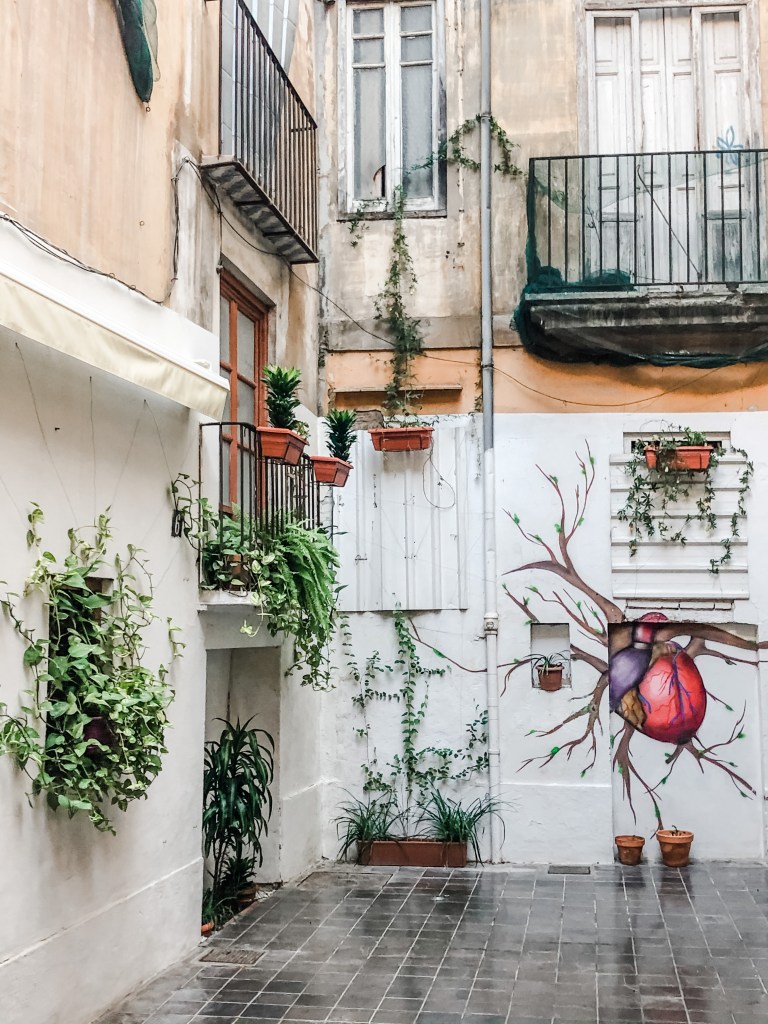
After the Sorolla exhibit, I retraced my steps to some street art that had moved me months earlier. Perfect images for Valentines’s weekend.

While wandering down narrow streets appreciating various street artists’ works, a mural of the couple holding hands reminded me of our two recent trips to Gandia. In December we had dropped off my residency paperwork an hour South of Valencia in Gandรญa, and in January we went back to pick up my new card.

GANDIA- December visit

Persimmon and citrus orchards whipped past while we sat on the train reading the history of Gandia and Spanish knight Rodrigo Diaz, aka El Cid. In the Middle Ages, El Cid, while exiled from home, helped rescue and liberate numerous Berber and Moorish occupied cities in Spain. At Castle Bayren in Gandia, Muhammad Ibn Tasufin and his North African troops camped above Gandia and on the seashore and surrounded El Cid. The situation seemed desperate as El Cid’s band was surrounded and harangued on all sides. While it would have been easier to surrender, El Cid, proficient in Greek and Roman battlefield tactics, rallied his men and led a full frontal charge on the invaders and broke through the center, which made the occupiers flee to their ships. After liberating Gandia, El Cid went to liberate Valencia that was under Moorish occupation. El Cid proved to be a fair ruler in Valencia, allowing Muslim, Christian and Jewish citizens to live peacefully side by side and made the city a refuge for all. I questioned at the time, if it was even possible to coexist peacefully with my apartment neighbors when I was surrounded on all sides by obtuse, noisy night owls?

After exiting the train station and dropping off my residency paperwork at the police station, the rains picked up and we took shelter in an architectural gem–the 14th century Gothic Borja Ducal Palace (See Xativa Castle post, the birthplace of the Italian Renaissance Borgia family). The Ducal Palace gallery with a ballerina and gold leaf baroque decorations was captivating. Crown Hall with its coffered wood ceiling and words from the apostle Paul in 1 Corinthians “Every man that striveth for mastery is temperate in all things,” wasn’t lost on me. That nod to temperance, forgiving, refraining from judgement with my neighbors was a master skill that I was in the middle of learning. And there, in the courtyard, was none other than an air raid Refugio. I pondered again the lesson on equanimity and finding refuge in uncomfortable floundering.

GANDIA – January visit

The sun was shining, birds were chirping and we had high hopes of getting in and out of Gandia with my residency card. But after getting in line to be told to get out of line and return at 1pm when cards would be distributed, we weren’t so sure. We meandered back to a park, and then stopped for hot chocolate. Sitting under Collegiate Basilica that had been gutted during the Spanish Civil War, we admired the buttresses, gargoyle water spouts, eavesdropped on a group chattering about their castle hikes, and wondered about the pigeons dyed, yellow, blue and green, scavenging for crumbs. Afterwards we passed the Convent of Santa Clara of Gandia. Many of the Borja women spent time in this convent as well as other women over the centuries fleeing from being married by force. After returning to the station, and waiting my turn to get inside, I was disappointed to learn that my residency card still wasn’t ready. The man behind the desk apologetically said come back at the end of February. I nodded and told myself to flounder with mindfulness and intention. Master skills are learned with acceptance and not a disappointed heart.

It is now the end of February, and we are headed back to Gandia in two days to try again to get my residence card. I hear the neighbors hollering below us, the wind slams the covering on an abandoned building nearby, and the apartment rattles from something being dropped and drug in the construction behind us. I look at the quote by Tara Brach I put by my laptop: “We can fall in love with life over and over every day. We can become children of wonder, grateful to be walking on earth, grateful to belong with each other and to all of creation. We can find our true refuge in every moment, in every breath” …. ‘refuge in every moment, and breath’ feels possible. Coincidence or not, the Academy Award winning El Cid movie with Charlton Heston is playing on the TMC. I’m watching El Cid try for peace and mercy instead of wreaking vengeance on the occupying Muslim in Spain. I have turned a corner and love life again. I think about all the things I am grateful for living in Spain. Living with Noise is just my latest adventure. Third time might be the charm in getting my residency card… if not, I can take a deep breath, and be happy anyway. Refugio was inside me all along.

Her Ancient Surroundings

What a large volume of adventures may be grasped within the span on [her] little life, by [she] who interests [her] heart in everything.” Laurence Sterne

At a World’s Fair in 1974, my parents purchased a delicate and finely carved wood figure of Don Quixote– a perceptive protagonist created by Spanish author Miguel de Cervantes. Dad, to keep the monsters away who spooked me at night, would regale me with tales of Don Quixote fighting off giants, that in actuality were just windmills. Through Cervantes and Don Quixote I learned there are two ways to see things…. the way they are, and the creative way. The creative way helped me turn the shadow monsters on my bedroom wall into Quixote’s faithful friend Sancho Panza and his horse Dapple, who I imagined patrolled the perimeter of my bedroom chasing away any monsters. Shortly after, my dad was in a car accident and with the ensuing traumatic brain injury, he lost ‘the way things are’ for a time. A segment of his prescribed recuperative therapy was artistic, and he carved and created a “Quixote,” which was just a primitive head resting on legs– a head brimming with imagination and breathless for adventures, and two legs to carrying the errant knight on his exploits. My Dad’s Quixote carving frequently pops in my mind’s eye while I am poking around my ancient surroundings in Valencia, Spain, as I don’t just see old stone towers. I see King Jaime entering the city when the Valencian flag flies in the wind; I see his echo on lamp posts, street drains and building friezes proudly displaying the bat crest over a crown– the bat that helped James of Aragon rally to remove the occupiers from the kingdom of Valencia. My head, filled with these wonders, rests solidly on my two legs, legs that earnestly desire to carry me on adventures imagined or otherwise.

“Not everyone is sufficiently intelligent to be able to see things from the right point of view.โ€  โ€• Cervantes, Don Quixote

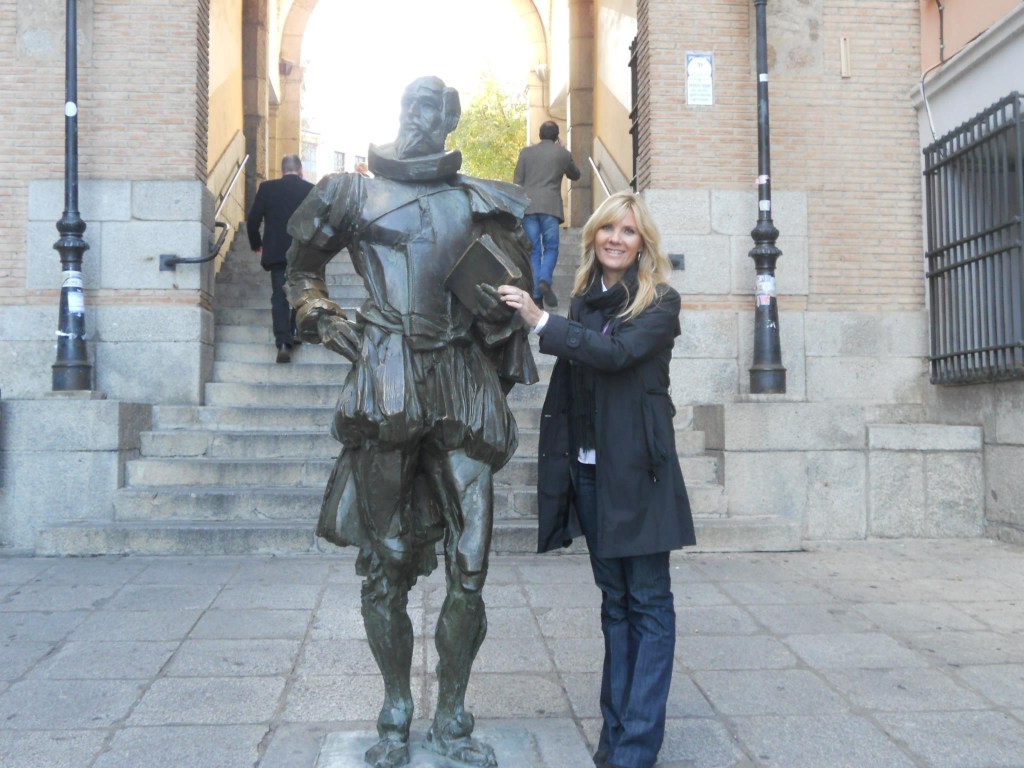
Cervantes Statue Toledo, Spain

“Look there, Sancho Panza, my friend, see those thirty or so wild giants?”
“What giants?” Asked Sancho Panza.
“The ones you can see over there,” answered Don Quixote, “with the huge arms, some of which are very nearly two leagues long.”
“Now look, your grace,” said Sancho, “what you see over there aren’t giants, but windmills, and what seems to be arms are just their sails, that go around in the wind and turn the millstone.”
“Obviously,” replied Don Quijote, “you don’t know much about adventures.โ€ 

โ€• Miguel de Cervantes, Don Quixote

One of the first museums Steve and I visited in Valencia was the cultural museum of Ethnology containing exhibits of ancient Iberian and Roman settlements in Hispania. While some might see three exhaustive floors covering 2000 years of archaic history, we saw as a three pronged adventure. We spent an entire morning learning about the intangible and tangible heritage of Sagunto, Lliria and Xativa, and how the Iberians, Phoenicians and Romans worshipped, lived, played, and battled. (This launched the next two ancient Roman outings, as we thoroughly enjoyed our trip to Sagunto a week earlier.)

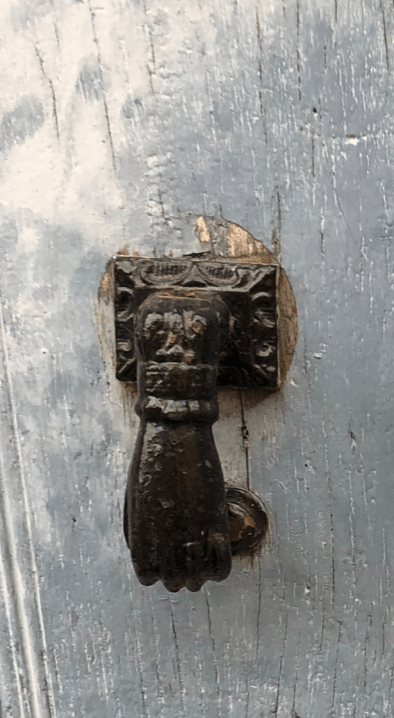
The aspect of my personality that likes discovery and connections noted several small female figurines in the Ethnology museum, similar to the Etruscan women carvings we had seen in Italy. The most impressive feminine figure of all, in an upright case near the end of museum, was called the Lady of Elche, a Phoenician/Iberian archetypal mother figure, goddess of light, also know as Mother Eve. The Lady of Elche, nicknamed Serpent Lady, due to her tussle with the tempter disguised as a snake in the Garden of Eden, is shown with her eyes opened. She can see things as they really are and can be, and not just in an edenic, perfect state. In true synchronous fashion, a Spanish acquaintance, after our museum visit, mentioned the Hand of Fatima, a Muslim, Jewish and Christian icon depicting a hand with an all seeing eye. These hands can be seen on door knockers in Valencia, and they represent non other than the Lady of Elche, the mother figure, with her watchful, perceptive eye. As a mother, wife and woman, and an employee in many male dominated businesses, I have been accused over the years as seeing others with my eyes half closed and not seeing their faults. In truth, I prefer using my imagination and insight to see the potential in others, and be the Lady of Elche with my eyes opened but seeing in other ways. It is easy to see giant windmills or the mistakes that others make, it is harder to see the best in them and what they could be. The Don Quixote mode of sight, seeing giant potential, and adventures through growth is a better way to view the world.

Hand of Fatima

XATIVA

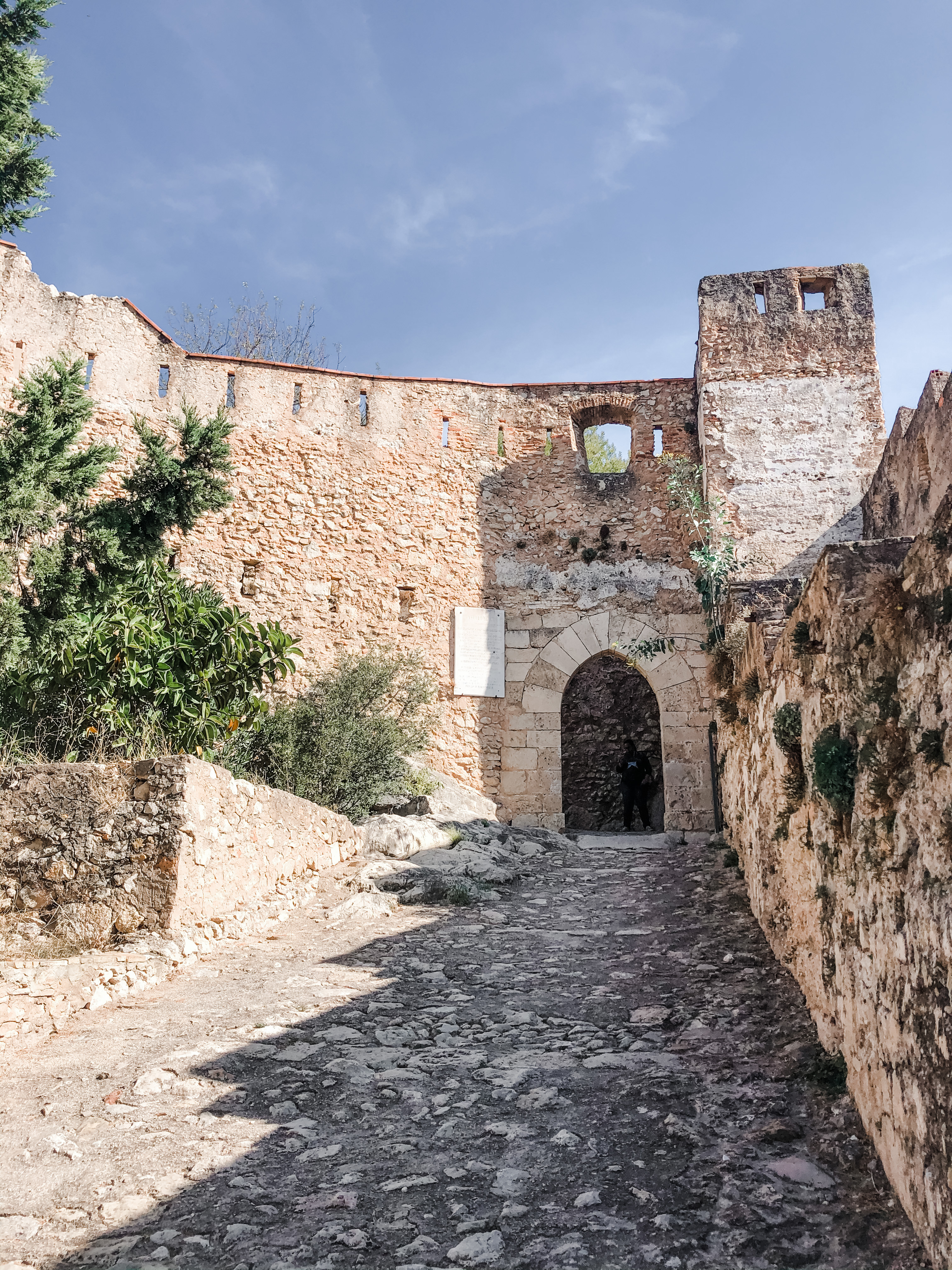
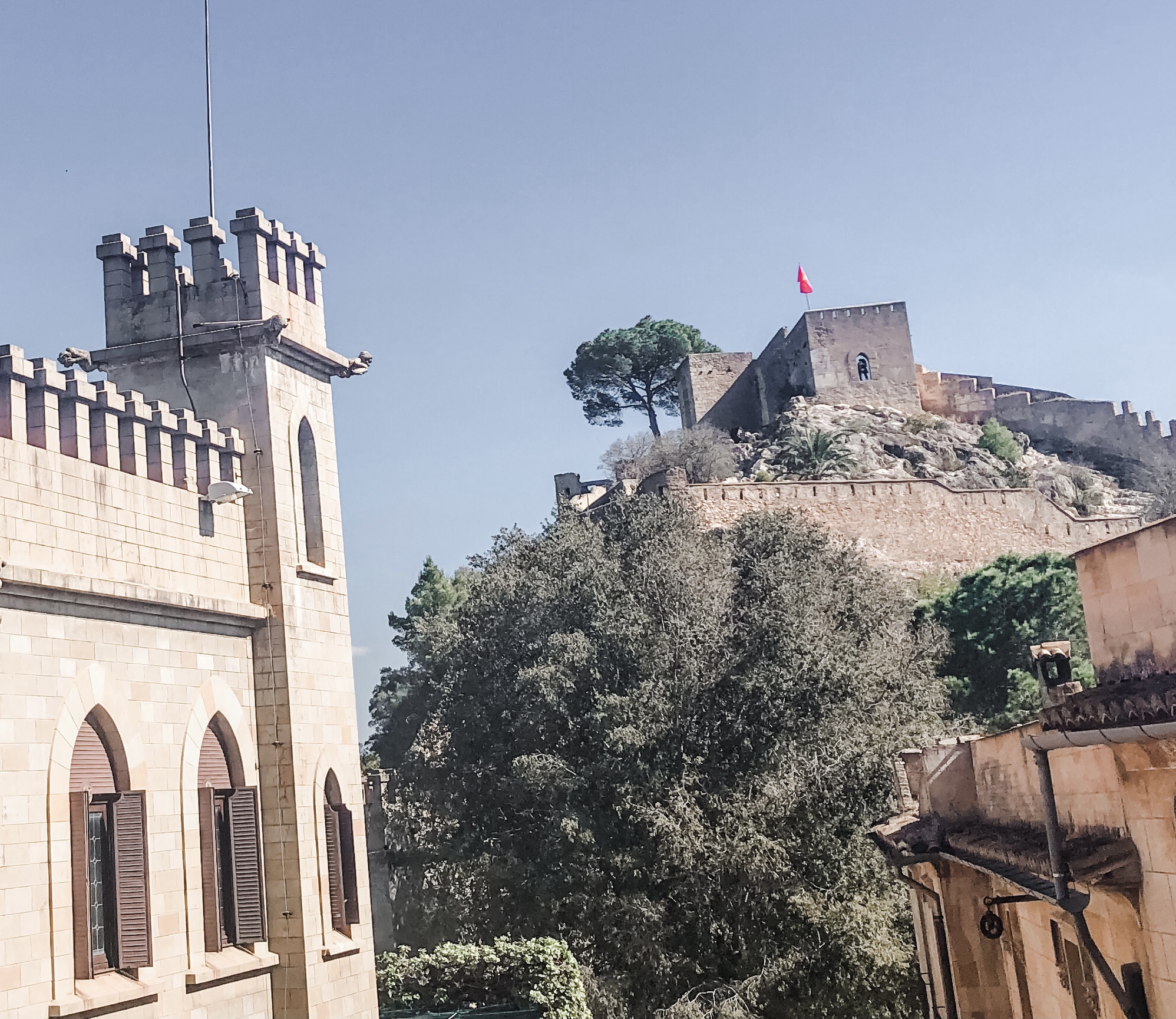
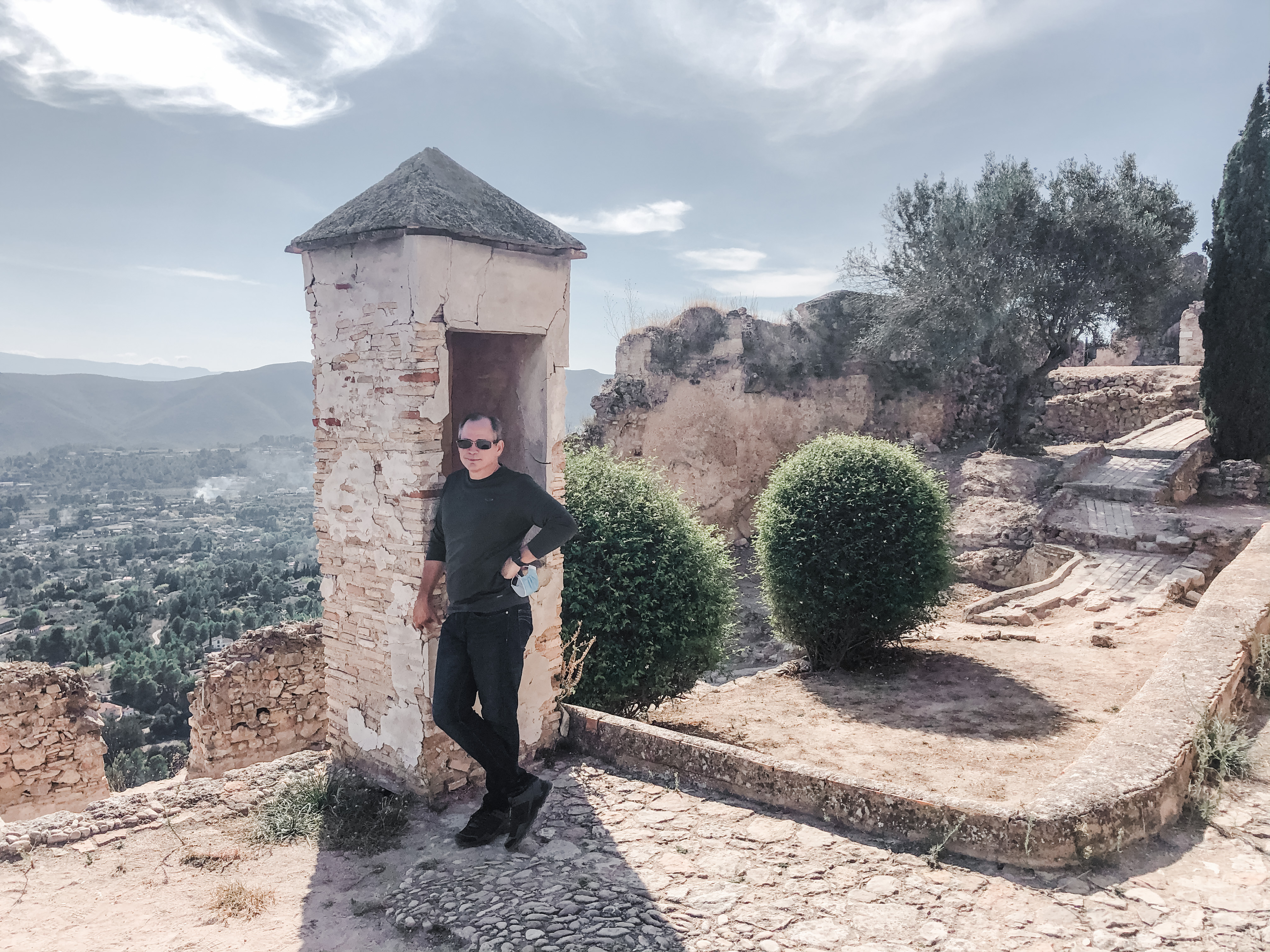
The following weekend we visited Xativa, the second stop of our three ancient roman settlements. As beautiful as our Sagunto excursion was (see Possibilities post), Xativa was the crown jewel with its castle Menor on one hill and Castle Major sitting majestically on the other. There are remains of Roman paving, water storage, fountains, cannons, ramparts, towers, and even one restored Islamic gate among others– everything needed to see a glimpse of the past when using your imagination. Xativa is known for being the birthplace of the infamous Borja family (renamed Borgias when they became popes in Italy); its fine linen from the Romans and paper from the Moors. It is also known in the 2nd century BC for Hannibal, the Carthaginian general, who plotted the sacking of Sagunto and invasion of Rome, Italy, from Xativa, as he could only see the Romans as a threat instead of an ally. In his short sightedness, lack of diplomacy and greed for silver mines in Spain, he caused a century worth of battles, and total destruction of Carthage.

After Hannibal laid siege on Sagunto from Xativa, and headed to Rome on elephants from the mountains of Northern Italy, a twenty five-year-old Roman named Scipio Africanus, full of new ways of seeing things, volunteered to lead troops in Hispania after his father and uncle were killed in a battle against the Carthaginian’s in Spain. No senior general wanted the task of going into battle against the Carthaginian in Spain and preventing reinforcements from reaching Hannibal in Italy. Young Scipio, with creative visions and insight drove the occupying Carthaginians out of the Iberian peninsula in just four years. Where other generals saw the impossible, a monumental wall protecting Carthaginian HQ, Scipio saw possibilities. After talking to several fishermen and learning the lagoon emptied at times, which exposed a strategic wall, Scipio stormed the occupying Carthaginians impenetrable quarters at low tide. Scipio, a master of creative warfare, cleverly trained his soldiers with new tactics and defeated Hannibal’s brother Hasdrubal. After Roman victory was complete, despite being well loved by his troops, and highly respected by Spanish and African princes, Scipio rested his command, moved to the country outside Rome and cultivated the fields with his own hands. Lauded as a hero by Roman citizens, Scipio Africanus could have used his fame and glory for political gain. Instead, taking a page from Don Quixote, he saw fame and glory as windmills to be fought and put down, and before nobility could place his accomplishments on a windmill millstone and grind his legacy to dust, he used his foresight and retired and used his mind studying Greek culture.

โ€œI was born free, and that I might live in freedom I chose the solitude of the fields; in the trees of the mountains I find society, the clear waters of the brooks are my mirrors, and to the trees and waters I make known my thoughts and charms. I am a fire afar off, a sword laid aside…. the earth alone should enjoy the fruits of my retirement “ Cervantes

Xativa brought out all the wonder of the past and made history resurrect. The lyrics to the Carpenter’s song Top of the World “Such a Feeling’s coming over me, there is wonder in most everything I see” popped into my head as we hiked the switchbacks to the castle. The tune returned as we stood on old Roman roads, hung out for a moment in the dungeon’s darkness, scampered up ramparts, admired the city below and gleaming ocean beyond. It was one of those days that shape the way you view all others.

IIIRIA

A few weeks later we ended the three part Roman Iberian peninsula settlements tour while visiting Lliria on a sunny Saturday. The Valencia Metro was the easiest way to get there, and it took us about 45 minutes to go 2o miles north of Valencia to the end of the line.

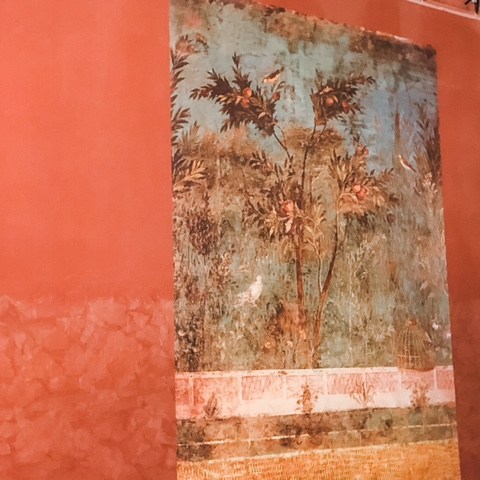
Illiria was built on a hilltop called Sant Miquel. The Romans started building around 76 BC and some vivid wall fresco called The Twelve Labours of Hercules and parts of their baths surprisingly still remain. Spain’s largest cache of buried coins was found in Lliria– 6,000 silver denarii Roman coins, minted in the 1st and third century were discovered. James of Aragon also left his mark on Lliria with the Church of the Blood built in 1238 over a mosque after the reconquest of the Valencia region from the Moors.

Unbeknownst to us, the modern city had not properly preserved their Roman past or ruins. (We read in several journals after our trip to Lliria that Roman baths and Muslim catacombs were just covered over when the city built new developments.) At the tour office we were told there were tours on Saturday, but while there was a guide available, she would not give a tour unless we reserved a couple weeks in advance. And the archeology museum that had some preserved Roman artifacts was closed due to COVID-19. Disappointment was the fuel that took us back to the train, but it was a lovely Mediterranean Fall day and the town’s 17th century baroque L’Assumpcion church with its picturesque facade was a nice parting glance. The truth is that Sagunto and Xativa were so spectacular that Lliria was always going to pale in comparison even if their museum had been open. In Lliria, I caught a glimpse of my dad’s Don Quixote statue of a head on legs but this time the narrative was Dr. Seuss:

“Out there things can happen and frequently do to people as brainy and footsy as you….. You have brains in your head. You have feet in your shoes. You can steer yourself in any direction you choose.” We had a curiosity in our head and let our legs carry us to a forgotten Roman settlement, and sometimes the point of adventures is just steering yourself where you choose and walking in a new place, and that we did.

Curiosity has its own reason for existing.” Albert Einstein


“The Mind is not a vessel to be filled, but a fire to be kindled.” PlutarchV

Over the years, during our adventures to Italy, Spain, France and Turkey to see Ancient Greek and Roman amphitheaters, arches, basilicas, temples and walking on their ancient cobblestones, feeling their wheel ruts etched under our shoes, and running laps around the circus where chariots used to race, it was in these places we understood Roman historian Livy’s message: “Bethink yourself not whence you sprang, but who you are.โ€ย  Studying their history, their idiosyncrasies, joys and mistakes, and how they worshipped, we better understood our own foibles, strengths, how we tick and what we believe. Now living in Valencia, Spain, and daily brushing up against the ancient Roman, medieval and gothic years, the current volume of our life’s adventures continually expands under a stoked fire of curiosity, and with introspection, and looking at our own personal journeys with new eyes and wonder, we have begun to see on a grander scale who we are.

“People travel to wonder 
at the height of the mountains, 
at the huge waves of the seas,
at the long course of the rivers,
at the vast compass of the ocean,
at the circular motion of the stars,
and yet they pass by themselves 
without wondering. โ€ 
โ€• Saint Augustine

Viewing life through Don Quixote’s lens, it’s possible to creatively fight the giant windmills of loss, disenchantment, disease and death when we view our lives as though everything is miraculous and a wonder. The monsters we shrink from cease to exist when we view them with changed eyes. It’s time to contemplate your wonder.

“but Nature more”

โ€œThere is a pleasure in the pathless woods…
I love not man the less, but Nature moreโ€ 
โ€• Lord Byron

During the Age of Discovery in the 15th century, botanists and naturalists joined Spanish expeditions to the New World collecting and recording plant specimens, seeds and vegetation encountered during the voyages. These specimens were transported around the globe and headed to the estates of European wealthy and university collections. Several seedlings from North and South America voyages were transported to the University of Valencia, Spain, in 1567, and their posterity can be seen towering in the Jardรญ Botร nic de la Universitat de Valรจncia, the Valencia Botanical Gardens, and in the terraced herb beds. Standing at the base of these gargantuan oak, cypress and fig trees this last week and looking up was dizzying and inspiring.

As an Autumn baby, I wake up from summer slumber when the air cools, and the angle of the sun shifts. The thyme, rosemary and mint perfuming the air for butterflies at the botanical garden, and beckoning benches under bamboo and pomegranate trees captivated Steve and I for an entire afternoon. The chattering of people at outdoor cafes was drowned to the sound of the pine boughs whispering in the wind. Nature emits a siren song on a frequency we hear, and the doves cooing and burbling fountain added to a perfect symphony of sight and sound. Green space is my happy place, and strolling though the botanical gardens on an October day, where the sun’s shadows stretched content as the basking cats tucked here and there, was truly restorative.

โ€œI felt my lungs inflate with the onrush of sceneryโ€”air, mountains, trees… I thought, “This is what it is to be happy.โ€ 
โ€• Sylvia Plath, The Bell Jar


Instagram is filled with those who want to influence others to buy, wear and try what they are pushing to be happy, but Thoreau, who went to the woods to live for a time, understood that nature is, and should be, the great influencer if we want to be happy. โ€œLive in each season as it passes; breathe the air, drink the drink, taste the fruit, and resign yourself to the influence of the earth.โ€ 
โ€• Henry David Thoreau,  Walden. I choose to be influenced by nature, to be imbued with oxygen and enlightened by the wisdom of the seasons.

My cousin Loretta wrote and asked me if living in Spain seemed like a dream, and if I pinched myself everyday just to make sure the beauty around me was real? I wrote back and said, ‘Sometimes the beauty in Spain is so real and so lovely, that it hurts. Sometimes it feels like I am dreaming after the hardships we have passed through, although I am wide awake and enjoying the last drop of everything.’ I have gone through existence with the notion that time and experiences are finite, so I must get to the marrow of the experience, the kernel of truth, and absorb what is real before moving on. Sometimes the experience of getting to what is real is hard and painful as Margery Bianco aptly wrote in the Velveteen Rabbit:

‘Does it hurt becoming real?’ asked the Rabbit. 

‘Sometimes,’ said the Skin Horse, for he was always truthful. ‘When you are Real you don’t mind being hurt.’ 

‘Does it happen all at once, like being wound up,’ he asked, ‘or bit by bit?’ 

‘It doesn’t happen all at once,’ said the Skin Horse. ‘You become. It takes a long time. That’s why it doesn’t happen often to people who break easily, or have sharp edges, or who have to be carefully kept. Generally, by the time you are Real, most of your hair has been loved off, and your eyes drop out and you get loose in the joints and very shabby. But these things don’t matter at all, because once you are Real you can’t be ugly, except to people who don’t understand.โ€

The truth is we cannot live in such magnificent surroundings and not be deeply moved and irrevocably changed as we become real. We know this time we have, away from election drama, viruses and life’s challenges is a gift. If we leave here in a year or two, we will never be the same after touching the rough bark of thousand year old trees, tasting decadent oranges warm from the sunshine and being surrounded by a people who love their families and are kind to those who are different from them.

We followed up the botanical garden’s beauty a few days later by finding a romantic gem called the Monfort gardens or Jardรญn de Monforte, situated across the Turia river. The gardens are set in the old orchard bought in 1849 by the Marquis of San Juan, and are styled in a neoclassic design with romanesque statues, grottos, fountains, bougainvillea blooming over a ‘love tunnel,” surrounded by well manicured shrubbery mazes. Two little girls in traditional Spanish costumes with shawls and fans were having their pictures taken, a dad sat and read a newspaper as his newborn child slept and a couple sat and stole kisses, and I couldn’t help but smile and know how blessed we are for this moment of perfection. To sit and inhale nature’s beauty.

The thought fluttered across my mind as we meandered around the gardens that took a hundred years to grow this lush… I wonder how long it takes to grow into yourself and know what you are about? To become real? Is it the end of middle age? Older? When our eyes lose vision but gain insight? When our skin becomes slack but is still capable of hugging others tightly? Like a Flamenco dancer, can we not not express and fully know ourselves until we have suffered deeply and loved the unlovable? is this what it means to be real? As a child of a master gardener, the thought came to me, that the shoots we nurture, the replanting, the weed pulling in the gardens of our life, they are the indefinite quest. ‘Keep on Gardening’ I heard whispered in the breeze.

“In search of my mother’s garden, I found my own.” Alice Walker

Angels Disguised

Inadvertently over the years, I have stumbled into danger’s path. Living in Valencia, Spain, the last four months has not exempted me from a dance or two with death. Two weeks ago, I was walking in Old Town on a minuscule “sidewalk” when a man rounded the edge of a building with such velocity, that I instinctively stepped off the sidewalk and into the street to avoid impact. That reflexive move put me right in the path of a car. Instantaneously the man grabbed my arm and yanked me to safety just as the car sped passed. He hurried on his way while I attempted a breathless “Gracias” to his back. This incident was followed a few days later while crossing an intersection, and suddenly feeling solidly rooted to the ground and unable to move. A bicyclist, not heeding his red light, barreled past and missed me by centimeters. Both episodes would have done more damage than just a hard knock to the noggin.

I wonder aloud (more often than Steve cares to count) about the odds of simultaneous events– the man, me, and the car all converging at that exact spot on Carrer de Calatrava and Cadirers. What kind of energy and ensuing motion compels things to arrive at the same place, at the same time? Everything in the world is in motion all the time– even things that look perfectly still are packed with atoms that are vibrating with energy. While I cannot see that energy that brings random things together, any more than I can see time or gravity (mysterious forces I’d love to see), I am content most days to marvel at coinciding events. There’s no doubt in my mind though that a great and powerful Oz behind the curtain is running the show.

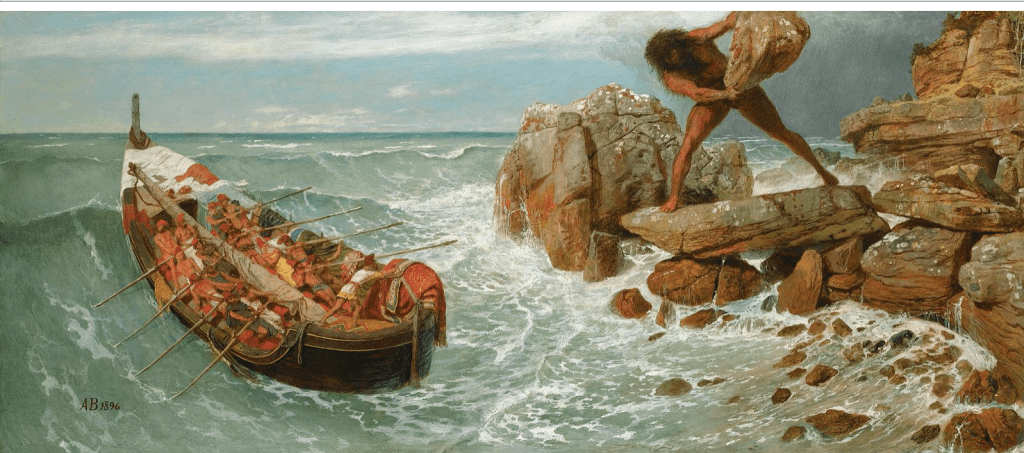
I’ve been under the assumption since my dad passed away over a decade ago, that he has been the angel watching my back wherever I wander. As a man who was struck by a drunk driver, and later hit by a loose boom arm of a passing cement truck, he understood danger can be dogged in its pursuit. And like the one eye Cyclops Polyphemos in Greek Mythology, who tried to kill Ulysses and ruthlessly pursued Galaeta the sea nymph, Death–that single eyed monster– occasionally gets us in his site. I don’t believe danger is around every corner and wispy winged guardian angels constantly flutter above, but neither do I believe in tempting fate and stepping in front of a car on purpose. I do believe though that there are angels in human form, as well as unseen guardian angels that step in when danger pursues and tries to court us.

George Sand wrote it better than I could: “I believe that there are angels disguised as men, who pass themselves off as such, and who inhabit the earth for a while to console and lift up with them, toward heaven, the poor, exhausted and saddened souls who were ready to perish here below.โ€ 

On an Italian Journeys tour with Nancy DeConcilis in Rome several years ago, we visited Villa Farnesina where Raphael had painted a fresco for Agostino Chigi called the Triumph of Galatea. In the fresco, Tritons from the depths below are set on abducting Galatea and her nymphs, but cherubs armed with bows come to Galatea’s rescue to fight off the sea creatures. This painting has stayed with me over the years as I am just sensitive enough to recognize that I too have had angels come to my rescue when I need it.

Spaniards, whether by Catholic culture or not, believe in angels, as evident by walking through their Belle Arts Museum and glancing around at the master’s works. I took these three photos within five minutes of entering the museum. Spinning a circle, I noted there were angels in numerous paintings. I sat on a bench in front of the middle painting, El Arcangel San Gabriel by Josรฉ Camarรณn Bonanat. Gabriel was the angel who appeared to Mary and told her “fear not.” I recalled the myriad of ways my family and I had been protected by unseen hands over the years and felt my pulse quicken. Gradually my fear of all those close calls was replaced by immense gratitude. I left feeling lighter and buoyed with hope for the future.

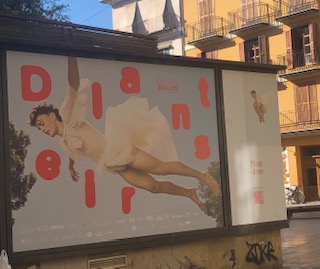
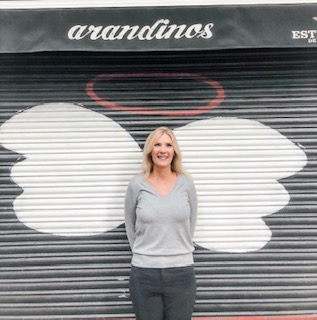
This morning, trying to bypass a film crew on my street for some upcoming movie, I wandered a new way to the grocery store, and my eyes fixed on a billboard for a dance troupe’s new production with a man with angel wings. I had to stop and look at it for a moment, as I find these types of synchronicities fascinating. Once I am mindful of something, these subtle messages crop up routinely for me to see if I pay attention.

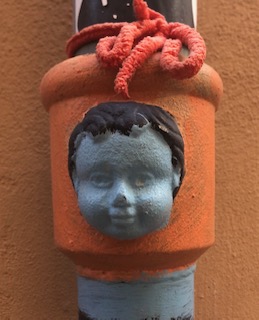
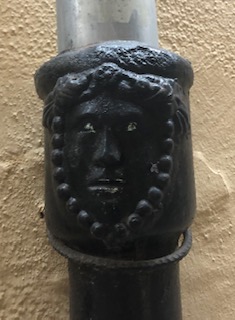
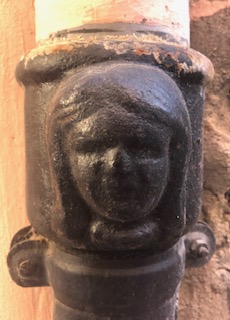
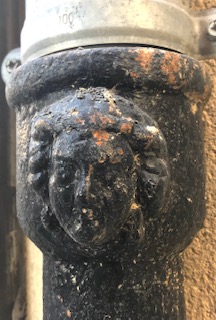
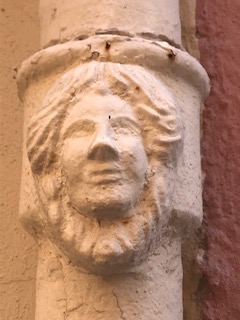
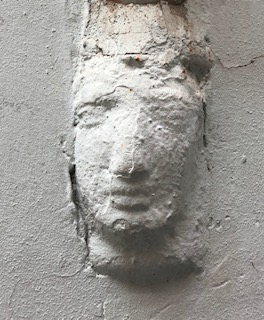
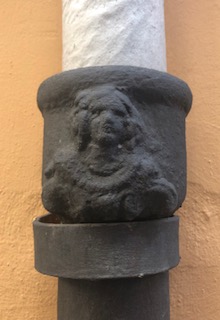
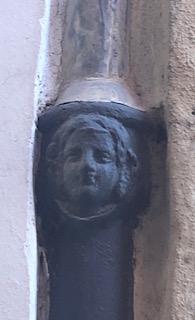
Steve, while walking to Spanish classes a few months back, started noticing little angel faces on building’s rain gutter pipes. He used to see cherub forms or “putti” on building’s bas relief, and in paintings while living in Sicily years ago, and he mentioned these faces to me one day in passing. I had not paid attention, but on my way home from grocery shopping, and having to zig zag and bypass more streets blocked for filming, I saw for the first time, five of these little guardian angel faces on the drain pipes. I smiled at these angel representatives, tucked away, unobserved, who kept watch.

After a bit of searching online for info about these, I found in the late 1800s, when city planners modernized the drainage, they involved civil engineers and metallurgic companies. Two of them, Fundicion Ferrer Valencia, and Don Tomรกs Aznar y Hermanos, had added these angel faces to the pipes. Romans, the founders of Valencia, used to add figureheads on the bow of their ships and galleys to keep them safe. As a nod to ancient Romans, the engineers may have made these angel faces as guardian angels to the city of Valencia. I found it charming to think these angel faces had been there over 150 years just watching over Valencians.

These faces got me thinking about the Patriarca Museum I visited last month to see two Caravaggio paintings, I noticed right before I left, there was a display case with “the Guardian Angel of the City of Valencia” made in the 1700s. It was a reproduction of King Jaime, who freed the city of occupation, and became the city’s guardian angel. On my way home it was not lost on me that for the first time I finally understood the meaning of the name of the street that led to my apartment. It was called Calle del Angel Custodio— Guardian Angel street. Critics would say its apophenia or abnormal meaningfulness or just a coincidence, but to me it was another nod of synchronicity and knowing we are never left alone nor unprotected.

โ€œNot all angels are from the other side of the veil. Some of them we walk with and talk withโ€”here, now, every day. Some of them reside in our own neighborhoods..โ€ Jeffrey R Holland

This afternoon as I sit with earplugs in and music on, trying to drown out the new construction drilling and hammering on the building that connects to ours, my eyes landed on the Halloween card from my angel friend Janet who is always inspired to send love and encouragement a week or two before it is needed. Her card reminds me that with all the scary things out there, and one eyed monsters bent on our destruction, and myriad of ways to perish, I do not need to be worried. Fear not. We are all watched over more than we know.

Possibility of Something New

The first verb I learned to conjugate in every one of our foreign moves was “posso,” (Italian and Portuguese) and “puedo,” (in Spanish). This Latin root means “to be possible or able.” I use posso/ puedo frequently to ask the question “Can I?” (Can I see the total amount? Can I write down my email for you instead of telling you the letters?) Latin base words that pepper the English language are like dear friends from home who bring the welcoming feeling of the familiar when they pop in for a visit. A cognate such as possible is not only a useful verb and familiar friend, it is also the framework for each of our moves– the possibility of building new friendships, exploring new sites, and emotional and mental enrichment. As we settle into our third month living in Spain, with all the possibilities and choices before us, I ask myself: can I let go of the ruins of the past, build on them and embrace something new? Can I create a world where work resembles play, where time is not scarce, where growth is a byproduct of a changed mindset?

The creation of something new is not accomplished but the intellect, but by the play instinct acting from inner necessity. The creative mind plays with the objects it loves. Carl Jung

Growing up on a family farm where it was all work, and play never entered our orbit, I was shocked to learn in science class that work and play complimented and wrapped around each other like a spiral staircase, similar to the double helix in our DNA structure. These DNA double helixes, had major grooves and minor grooves. As a beast of burden, I decided my major groove must genetically be work, (wider with more proteins binding to it); and my minor grove was play, (narrower and less binding). Even after learning our minds and bodies need rest and play after exertion, the possibility of play always seemed out of reach, until one day a year ago when I was confined to bed post surgery, flat out in the midst of personal crisis, as I could no longer work. I began to hold onto the possibility that “It was never too late to have a happy childhood,” and moving to Spain became the impetus to finally getting around to the science of playing.

It didn’t take long after putting down stakes in Spain to see that Spaniards excelled at relaxing after work, and thoroughly enjoyed playing. Every afternoon they could be found playing on soccer fields and lounging in outdoor cafes in animated conversation, and laughing during their evening strolls called ‘paseo.‘ We noticed festivals and fireworks sprung up every few weeks and everyone, even children, took to the streets until the wee morning hours just enjoying life. Over the weekend, Spaniards, from all around the country, flocked to Valencia to join in the liberation festival commemorating Conquistador King James I of Aragon who took back Valencia from the occupying Moors in 1238. As we walked around seeing Spanish women and men beautifully arrayed in their traditional costumes, dancing and singing, I felt a deep longing bubble up, the need to play, and I wanted to join in the fun.

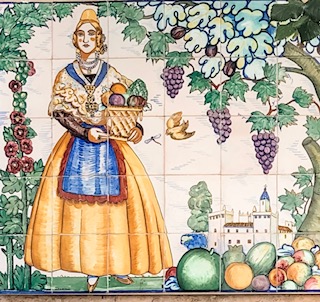
In this place, working on a second chance of having a happy childhood, I admired how Spaniards put up ceramic plaques commemorating those who worked hard at play– bullfighters, or matador’s who danced in front of angry bulls, and neighborhoods lauded on plaques for playfully building the best paper mache monument that was burnt during a three week Falle festival marking the coming of Spring. The Falles filled with parades, music and dances and traditional costumes and fireworks commemorate the endless possibilities of a universe of play.

“They stand in the great space of possibility in a posture of openness with an unfettered imagination for what can be.”

It is hard to move from spectator to participant, even when there is a will. In the Art of Possibility, psychotherapist Rosamund Zander writes that one of our roles in life is to radiate possibility into the world, and we do this by changing our mindset, and turning everything into play. By seeing life as a game and seeing ourselves as a game board, “we shift the context from one of survival to one of opportunity for growth.” This change of mindset opens up new opportunities of shifting the paradigm of the necessity of work to include the necessity of play.

In order to “Dwell in Possibility” as Dickinson wrote, and make everything a game, our first field trip play day was taking the train to the Roman ruins of Sagunto just North of Valencia. Living without a car in Valencia has been fantastic and challenging at once, and for the first time in our married life, our only option was bus or train. We chose the train. On an early Saturday we settled into public transportation seating and gave full relaxed attention to the scenery going by, and laughed and talked and not surprising it seemed like play.

The thirty minute train ride to go twenty miles up the coast to Sagunto, sped by quickly. Citrus and olive groves watched us glide past. An occasional villa appeared on the expansive farm land extending to the ocean. Getting off the train, the wind picked up but we fixed the chills by walking on the sunny side of the street below Sagunto castle.

The charming old town we passed through, to get up to the ruins, with its bulging ancient walls, wacky staircases, tiled thresholds on restored rustic buildings and little nooks and crannies filled with colorful potted plants was delightful. The walk up the hill, while steep, was better than catching the miniature green train chugging uphill, as we were able to poke around and read the orange historical signs. We found ourselves in a dead end a time or two, but upon turning around and retracing our steps, we were captivated by the lovely views we had had at our backs all along. Meandering and dawdling in a new place always encourages it to open up its secrets.

Arriving at the ruins, an old admiration for the Romans kicked in. These masters at concrete always left behind structures that lasted for thousands of years. And when building a new city, the Romans always made space for an amphitheater for drama and gladiators, and a circus for chariot races along with the forum, basilicas, and temples. They understood the need for play after hard work. Over the years, we have visited ruins in Rome, Italy; Nimes, France, and Italica, Spain, and Sagunto did not disappoint. The Almenara fortress Gate, perimeter walls and foundations of the Forum still stand. The mix of Iberian defensive walls, the Roman retaining walls reinforced by buttresses, Islamic medieval arches mixed in with Christian Gothic and Renaissance rework of towers and bastion was an impressive, creative, collaborative work. Cisterns, millstones, granaries, ovens for bread, shops and homes on the immense hilltop fortress overlooking lush fields below with thousand year old olive trees still producing olives for oil, and grape vines that filled the ancient amphorae displayed around us with wine, made the past feel present with possibility. Soren Kierkegaard undoubtable felt this as he penned, “What wine is so sparkling, what so fragrant, what so intoxicating as possibility.

The Roman philosopher Seneca said: “Let us live, since we must die.” The thought of living life after cancer and a brush with mortality swirled around us on this hilltop fortress, and we contemplated again leaving behind us a memorial of our lives, a monument of continued work, eat, sleep, repeat….or moving onto a narrower rockier path which required stretching, playing, living small but purposefully, with new ways to exist, and leaving behind a legacy of truly living. Horace, a Roman poet, said: “Nil Desperandum” or “We don’t despair, but live.” While worry and work had its place in our lives, we chose again the livelihood of living, and the possibilities of something new with play.

We, the insistent on living, looked past the ruins, enjoyed the sun on our shoulders, the breeze coming off the ocean and breathed in life. There was nothing checked off the to-do list but so much was accomplished. We stepped unimpeded, with openness, imagination and playfulness into the great space, the universe of possibility where living happens. We all can. See you there.

Playfulness allows us to see things from different angles and may sometimes save us.”
โ€•ย Erik Pevernagie

A BIG life embracing small

Neuroscience is big on mapping even the smallest thoughts in the human brain. When we think a thought, or even try to ignore a thought, our brain neurons fire and oxygen is pulled into the bloodstream which creates spatial patterns in the brain. Over time, positive thoughts increase wellbeing and health, while negative can bring on depressions and cognitive decline. I was looking at an intricate ceramic mosaic set into a wall in Ciutat Vella or Old Town of Valencia, and I started wondering what spatial patterns had I created on the walls of my brain by giving them pause, energy and oxygen? After living in Spain for three months, and finally finding some equilibrium, I hoped my positive neural pattern was a beautiful mosaic.

The second month in Valencia undoubtably made some warped spatial patterns… after falling down wet marble stairs during a cloudburst; during a shakedown at the grocery checkout due to a faux pas bringing my trolley inside; during my gaffe in a posh bakery attempting to order apple tarts, tarta de manzana, and instead asking for melanzna, which is eggplant… I laugh these blunders off, and pray I didn’t unwittingly give these small episodes too much oxygen and spacial graffiti in my brain. Because sometimes at night, while going over my day, it is very easy to dwell and beat myself up for not being perfect. But as the old Latin phrase goes Omnium Rerum Principia Parva Sunt – “The beginning of all things are small.” So I remind myself, these are my small humble beginnings.

In truth, despite being lost in translation most moments of the day and dealing with a cacophony of sounds in a close quartered ancient city, I’m better equipped now to dial down and shake things off. I frequently say “I love it here,” and mean it, even with the ongoing construction next door, my neighbor’s clacking heels, inebriated loud laughter echoing from the two restaurants below, reverberating fireworks, and the street sweeper swishing by. Admiration for Valencianos, their history, and their beautiful city fills my radar instead. My nervous system and brain have adapted to the chaos and noise and no longer makes small irritants big and unbearable. But I have more stretching and growing to do, as I can’t converse beyond a sentence or two with the friendly woman behind the counter at the local bakery, or shoot the breeze with the knowledgeable museum docent who wants to chat about Murillo and Velasquez, or do a simple but big thing like make Spanish friends when I am out walking or exploring, as my vocabulary is limited to a few words about the weather or ordering at a restaurant.

Emily Dickinson understood pushing through difficult, growing moments that make you want to tuck tail and run:

“If your Nerve deny you, Go above your nerve….If your Soul Seesaw, Lift the Flesh door, The Poltroon wants oxygen, Nothing more.”

When my cowering nerve tells me I am not bold enough to explore on my own, I explore anyway. When my nerve tells me my imperfect communication skills in Spanish are a shambles, I try to communicate anyway. When my knees, hands and ego are bruised from falling and failing, I get up and go on anyway. My reason for being, my raison d’รชtre, is to learn and grow and to make beautiful kaleidoscope patterns in my mind and my life.

A big life starts with doing small things” Chitra Divakaruni

This morning a sunrise, I leaned out the window and admired the amber glow of the ornate street lights bathing the buildings in a dreamy ochre, and enjoyed the resonance of the Cathedral bells in Plaza de al Reina. My neighbor opened his window and sent Italian opera and Parlami D’amore to the heavens, and I was filled wonder over breakfast. A concert pianist somewhere below starting practicing his scales and classical pieces which blanketed the ensuing construction noise. The local tour guide began instructing students about the significance of the water and fountain in the plaza, and I took it all in and was reminded I am still a student of life lessons. Fragments of joy are all around us, and it is what our brain wants to give oxygen to, if we let it. It’s what our heart needs to be enlivened — oxygenated, soaring thoughts pumped throughout our bodies and minds.

In order to achieve this goal of enriching my thoughts, I watched a Spanish series, Las Chicas del Cable (The Cable Girls), and started a book by Spanish author Vicente Blasco Ibanez, Woman Triumphan, to try and get incrementally better with comprehension. Enunciated Spanish from DuoLingo and Rosetta Stone is not the mumbled, truncated Spanish of Valencia I’m desperately trying to grasp. Hopefully a combination of Spanish TV dramas with subtitles, listening and reading and becoming familiar with slang and colloquialisms will get my brain better attuned.

“I winked at my own littleness, as people do at their own faults.” Gulliver’s Travels

On a whim last week I skipped the grocery store and ventured into the Mercat market. I had wandered in a few times but never purchased anything as I had difficulty ordering in grams and kilos. Instead of listening to my poltroon, and going for the ease of the grocery store, I stood rooted in line, determined to get the clementines I wanted. Above me were freshly cut verdant grape clusters hung on fishing line that dazzled like chandelier. Colorful purples, oranges and red fruit surrounded me and made me dizzy with wonder. I walked home with my bag overflowing with citrus, nectarines and grapes. Such a small thing to use your voice and repeat yourself when not understood, but this minuscule move on my part opened up a giant new world to me.

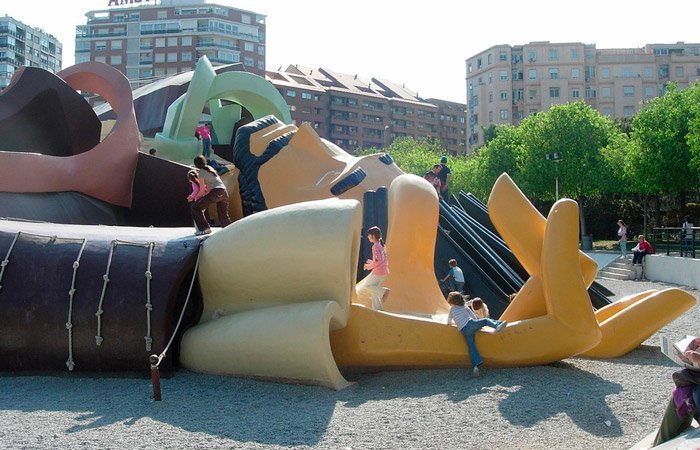
The next morning I reversed my walk on the old Turia riverbed turned park and stumbled across a children’s park with Jonathan Swift’s Gulliver stuck in the sand fighting off the tiny Lilliputians. I nodded at this mythical character trying to get up and get his footing. I too, a Gulliver, was fighting off the small irritants in a foreign place and trying to get my footing and stand upright. I promised myself I would no longer be tied and held down by tiny cords of my own littleness of thoughts, emotions and fear.

The Fundaciรณn Bancaja brought in a Joaquin Sorolla exhibit from his Museo in Madrid. Sorolla excelled at sunlit water scenes of Valencia, Sao Sebastian, Paris and Rome and was called the “Spanish painter of light.” He was a prolific painter on odd pieces of cardboard and small boards. I popped in and looked at his minuscule paintings of everyday life– snapshots of individuals stepping into light and basking there— and they resonated with me. Looking at his minute works, some just barely the size of my hand, I understood again an enlightened choice of letting go of small thoughts, baggage and chains that hold me back, and embracing little gems of beauty. This shift would insure we live life on a grander scale in Spain.

“There are people who can do big things, but there are very few people who will do the small things.” Mother Teresa

One of the reasons we picked Spain to live was to try and do some genealogy for Steve’s Spanish side. Over the course of a month we found in order to get information on his grandfather, a birthdate and region of Spain was not enough, we needed to know the exact city where he lived. It seemed such a small thing to hang up a search. Steve spent hours searching online records, city by city and eventually came across his grandfathers’s name on a webpage. But, he but could not open the document to see if it was a match. I sent an email with my broken Spanish to the site asking about this document, and a week later I got an email with a copy of the report. Sure enough, it was his grandfather, and it confirmed the city where we needed to take the train in order to start searching for his family members.

An ember, a mere spark makes a fire when given enough oxygen. When I was a child, my mom used to burn our ditch banks every year to clear the weeds but to also encourage new growth. The brunt scared aftermath was hard to look at but after a month or two, green shoots always sprung up from the ash. I see myself of having passed through a fire, one of many to pass through living in Spain and throughout a lifetime, and now happiness is growing through the char. We will find Steve’s ancestors, and we will find ourselves in the process, we will find doing small things in a foreign country during a world pandemic can lead to large dividends. We are going “above our nerve.” It’s a spark but the ember should take. All beginnings are small but here’s to making them bigger. Wish us luck.

Pots, Pans and Trash Cans

“I pray for your journey as it unfolds into the unknown. I know you feel a bit out of sorts. We all do sometimes. It’s okay. Don’t be afraid. You are loved. Remember it, know it, live it, breath it, rest in it. “ Sarah Bessey

It’s been an ‘out of sorts‘ couple of weeks. I felt the longing for the familiar and home sneak up after a losing a post I had worked on for three days, being lost on public transportation, and even more lost while trying to communicate in Spanish. It’s inconsequential to try and figure out if I was ill humored and then was lost, or lost and then ill humored. Regardless, patience was not my virtue the last few weeks and discombobulation reigned.

My friend’s daughter moved to Japan last month for work, in the middle of a virus, with four young children. They were quarantined in a small hotel room for three weeks. Her husband, a therapist, said “well we wanted an adventure and here it is. The good and the bad are all part of the adventure.”

I forget when I’m in the middle of the bad parts of an adventure, that being lost emotionally and physically is part of the equation. Math is not my thing but I somehow remember that a ‘negative times a negative equals a positive.’ With that logic then negative experiences multiplied by other negative experiences can still produce positive outcomes. Losing three days work, taking the wrong public transportation and walking back two miles in sweltering heat to find the correct tram line, and not understanding what the grocery store clerk was asking me as she exasperatedly repeated herself three times, still means positive outcomes are possible.

Steve, much better at change, hasn’t floundered on this international move. He spoke Spanish out of the gate and has better “Spidey Senses” directionally. His theme this move has been a line from an old 70s Meatloaf ballad “Two out of Three ain’t Bad.” He finds a way to compromise and focus on a couple wins. When the landlord didn’t complete requested repairs (painting, replacing bulbs, low flow faucets, and pest extermination) Steve did the repairs on his own. Despite the ad and our contract saying the kitchen was fully stocked, there were no dishes, pots, pans, nor any linens when we got to the apartment, so it was back to the Airbnb for another night. Steve said at least we have the apartment keys now, and it worked out that our Airbnb host could let us stay one more night. After sleeping in the apartment the first night, and waking up bleary eyed after listening to a party through the walls until 2 am and scratching at the ant bites on our feet due to the apartment being overrun with ants, Steve said at least we have a bigger queen bed to sleep in instead of the minuscule double at the Airbnb, and I have a tube of cortisone for the bites.

Finding a ropa de tendedero, a metal folding clothesline to dry clothes, a hardware store to copy keys, boric acid to kill the ants and cockroaches and sundry items like shower curtains, laundry basket, rugs, hot pads, cooking ware, dishes, utensils was not a problem but a challenge for Steve. Saturday at 3 pm we ventured out, and the shops were shut tight. Luckily we found a Chinese Bazaar still open. We bought the essentials: a couple plates, a giant skillet (that could double as a pot to boil things) and trash cans. When we got back to the apartment, despite not having our Spanish credit card yet (due to Santander bank closing for the whole month of August) Steve managed to place an order on Amazon.es (Espana) by uploading a financial document, and he procured a metal clothesline and a few more kitchen items. I managed to cook the whole weekend with a pot, an oven broiling pan and had a trash can to hold the refuse.

Sunday morning was rainy and humid but we ventured out in the stillness while the city slept. We stumbled upon tiny plaza Mocadoret that had a mosaic sign commemorating the miracle of the handkerchief or (mocadoret) in 1413. Saint Vincent Ferrer taught in a plaza nearby. He said the journey of mortality was fraught with darkness and the unknown, and the remedy was service to others. He threw his handkerchief in the air, and he said wherever it landed, it would find someone who needed help. The crowd followed Ferrer, and found the handkerchief at the door of a little family starving to death. The crowd gave what they had to keep this family from starvation. In 2013, 600 years later, the Parish in Valencia also donated non perishable goods to a charity nearby to feed the less fortunate and to remember the miracle.

Street art Barrio El Carmen

Our journey into the unknown of Spain does feel scary at times–even when we wanted and planned a year out for this move. Negative experiences are not the destination. We can donate our time and means and be apart of miracles for others. Reflecting on the kindness that happened in this plaza, and pondering the good that can come out of bad…. I felt steady and righted again. “Don’t be afraid. You are loved. Remember it, know it, live it, breath it, rest in it.” I let go of the negatives… there are so many more multiplying positives to enjoy on the horizon.

The Good that Remains

Due to an uptick in corona virus cases in Catalonia, the bombardment of troublesome headlines started just two weeks after our arrival in Spain: 

Spain Dropped from the “Safe List” Mandatory quarantine for those Returning from Spain Greater berth needed– Stay Away from People

With the resurgence, and inoculations still inaccessible, rousing new hope and appreciating “now” didn’t make headlines. I went back to an article from last March and reread a quote from Anne McClain, NASA astronaut, who explained how she dealt with social isolation and duress while in space. McClain said: “Expect to do things differently. Expect to need to adapt. Expect to be out of your comfort zone. Expect to put others first.

I jumped to a story about an elderly man, who had survived illnesses, wars and the Corona virus, who said: “I learned a long time ago to not see the world through the printed headlines. I see the world through the people who surround me. I chose to make my own headlines.” 

Months ago, after giving up on 24 hour news feeds as toxic to the soul, and having switched to just gleaning news by scanning headlines as an attempt to feel more settled (albeit thwarted), this resonated with me. I found myself making up my own headlines:  

Women gets inoculated with new mindset Uptick in free library classics downloads Man carries immunity to negativity.

I instantly felt more positive and peaceful making my own headlines. And I made a conscious decision to see the world by focusing on the selfless acts of people around me, seeing the good that exists, and putting others first.

A photo memory popped up on my phone of Pedro de Orrente’s early 17th century painting,ย Mary Magdalene, Penitent.ย I saw this beautiful painting in the lovely baroque Museo de Bellas Artes de Valencia seven months previous. I had no recollection of seeing it, even though it was the one painting I took a photo of despite all the art of Goya, El Greco, Murillo and Velรกzquez. Orrente was living between Murcia and Valencia when he painted this dramatic depiction of Mary in tattered clothing bathed in light. After looking at it, I knew why Iย 

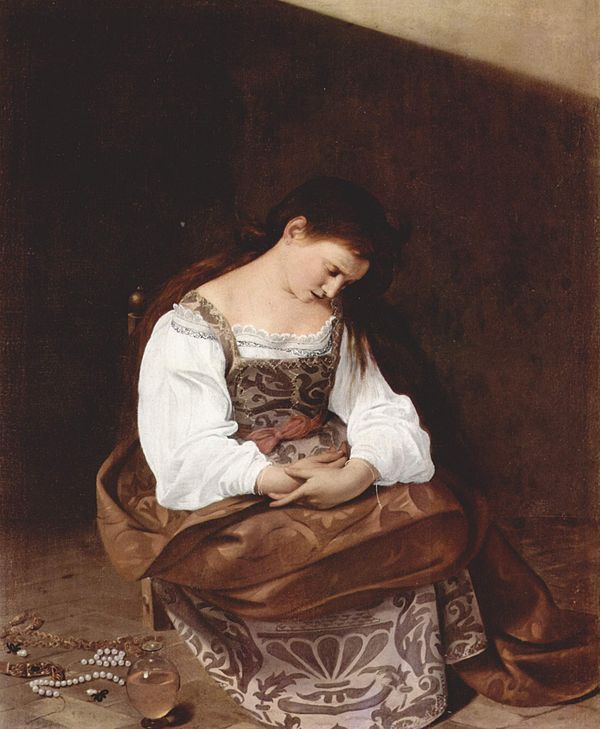
took a photo of it. Orrente’s painting was done in the Caravaggisti style of dramatic chiaroscuro– the dark background contrasting with an illuminated subject in the foreground. I fell in love with chiaroscuro while living in Rome years ago. Seeing Orrente’s painting again reminded me of seeing Carravaggio’s version of Penitent Magdalene in the Doria Pamphilj gallery. While Caravaggio’s baroque Mary was painted in 1595 and Orrente’s realist Mary in the early 1600’s, both remind me of women who begin to understand something… a thought and a light goes on in their minds. I don’t see the Marys’ upturned or downward looks as contrition as she was wrongfully maligned. I see a woman who has been burdened by the chaos around her and despite darkness gathering, she is reminded of her light, and the good that still remains to be experienced. This is why I am drawn to her.

On our many masked walks around Valencia we are stopped, usually by Spaniards who are visiting Valencia as tourists, and asked directions. I find this amusing as we are new to Valencia. Steve, always patient, helpfully explains in Spanish how they can get to one destination or another, while I nod and offer my two cents. I wonder as they walk away, why they asked us. (This was common when we were in Rome, Brazil or New Zealand, locals stopped and asked us directions). Granted Steve is of Spanish descent and may look like a local. With contemplation, it occurs to me though that like recognizes like. They, still optimistically out enjoying nature and architecture, recognize us as individuals like themselves who are still focused on positive pursuits. Like us they are down to the good that still remains during quarantine as we walk around Valencia.ย 

Expect the good. Expect to put others first. This is how we survive.

Apartment Adventures

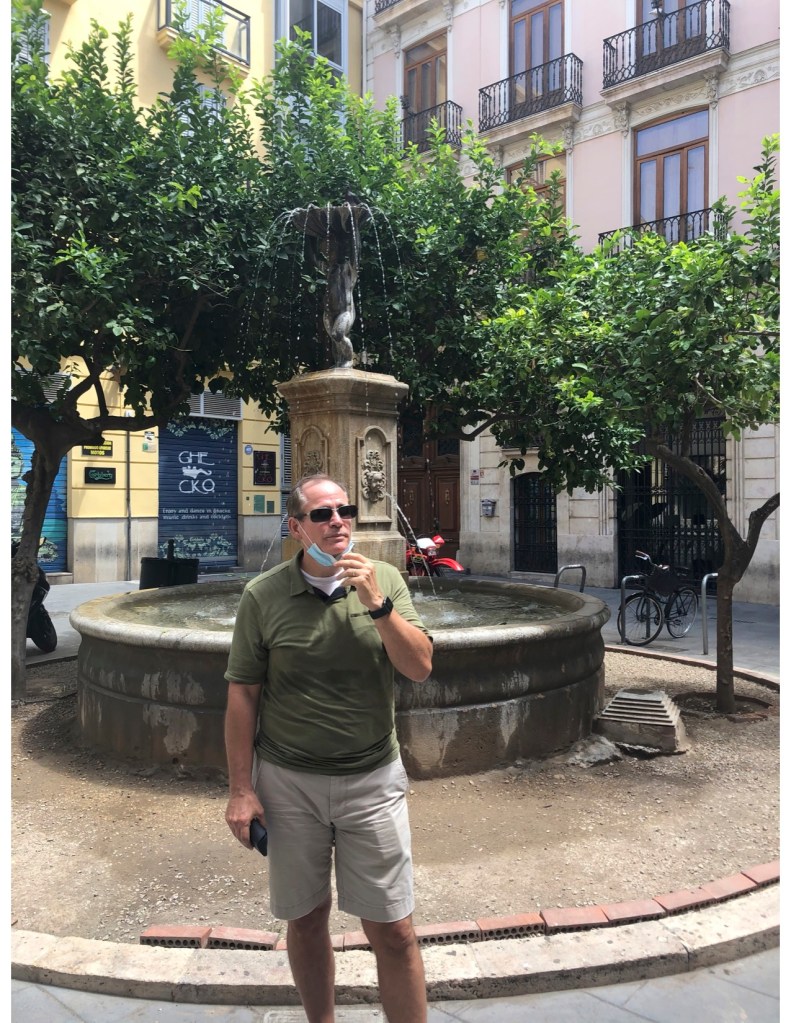
We made an acquaintance with another real estate agent, Rafa, who managed to get us a viewing of a rooftop terraced apartment in Plaza del Negrito. This was another apartment on our top ten list that remained elusive until we met patient and kind Rafa. Even though it is a bohemian location now, with readings at vegan restaurants and trendy bars, it still has the feel of the past with ornate 18th Century Palaces and fragrant lemon trees that ring the fountained plaza. This barrio in el Carmen is know colloquially as “El Negrito” from a little cherub perched on top on the fountain. In 1850, when drinking water finally arrived in Valencia, this fountain was one of the first to offer fresh clean water. A Spanish cocktail called Agua de Valencia is a nod to this Valencian fountain water.

Our previous real estate agent told us the owner of this elusive apartment was flipping the beautiful rooftop apartment to an Airbnb and was taking it off the apartment rental market. It took Rafa only a few days to convince the owner to let us see the apartment and consider renting it for a year.ย 

We wandered down a narrow feeder street but could not find the apartment. We texted Rafa who responded he was en route and to wait for him. We walked back to the fountain and listened as a tour guide explained to his group that the fountain water had been blessed and while it hadn’t turned to wine yet, the bars around them could fix that problem.

Steve checked on line and the bars in the plaza stayed open and played music until 3 am. It also said was a favorite stop for tourists and locals alike during the Fallas- a two week street party with fireworks.

Airbnb reviewers in the area didn’t complain of the noise. Of course, if the people staying at these rentals were participating in the festivals and frequenting the bars, they would be part of the crush of people up until 3 am making the noise.

Rafa appeared and led us to a door but the key he picked up didn’t work. He called his office and got a code, and that worked to open the outside door. We took the elevator up but strangely the apartment wasn’t there. Rafa spoke to a man getting off the elevator who said we were in the wrong building and to go next door. We went back down and found a small door hidden behind a restaurant umbrella that proved to be the right place. The ornate staircase and exposed brick inside the wooden door made a great first impression. We squished in the tiny elevator and went up to the loft and climbed a few steps to the rooftop terrace. The panorama view of church towers, cupolas and terra-cotta roofs was dazzling in the sunlight even with neighboring building’s pipes, power lines and mismatched laundry drying on the line. Lit up at night it would be spectacular. The apartment layout with three bedrooms, two of them with en suite bathrooms, would be comfortable when guests came to visit. The church bell in the distance made a pleasant sound, so our only concern was noise at night.

Rafa said to walk the plaza that night to see if the noise at the street cafes and bars was unbearable. He also said the Fallas were cancelled this year due to the virus and with the recent uptick, they would probably we cancelled again, and that the people in the bars at night were still at a record low. He said to let him know if we wanted to proceed. We walked back at 10 pm, and the plaza had a golden glow and there was minimal hubbub and noise. We decided this was our place.

The next day we messaged Rafa that it was a go and we went to AProperties to sign the lease and put down a deposit. We should hear next week if the owner approves the lease and a few minor repairs. FInger’s crossed we sign the final paperwork on the 5th and get the keys the 7th to move in. Perfect timing as our Airbnb rental ends on the 8th. Getting closer to being settled feels like an accomplishment. Thomas Carlyle said it well: “Nothing stops the man who desires to achieve. Every obstacle is simply a course to develop his achievement muscle.”

We stopped at the bank and finally were approved to open a bank account and transfer money in order to make security deposits for the apartment.

Now it’s time to celebrate successful apartment hunting adventures and take the metro to the beach. It’s only a fifteen minute metro ride to the Mediterranean Sea to enjoy the cool water. See you at the beach!

Website Built with WordPress.com.

Up ↑